


Vince Gironda's 8×8 in Durata: the deload you can see coming
Gironda called 8×8 the honest workout, and the honesty is in the rest period rather than the weight. Eight sets of eight on every exercise with thirty seconds between them means the eighth set is decided by how well you handled the third. There is no waiting it out and no fresh attempt, which is why the weight you can do this with is nothing like the weight you can normally lift eight times.
This run drove six weeks of it, eighteen sessions, three days a week. The interesting part is not the climb: it is what happened when the hack squat stopped completing its eighths at 150 kg, and how much notice the app gave before it took weight off the bar.
Finding the program
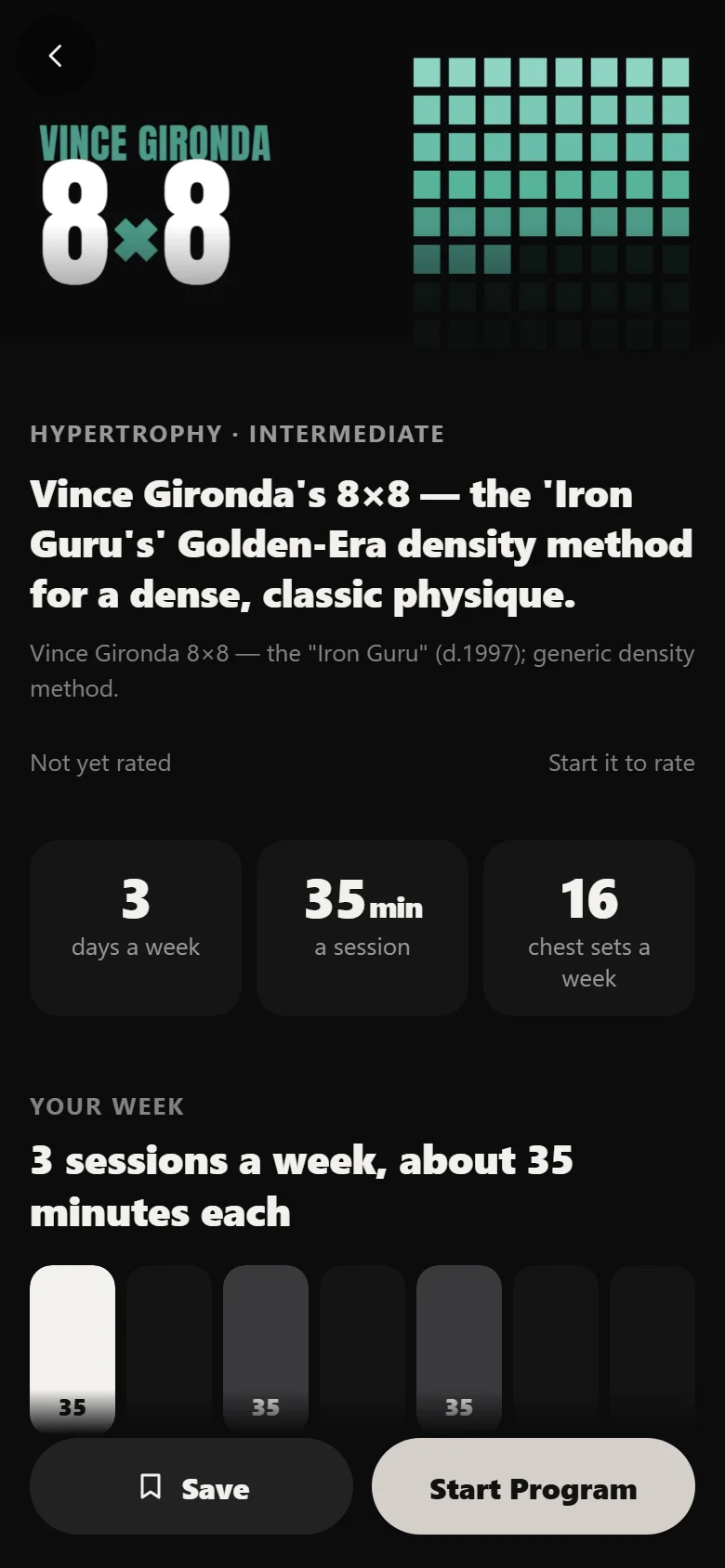
In Discover, Vince Gironda 8×8 sits on the Hypertrophy shelf, marked Intermediate, at three days a week. Search finds it by name, or Filter narrows the shelves by level and days a week. Tap the cover for a quick look, then View Program for the full page.
The hard part has nothing to do with how heavy it is. Managing thirty seconds of rest for sixty-four sets a week is a skill, and doing it while keeping the reps strict is a harder one.
The program page lays out three sessions a week (chest and back, shoulders and arms, then legs) with four exercises each, and every exercise carrying the same eight sets of eight. The progression rule is stated there too: complete all sixty-four reps and the weight goes up 2.5 kg.
Twelve weights, all of them meant to feel too light
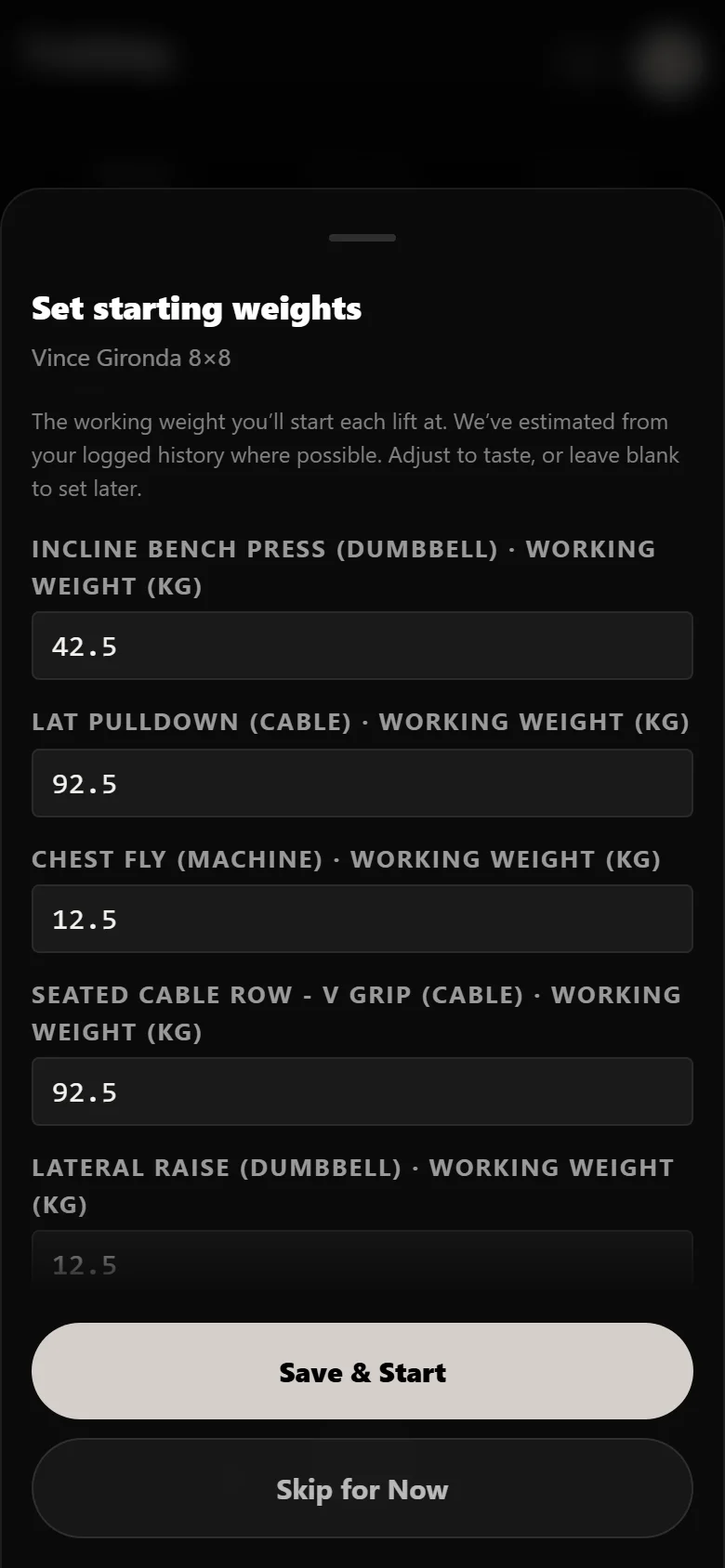
There are no training maxes. Setup asks for a working weight on each of the twelve exercises: the hack squat went in at 145 kg, the lat pulldown at 92.5 kg, the incline dumbbell press at 42.5 kg and a run of smaller movements at 12.5 kg.
Gironda's instruction is to pick around sixty to seventy percent of what you would normally use for a set of eight. Nobody believes this on set one. The thirty-second rest is what makes it true, and the fifth set is when it stops being a matter of belief.
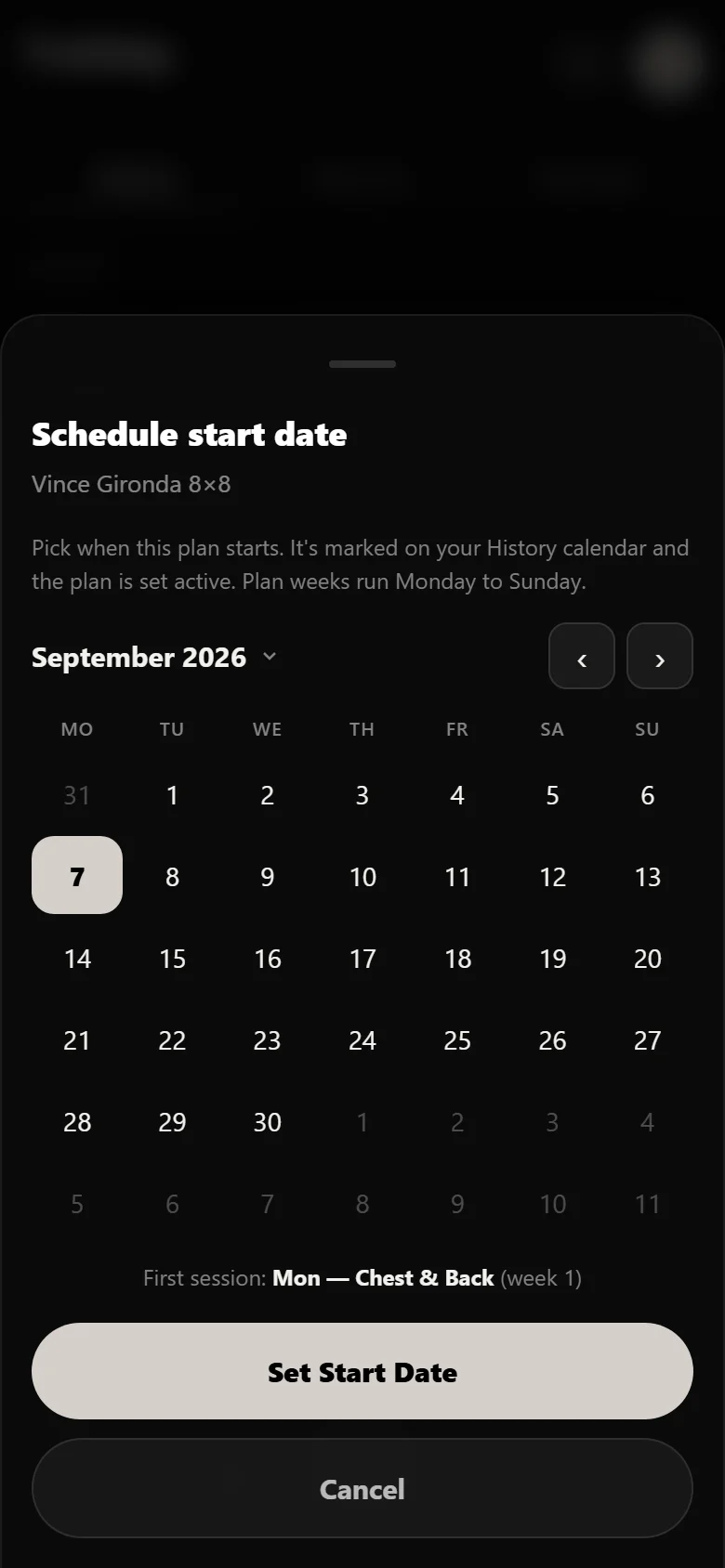
A start date puts six weeks on the calendar. Three sessions a week, eighteen in total, and each of the twelve exercises comes around once a week — six appearances each, which is exactly enough for the story below to play out.
What sixty-four reps at thirty seconds' rest looks like
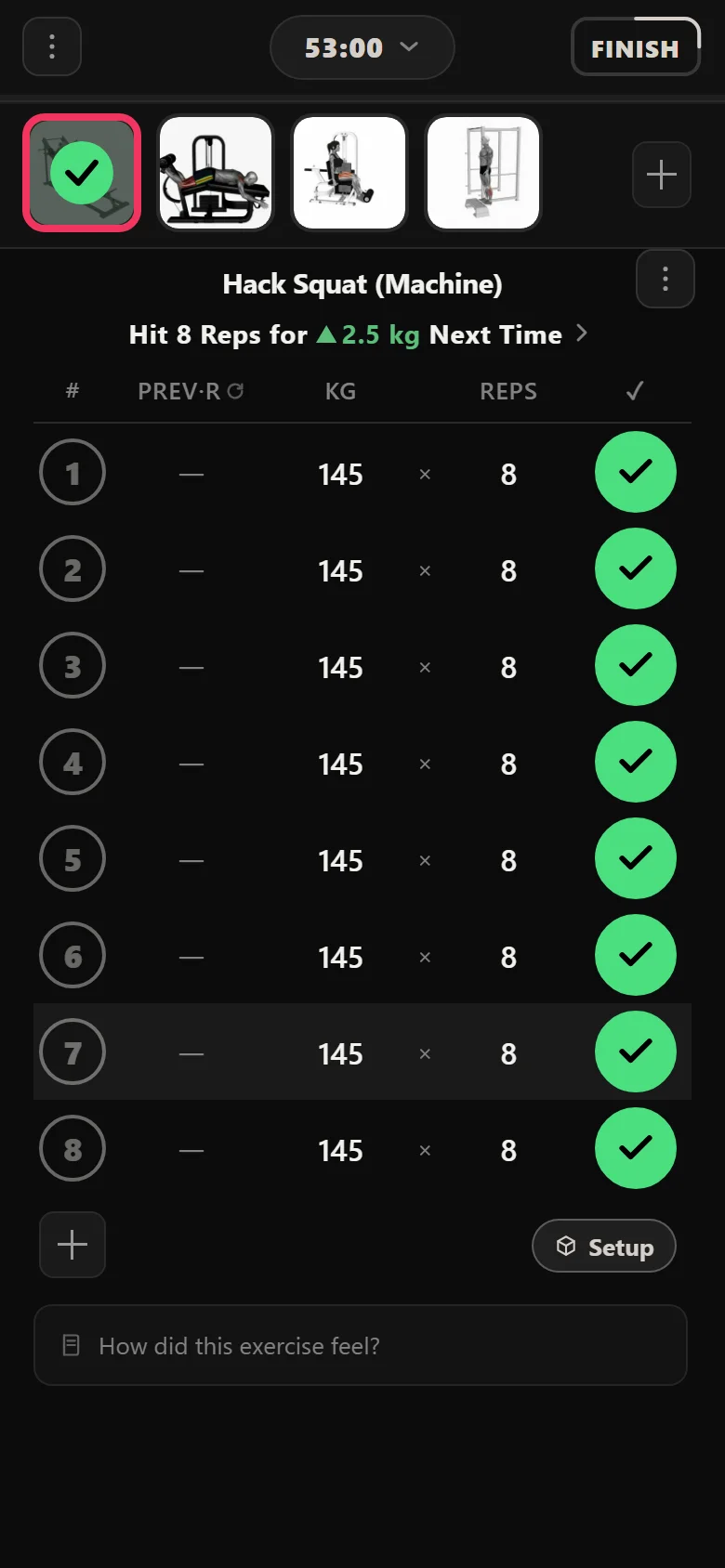
The hack squat opens at 145 kg with eight sets of eight waiting under it, and the rest timer starts itself on every one. Thirty seconds is short enough that reaching for the phone between sets is the thing most likely to break the session, which is the argument for letting the app run the clock rather than watching it.
The set list is deliberately monotonous. Same weight, same reps, eight times, and the only decision you make all session is whether set eight got eight. That decision is the entire input the progression rule takes.
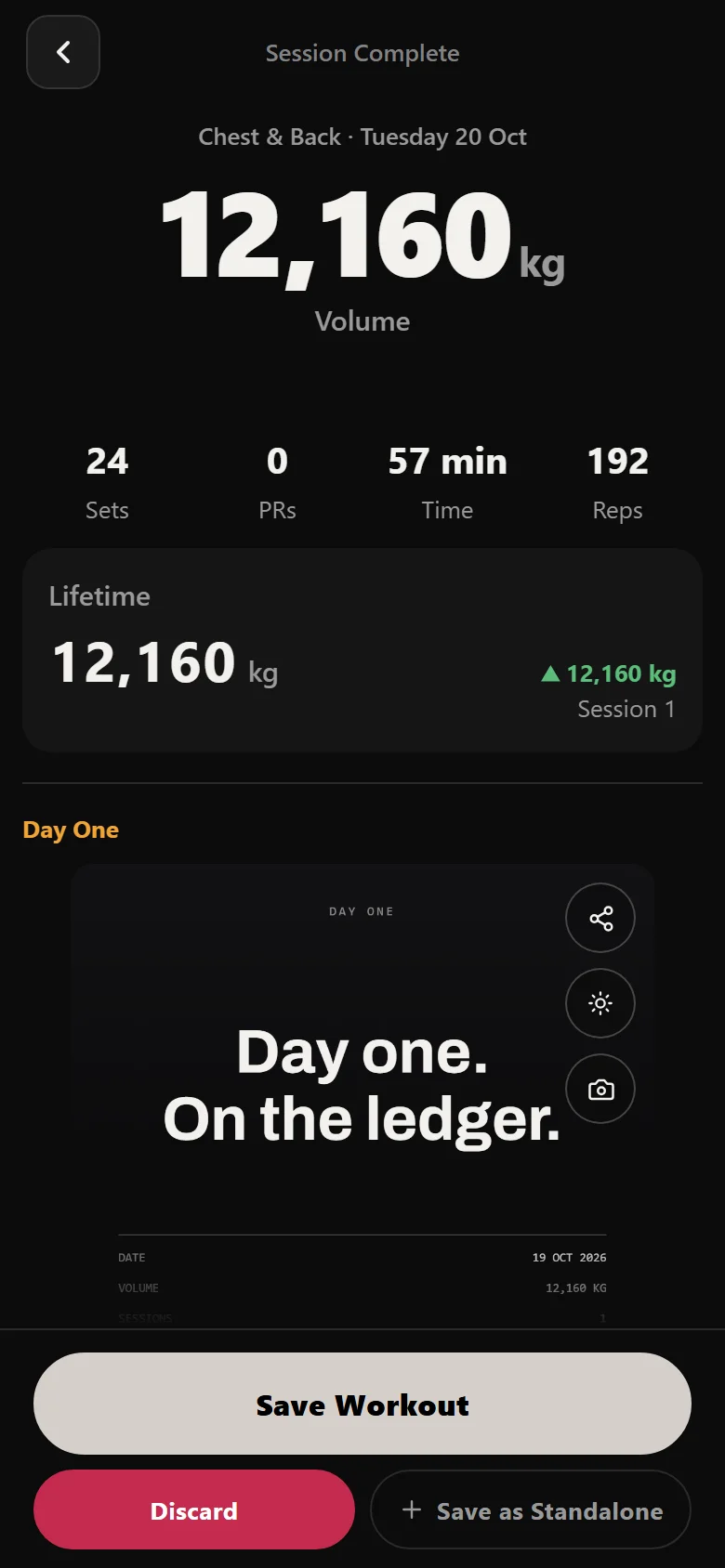
The recap shows what that adds up to: 12160 kg in a single session, across 24 sets and 192 reps. It is a volume program wearing the clothes of a light one.
Two weeks of the easy part
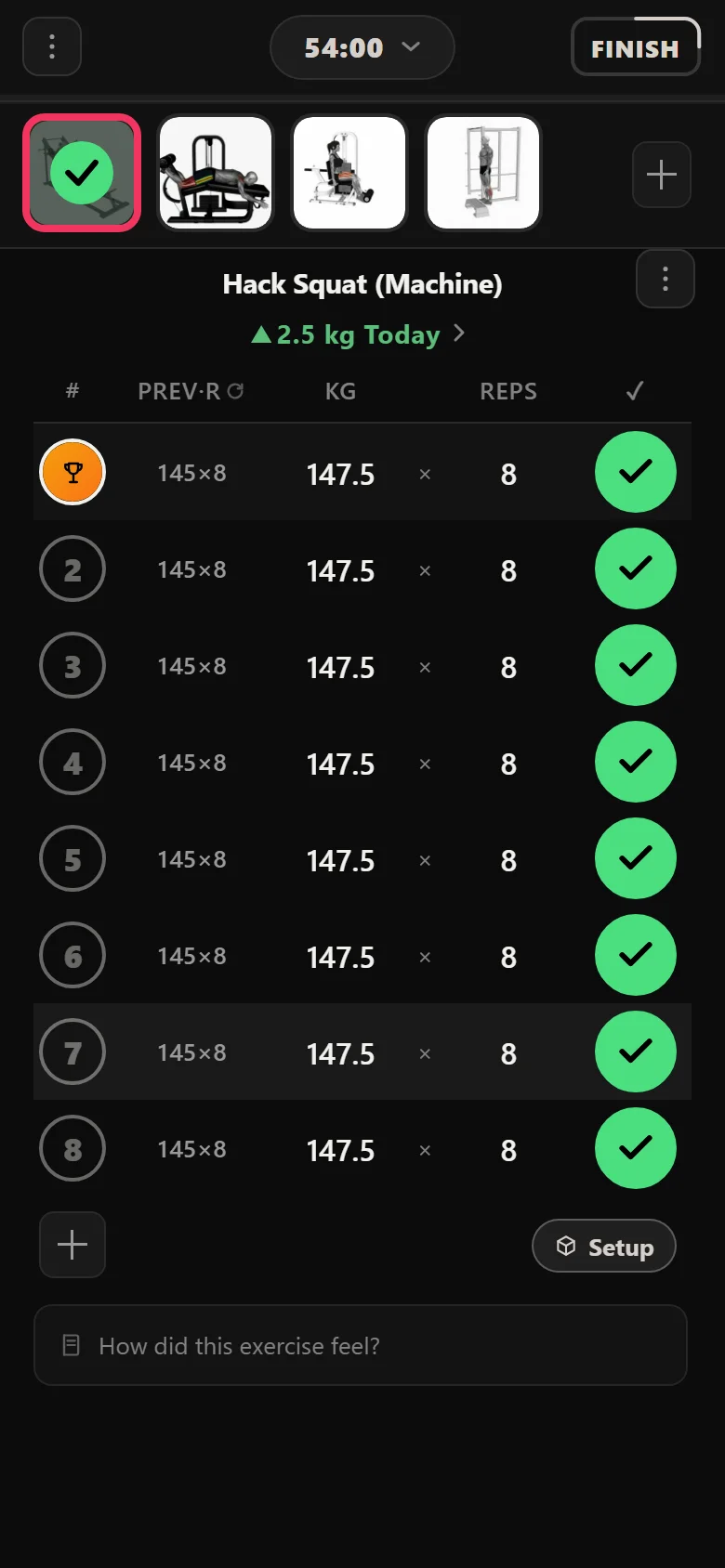
The first two hack squat sessions completed cleanly, so the weight moved on schedule: 145 kg, then 147.5 kg. That is what a rule with a 2.5 kg step and a once-a-week lift looks like when everything lands, and it is the part of any block that makes you optimistic about the rest of it.
Nothing about those sessions was a judgement call. The weight was already on screen when the session opened, because the app had decided it from what got logged the week before.
150 kg, and the chip that shows its working
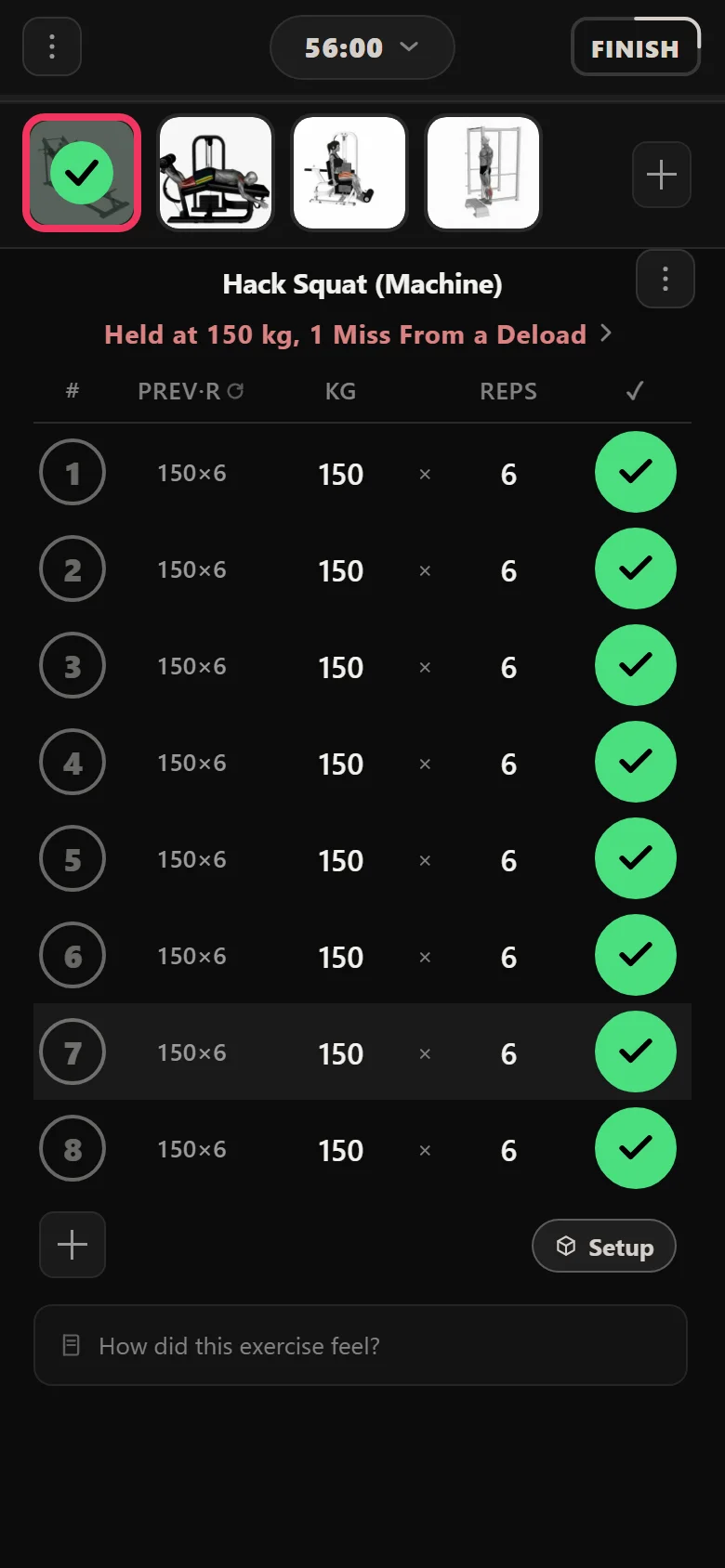
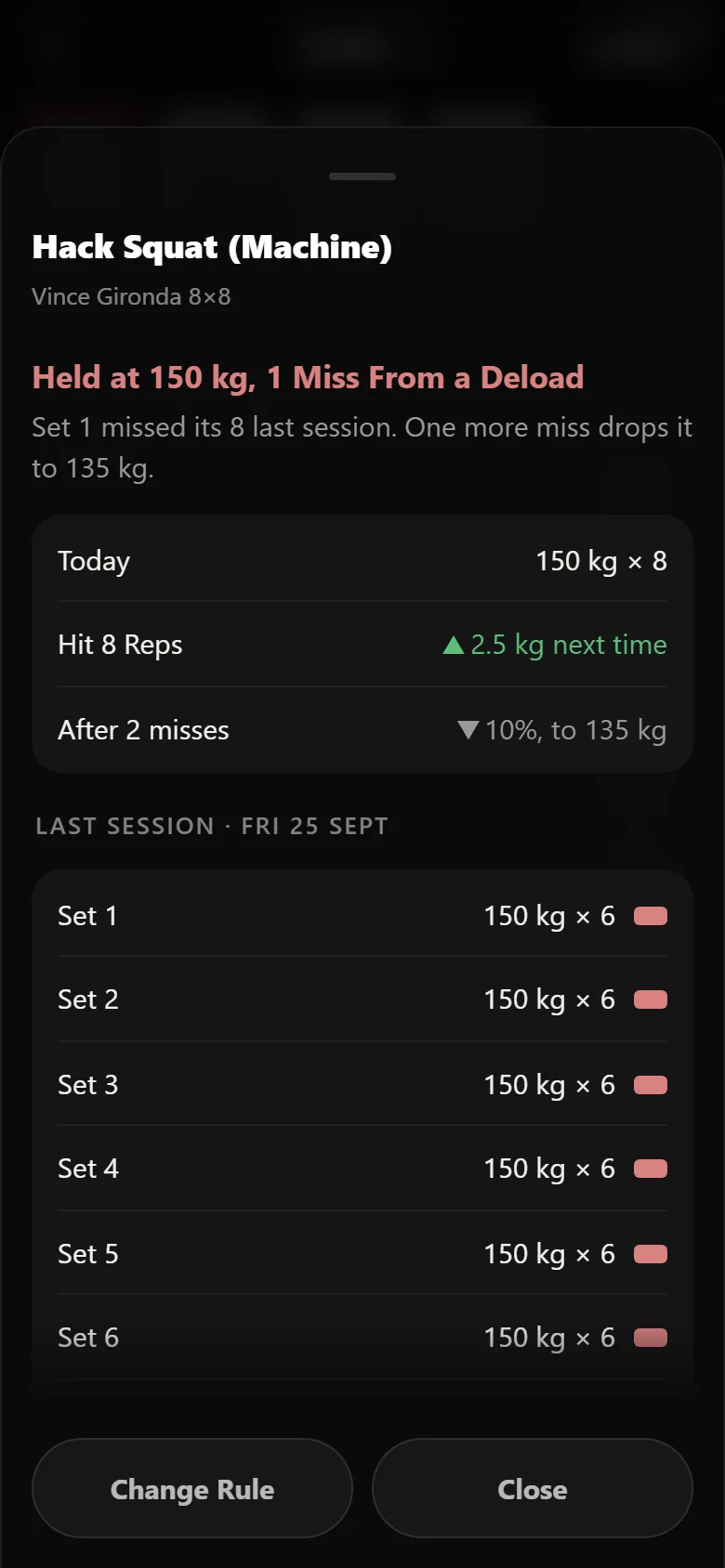
Week three is where the rest period collects. At 150 kg the working sets came in at six reps instead of eight, and on this rule any set short of eight makes the whole session a miss. The weight held rather than advancing.
So far, so ordinary. What is worth stopping on is the chip on the lift, because it is a button. Tapping it opens the rule's case: the evidence from this exact slot's own history, the sessions it is counting, and the law it is judging them against. It says one miss is banked, and that a second at this weight means a ten percent cut, to 135 kg.
That is a genuinely unusual thing for a training app to do. Most of them either hide the arithmetic or present the result as a fact. Here the cut is visible a full session before it fires, sourced from your own log rather than from a general rule about lifters, which means you go into week four knowing exactly what is at stake and exactly what will happen either way.
The cut, and the rebuild
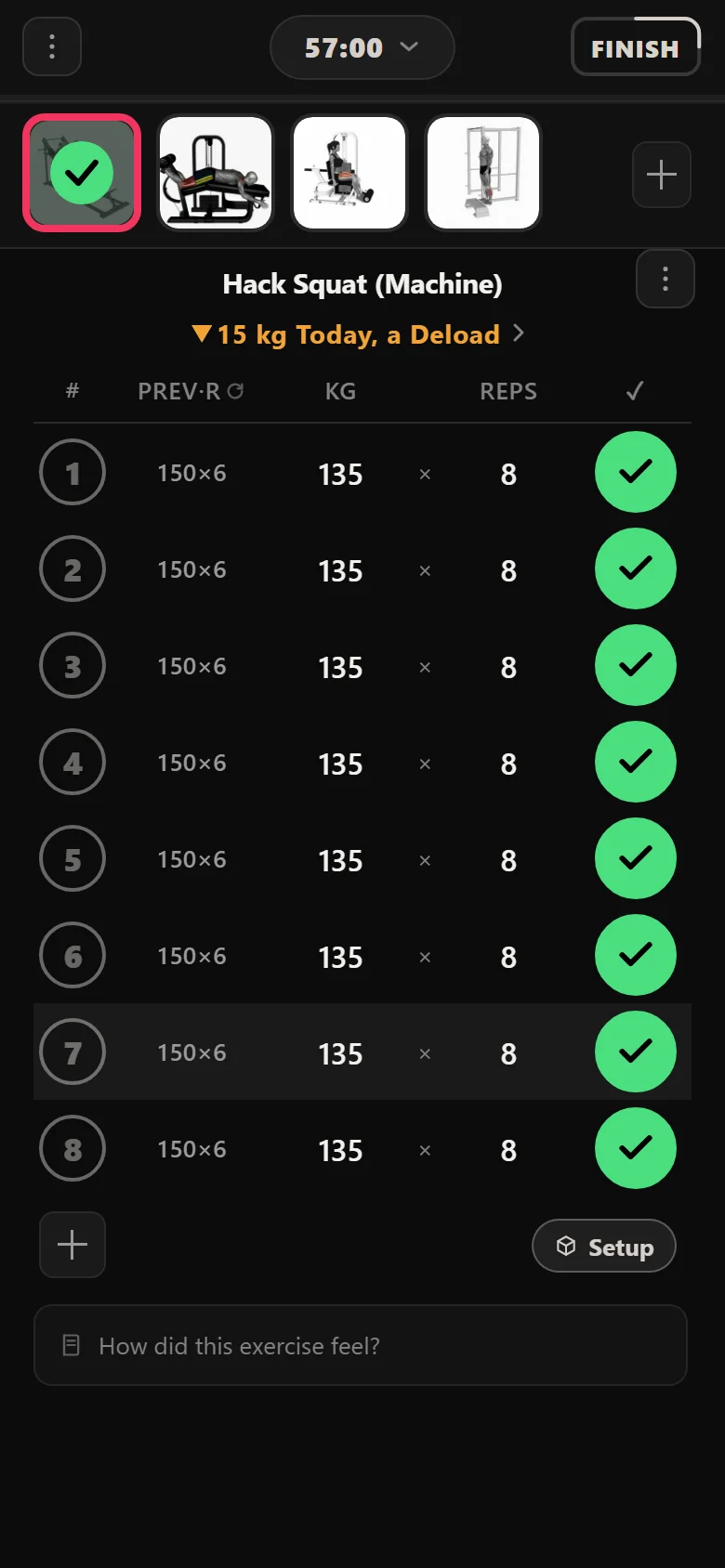
Week four came in short as well, so the rule did what it had already said it would: it took ten percent off and put the hack squat at 135 kg. Nothing was calculated by hand and nothing was decided in the moment.
From there the climb restarted, 137.5 kg the following week, and the block ended mid-rebuild. Six weeks after opening at 145 kg the hack squat is at 137.5 kg with 140 kg prescribed next — which is a worse number and a better position, because it is one the sets actually support.
The strip below is the whole lift in six appearances: two clean weeks, two misses at the same weight, the cut, and the start of the way back.
Hack Squat (Machine): working weight, week by week
- 145S3 Session 3 — start
- 147.5S6 Session 6
- 150S9 Session 9
- 150S12 Session 12
- 135S15 Session 15 — deload
- 137.5S18 Session 18 — rebuilding
What the other eleven lifts were really doing
Five of the twelve exercises climbed every single week they were trained. The incline dumbbell press went 42.5 kg to 57.5 kg, the lat pulldown 92.5 kg to 107.5 kg, and the chest fly, lateral raise and leg extension all went 12.5 kg to 27.5 kg. Six weeks, six increases each, the maximum the rule can deliver.
It is tempting to read that as six weeks of rapid strength gain. It is not, and reading it that way is how people end up disappointed by block two. Those lifts started at weights well under what eight sets of eight can actually sustain, and what the app spent six weeks doing was finding the real number. The five that climbed had further to travel. The six that never moved, the cable row, the dumbbell press, the preacher curl, the pushdown, the leg curl and the calf raise, started close enough to it that the eighth set never came free.
The hack squat is the same story from the other direction. It opened at 145 kg, which turned out to be above its 8×8 weight rather than below it, so instead of climbing it stalled and got cut. All three groups are the same rule doing the same job.
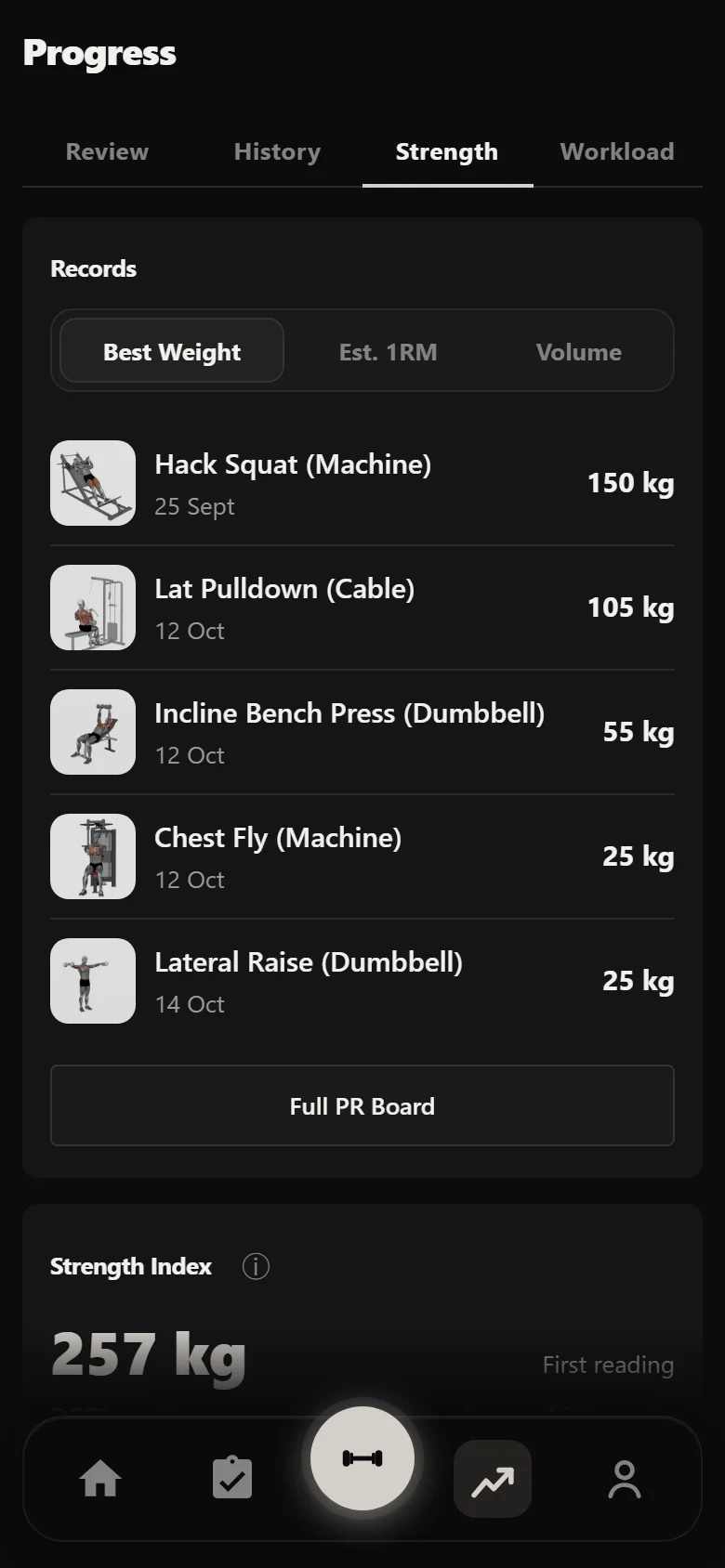
The Strength tab lists the records the block set by best weight: the hack squat at 150 kg, the pulldown at 105 kg, the incline dumbbells at 55 kg, the machine fly and the lateral raise at 25 kg.
Six weeks, seen from the outside
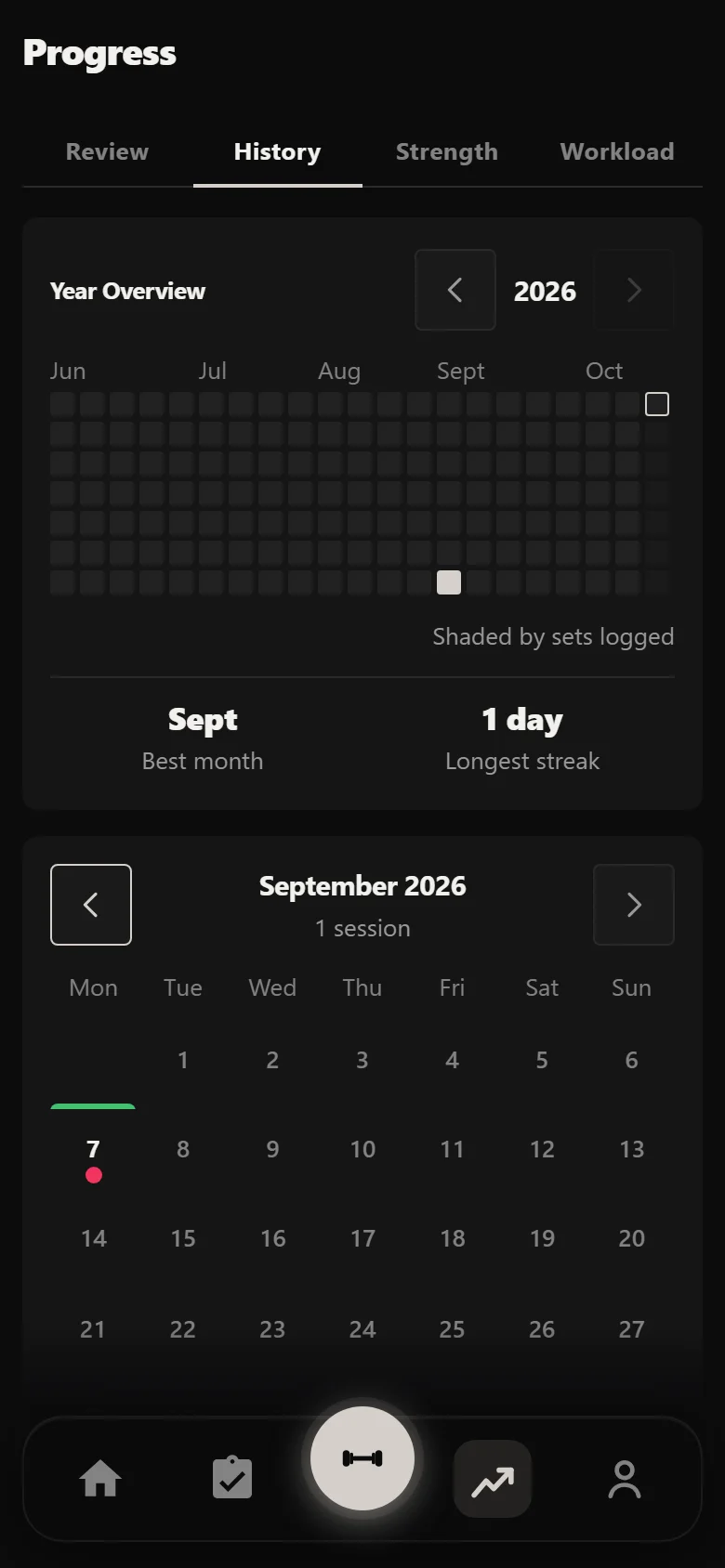
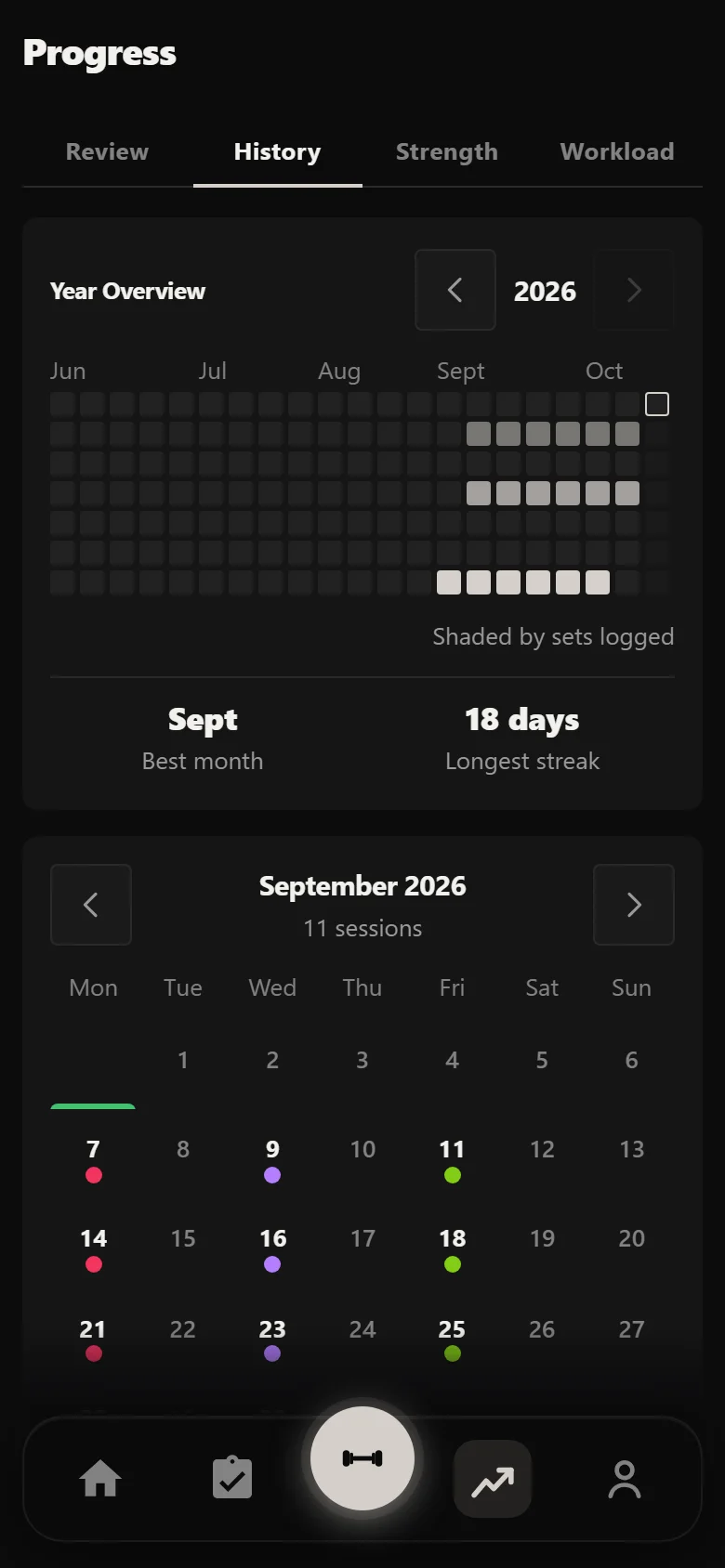
The History calendar holds all eighteen sessions, three a week, each of them a wall of eights. Read the totals rather than the weights and this is one of the heaviest blocks in the catalogue.
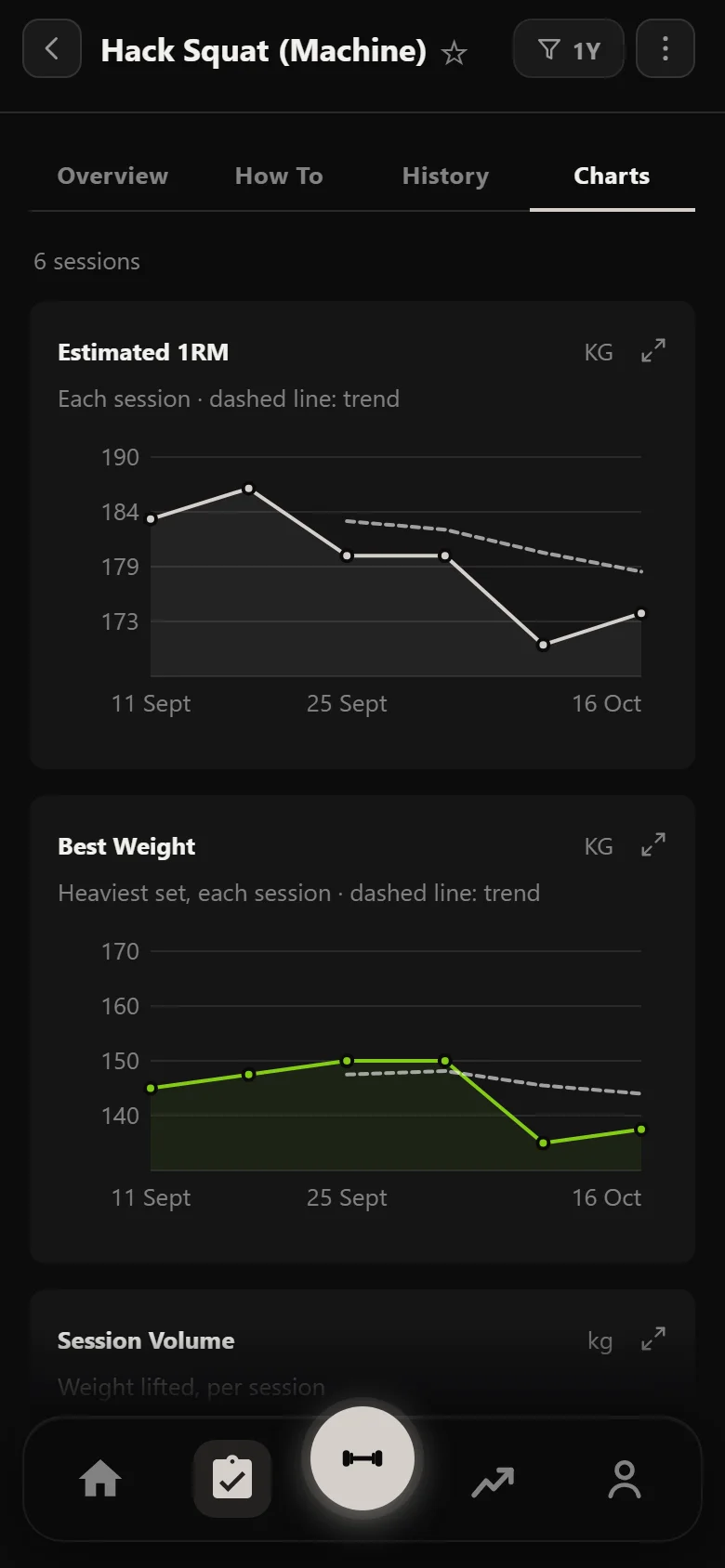
The hack squat's estimated one-rep max chart is the clearest picture of what happened: it climbs for two weeks, flattens through the stall, drops at the cut, and turns upward again in the final week. That shape is the program working, not the lifter failing, and it is worth recognising the next time you see it on one of your own lifts.
The payoff: the same lift, six weeks apart
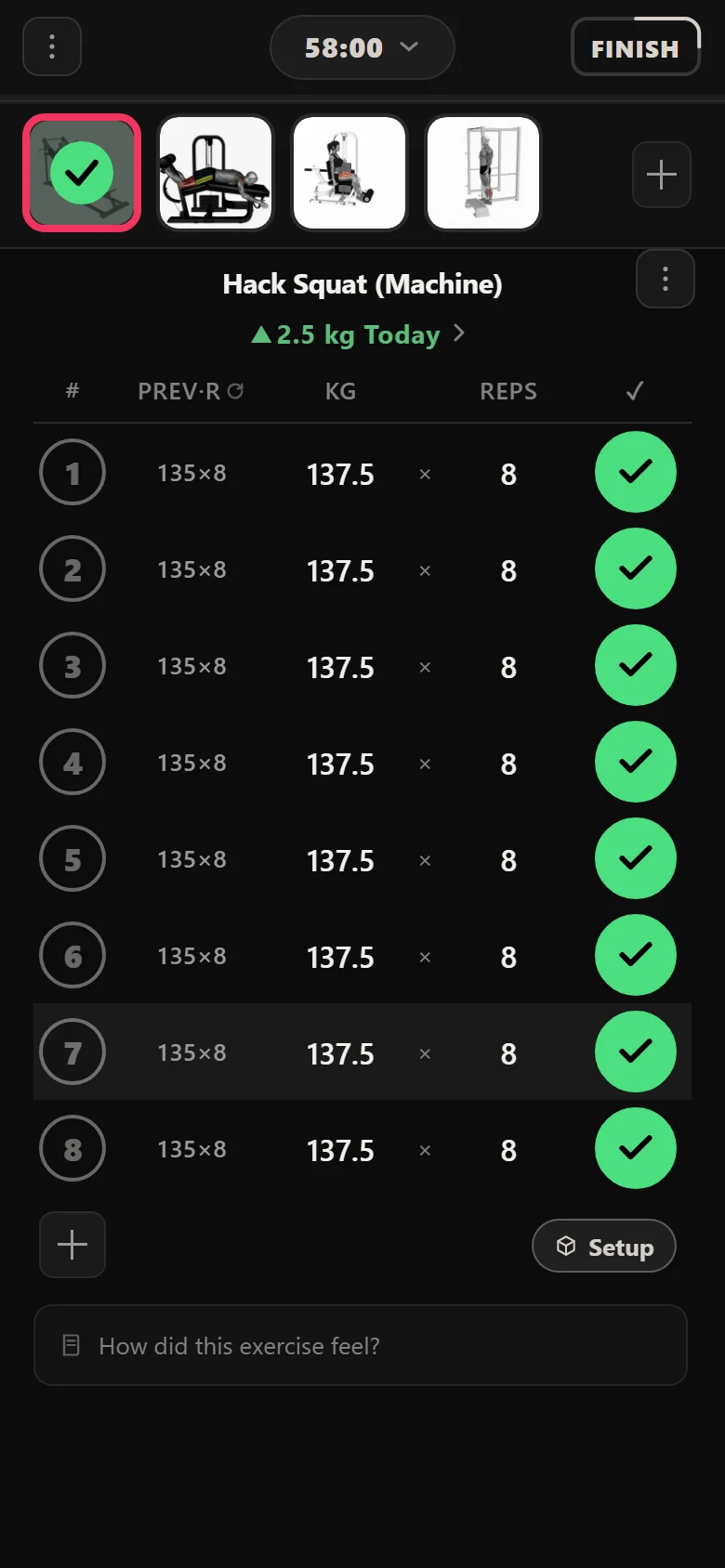
Two screenshots of the same lift on the same screen: week one and the last session of the block. The bar is lighter in the second one, and that is the honest result. The program found the weight this lift can actually do eight sets of eight with, and it was below where the block started.
Peaked at 150 kg, missed it twice, got cut to 135 kg and rebuilt to 137.5 kg with 140 kg prescribed next.
Common questions
What is Vince Gironda's 8×8?
The Iron Guru's density method: eight sets of eight reps on every exercise with only fifteen to thirty seconds of rest between them. Gironda used it to build the dense, classic-physique look of the golden era. Durata runs it as three sessions a week (chest and back, shoulders and arms, legs) with four exercises in each.
What weight should I start with?
Around sixty to seventy percent of what you would normally use for eight reps. The short rest is what makes that number correct, and this run is a good illustration of the cost of guessing high: the hack squat opened at 145 kg, stalled, and was cut to 135 kg by the rule before it started climbing again.
When does the weight go up?
When all eight sets reach eight reps. Fall short on any set and the session counts as a miss, the weight holds, and two misses at the same weight trigger an automatic ten percent cut. The chip on the lift shows which of those is about to happen while you are still training.
Why did the app take weight off my lift?
Because two consecutive sessions came up short at that weight. It is not a punishment; it is the only way back onto a weight the sets can actually support. Tap the rule chip and the app shows its evidence: the sessions it counted, the rule it applied, and the number it is about to move you to.
Is thirty seconds of rest really necessary?
It is the program. Take ninety seconds instead and you have an ordinary eight-set workout that happens to be light. The short rest is what turns a manageable weight into a hard session, and it is why 8×8 produces a session total like 12160 kg without anything heavy on the bar.
Is Durata free?
Yes. Durata is free to use, with the full program catalogue, automatic progression, rest timers and PR tracking. Everything in this walkthrough is in the app.
Put it into practice
Durata is free to use — 50 proven programs, automatic progression, rest timers and PR tracking, all on your phone.