


DC Training in Durata: the one lift Dante would not rest-pause
DoggCrapp is known for one thing: the rest-pause set. Take the weight to failure, breathe fifteen times, go again, breathe, go again, and that cluster is the entire working volume for that movement. One set per exercise, five exercises, two workouts alternating so each muscle comes round roughly every fifth day.
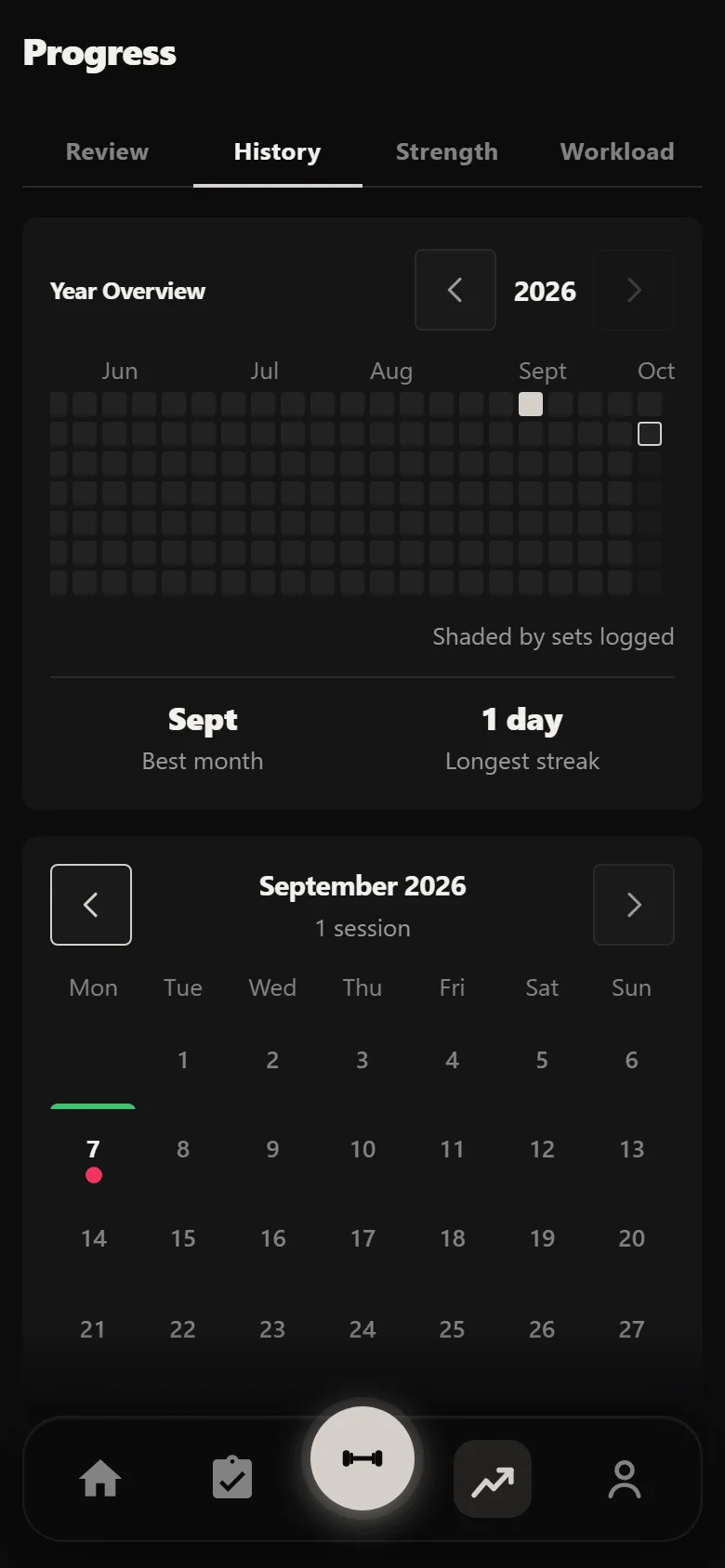
Dante Trudel made one exception, and it is the interesting part. Quads do not get rest-paused. They get a heavy straight set and then a twenty-rep widowmaker, two sets in two different rep ranges. This drive ran twelve sessions across four weeks, and the exception is the only lift in the program that finished exactly where it started.
Finding the program
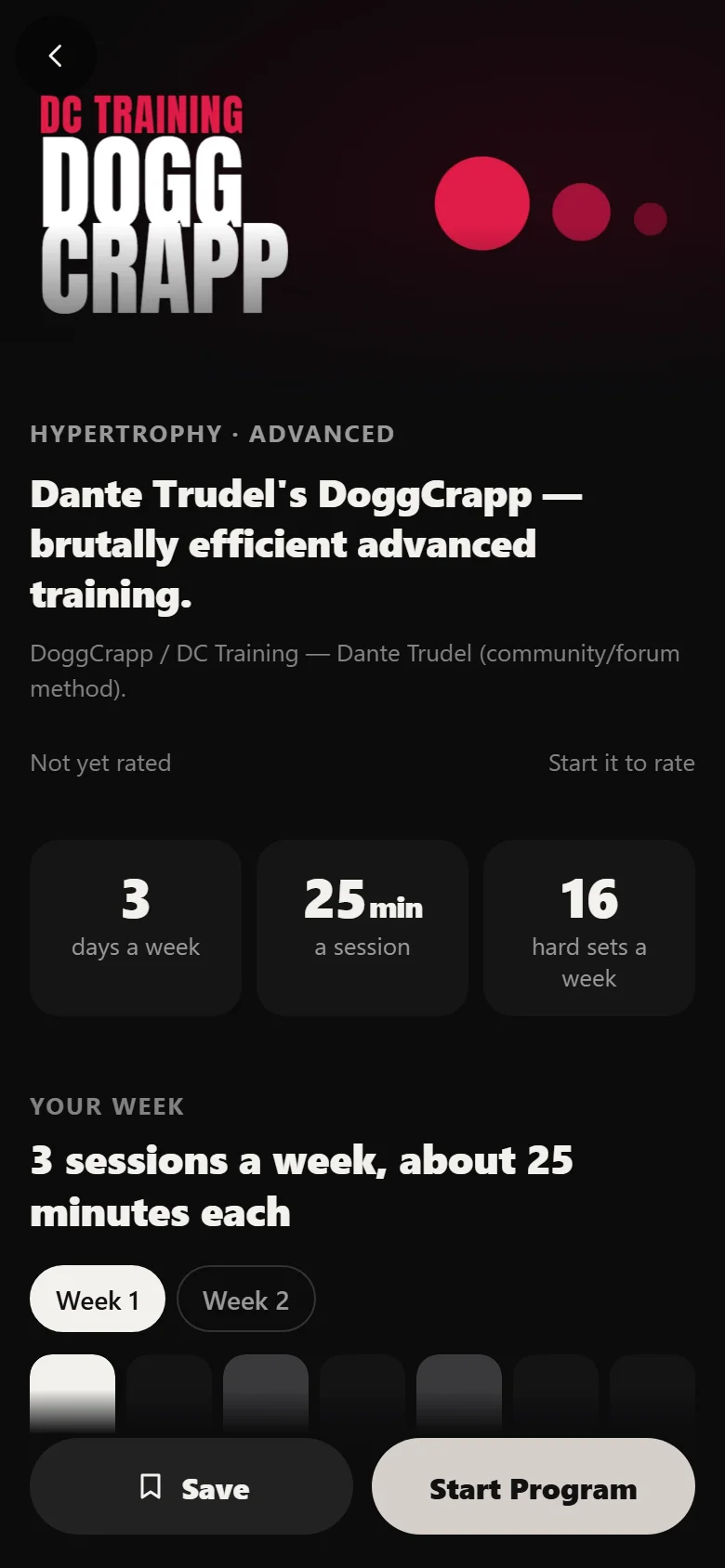
In Discover, DoggCrapp (DC Training) sits on the Hypertrophy shelf, marked Advanced, at three days a week. Search finds it by name, or Filter narrows the shelves by level and days a week. Tap the cover for a quick look, then View Program for the full page.
The Advanced mark means something here. This is a method for someone who already knows what failure feels like and can tell it apart from discomfort.
The program page shows the shape before you commit: three days a week, two workouts rotating, and a session list short enough to read in one screen.
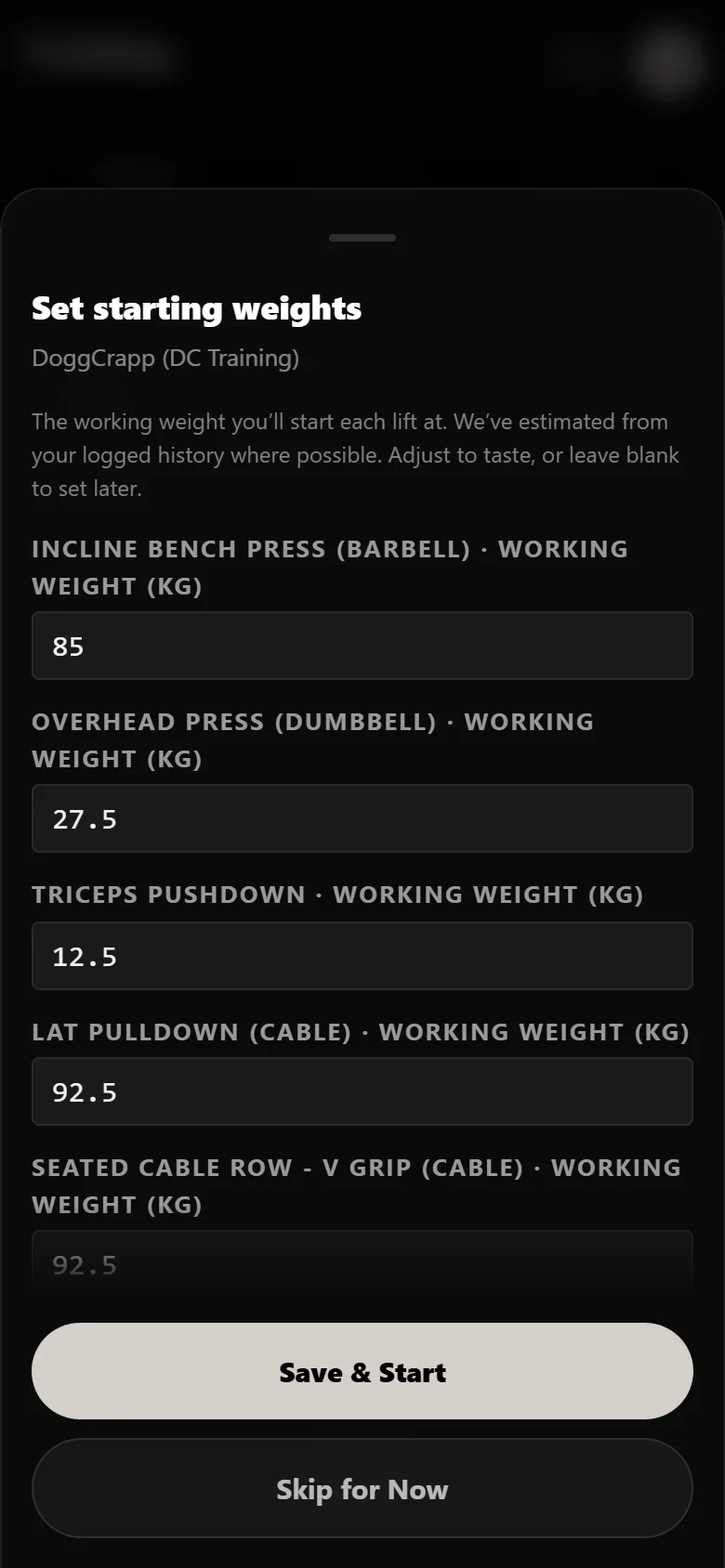
No training maxes, no percentages, no weeks
The setup sheet asks for a working weight per lift and nothing else. Incline bench 85 kg, overhead press 27.5 kg, pushdown 12.5 kg, pulldown 92.5 kg. There is no training max to enter, no percentage table, and no week number that decides what you lift.
That is not a simplification the app made. It is the program. DC has no prescribed load anywhere in it. The only instruction is to beat the last entry in your logbook, which is why Dante's write-up says a training log is mandatory rather than recommended. Without the previous number there is no prescription at all.
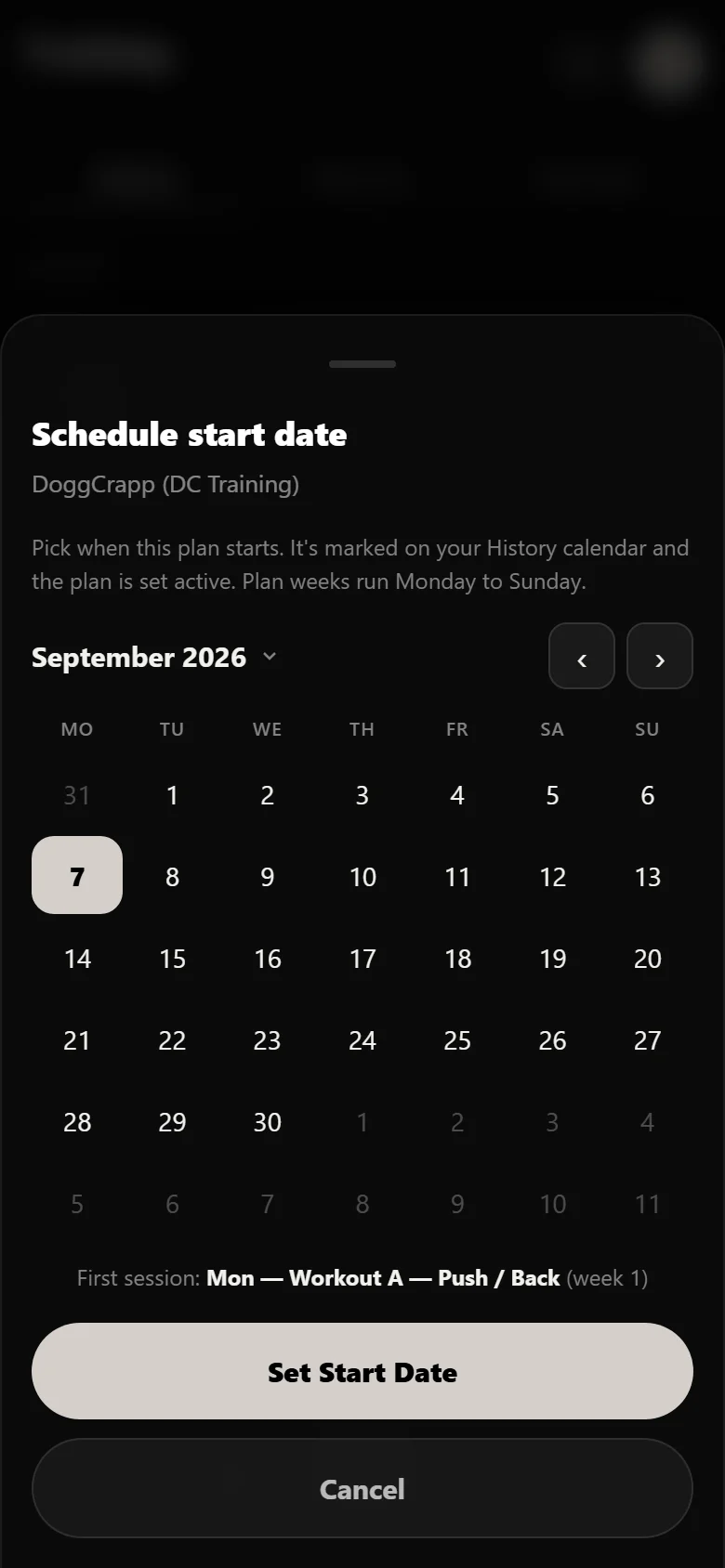
It means the app is doing something slightly different from a percentage block. It is not calculating your session, it is remembering it, and then holding you to it. A start date lays the rotation out, and the first session is the only one you will ever enter a weight for by hand.
One set, and what the app does with it
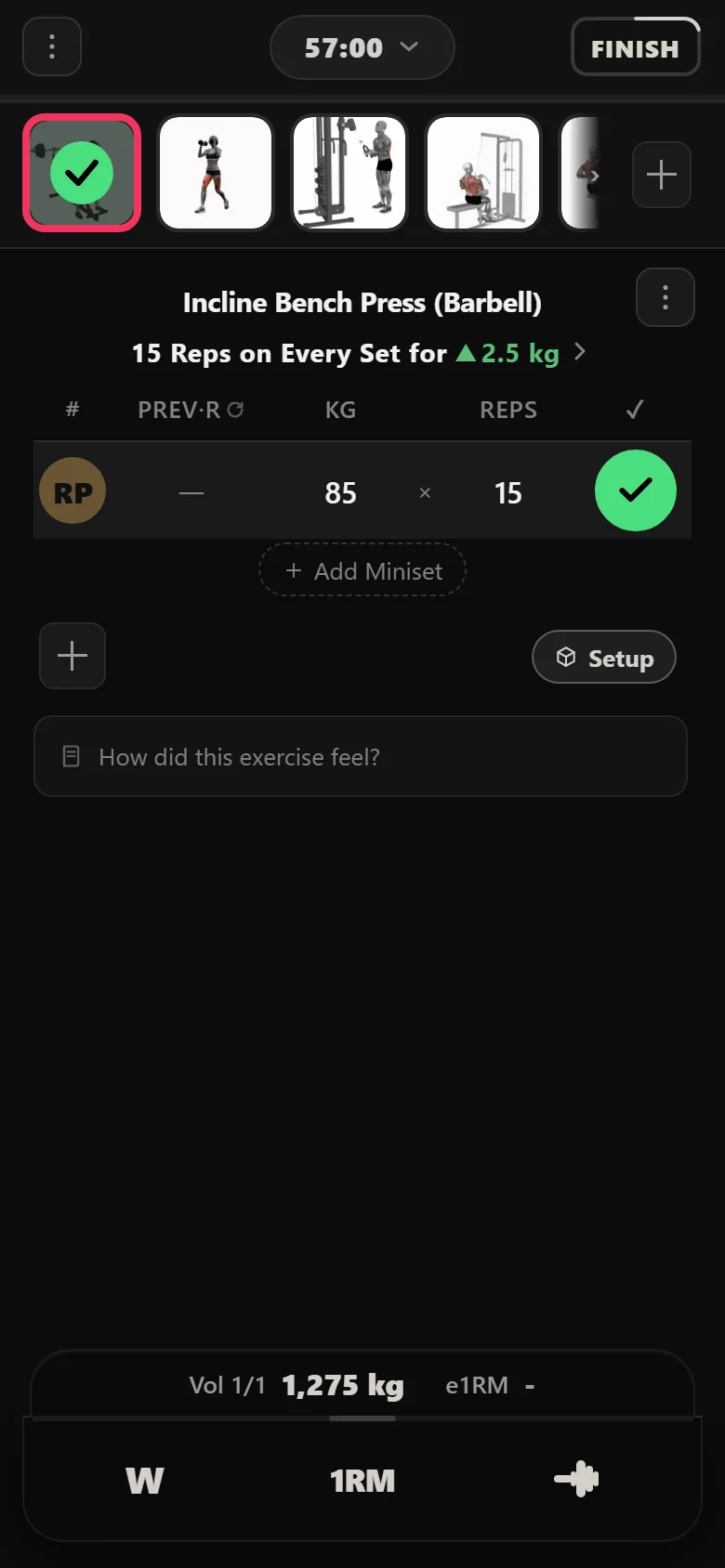
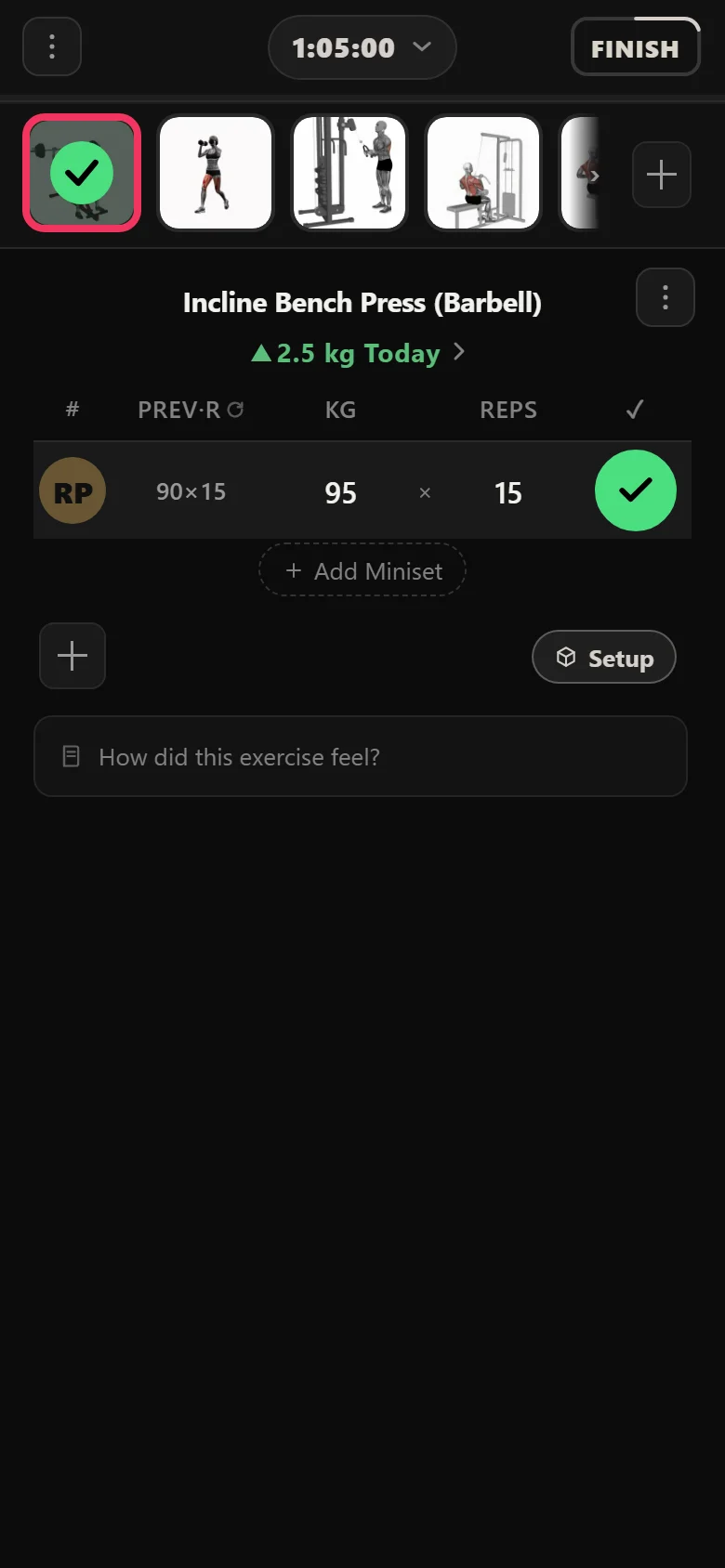
The incline bench opens at 85 kg with a single rest-pause set carrying a target of eleven to fifteen reps. The rule chip sits under the lift while you train, and it says what happens next: hit the target and the app adds 2.5 kg to the next appearance.
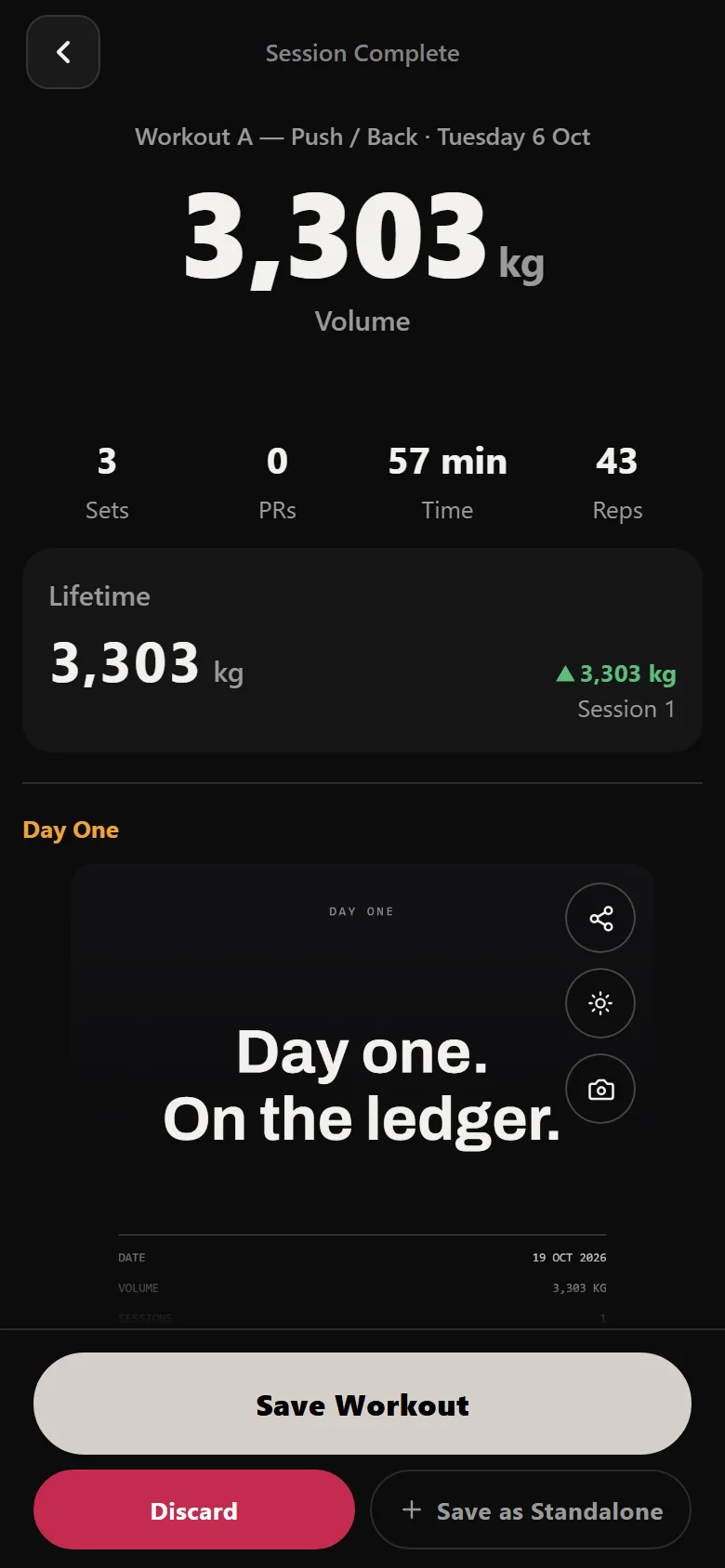
The row in this log reads three sets because warm-ups were added with the warm-up calculator, which marks them as warm-ups. Only one of those three is the work, and only that one is judged. That matters on a program built from single sets, because a warm-up counted as a working set would turn every session into a miss.
The session summary tallies the whole thing on the way out: 3303 kg moved, 43 reps, and the per-lift totals underneath. On most programs that number is a curiosity. On DC, where the session is over quickly, it is the clearest evidence that anything happened.
Four sessions of the easiest progression there is
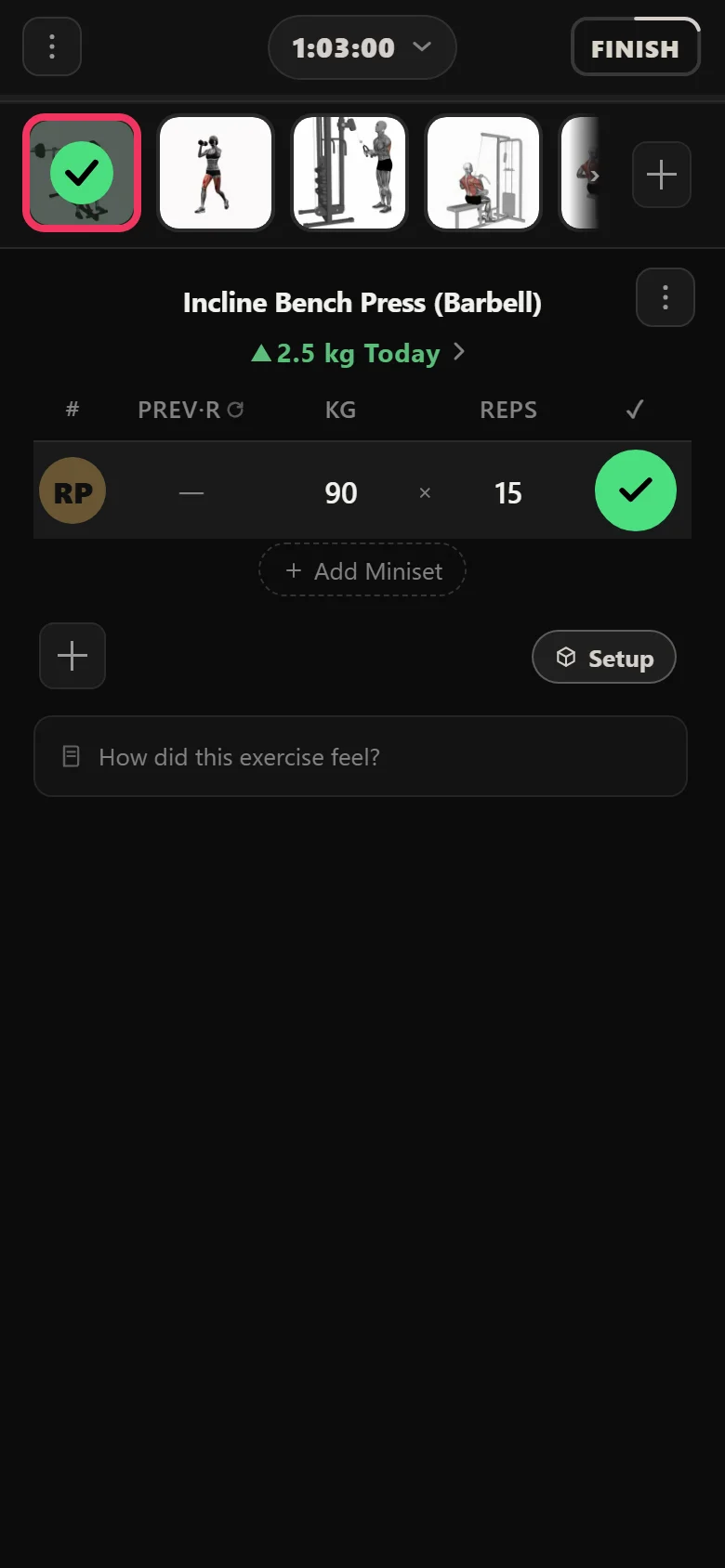
The first stretch of a DC blast is the part people quote at each other. Turn up, beat the logbook, and the weight goes up again. The incline bench went 85, 87.5, 90 across its first three appearances without hesitating.
The frequency is what makes that sustainable. Each muscle comes round about every fifth day rather than every third, so a lift taken to genuine failure has four days before anything asks it a question again. On a program where every set is all-out, that gap is not padding, it is the reason the method survives contact with an advanced lifter.
By session five the bar is at 90 kg and the number is already on screen when you open the app. Nothing was decided by you in between.
The session that does not go up
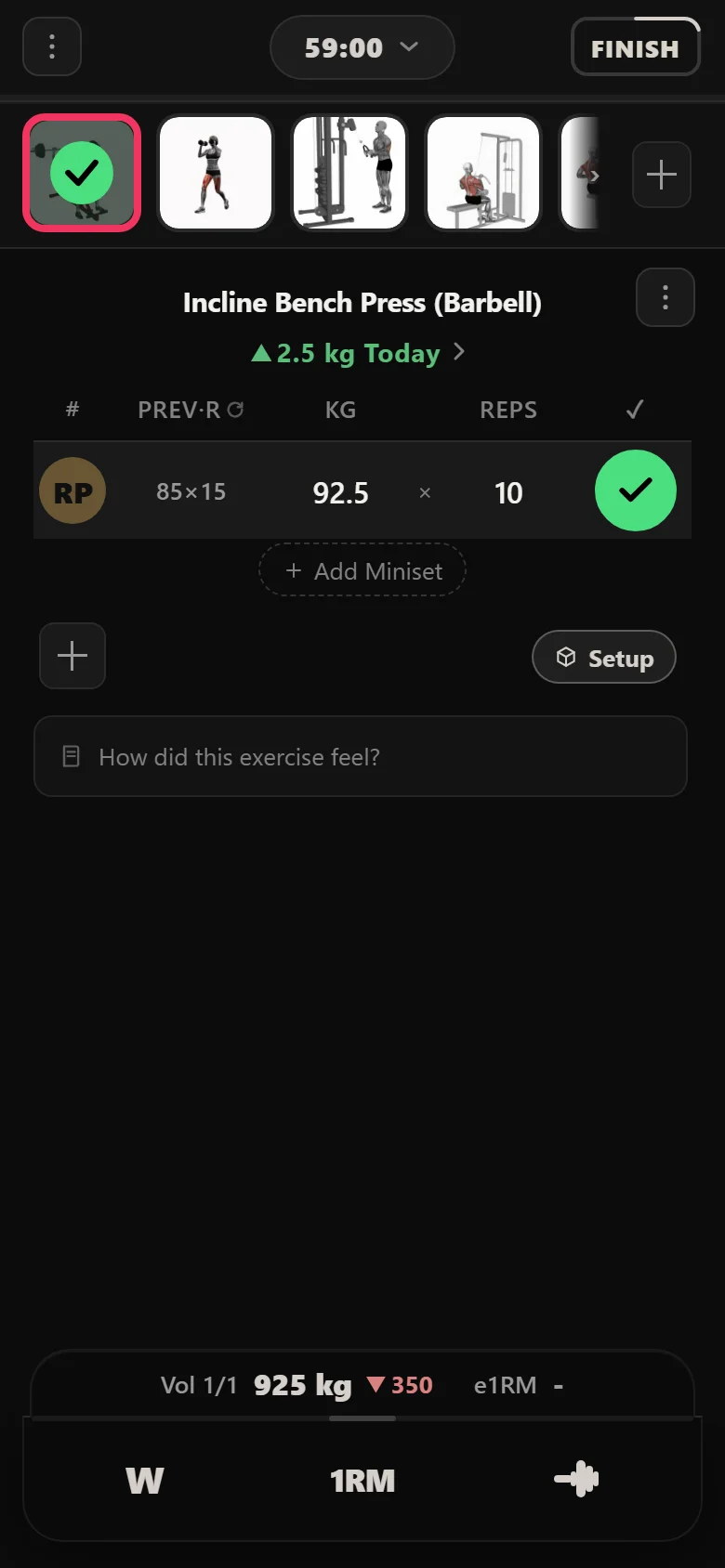
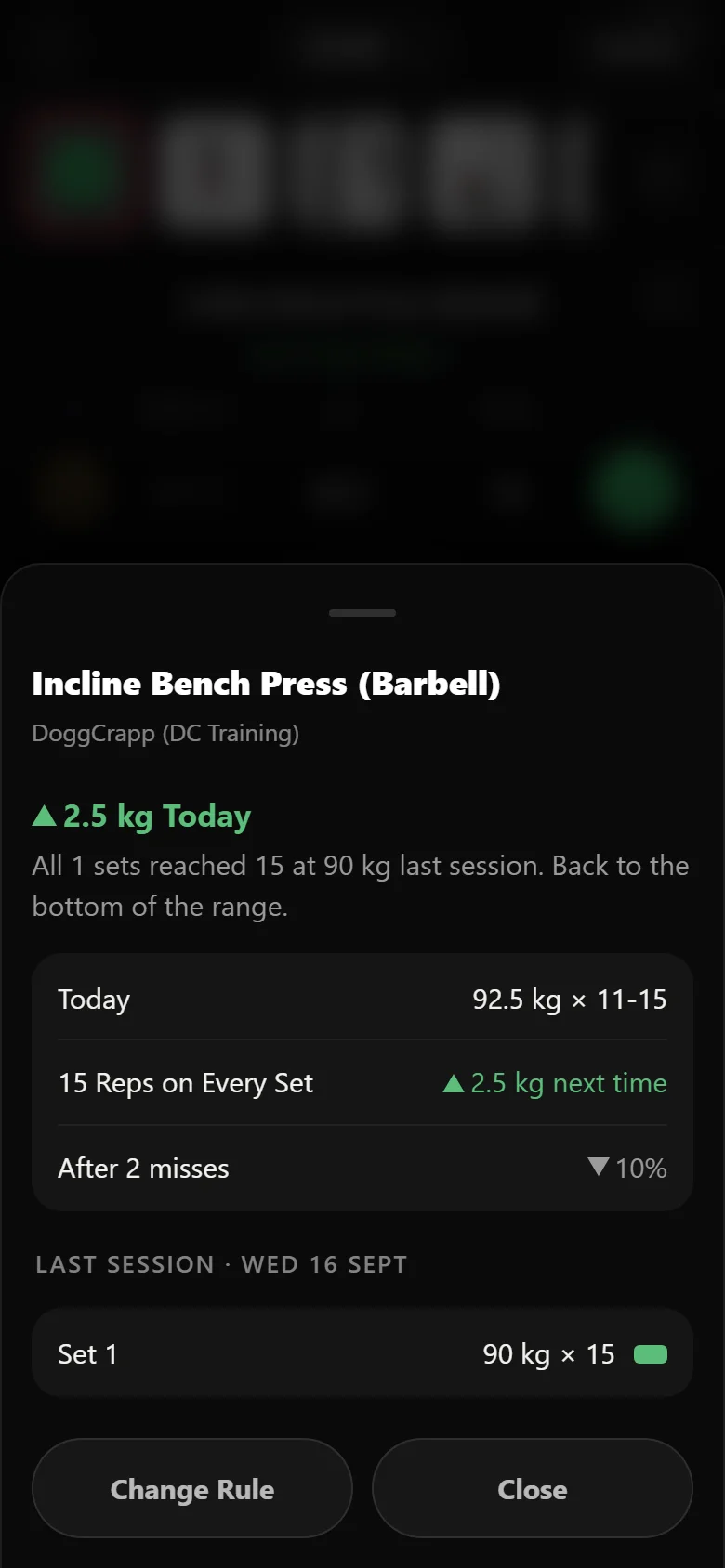
92.5 kg is where the run stopped. The cluster produced 10 reps against a target of eleven, which is a miss, and a miss on the only working set is a miss on the session. The weight was held rather than advanced.
The rule chip is a button, and this is the best thing to do with it. Tap it and the app lays out its own case: the evidence from this exact lift's history, what it is being judged against, and what happens next. Opened on this session, it shows why the bar is at 92.5 kg at all: the single set reached 15 at 90 kg last time, so the weight went up 2.5 kg and the reps went back to the bottom of the range. Below that it states the rest of the rule: 15 reps on every set for the next 2.5 kg, and a 10% cut after two misses.
The second one did not land. The next appearance cleared 92.5 kg and the one after that opened at 95 kg. One miss buys a repeat, not a cut, which on a program with no deload weeks built into it is the only recovery mechanism there is.
The strip below is the incline bench across the whole block, with the held session marked.
Incline Bench Press (Barbell) across twelve sessions
- 85S1 Session 1 — start
- 87.5S3 Session 3
- 90S5 Session 5
- 92.5S7 Session 7 — 10 reps of 11
- 92.5S9 Session 9 — held, then cleared
- 95S11 Session 11
The other direction: reps first, then weight
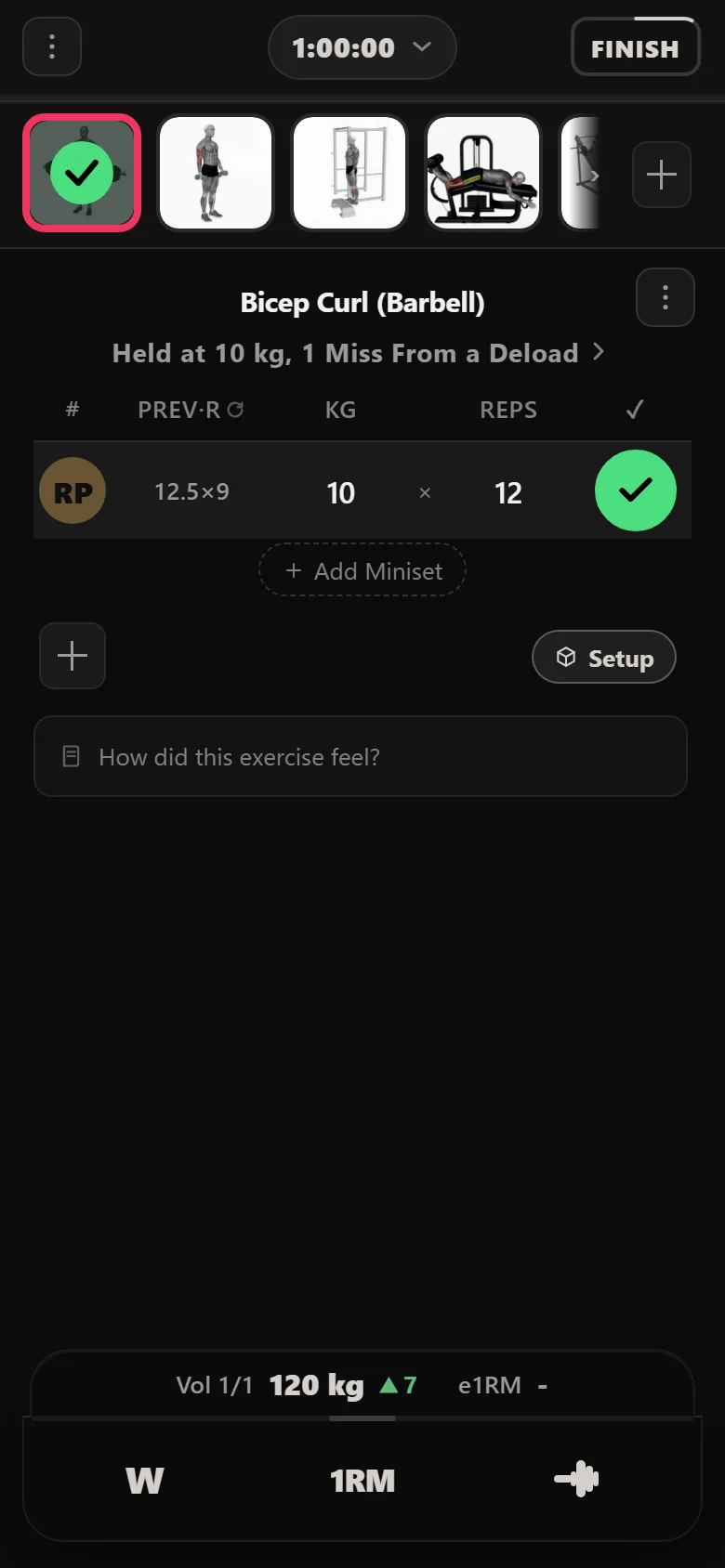
Not every lift climbs by adding load. The accessories run double progression, which moves the rep count before it moves the bar: work up through the eleven to fifteen range session by session, and once every set reaches the top of it, the weight goes up 2.5 kg and the reps reset to the bottom.
The chip spells that out rather than making you remember it, which on a program with ten lifts running ten separate arguments is the difference between following DC and administering it.
It also explains why the smaller movements look stuck for weeks and then jump. A lift sitting at 12.5 kg for four sessions is not stalled, it is climbing through reps where the weight column cannot show it.
The lift that never moved
Nine of the ten lifts in this block ended somewhere other than where they started. The incline bench went from 85 kg to 97.5 kg, the pulldown from 92.5 kg to 97.5 kg, the overhead press from 27.5 kg to 32.5 kg, the hammer curl from 12.5 kg to 17.5 kg, the leg curl from 12.5 kg to 15 kg. The pushdown, the cable row and the calf raise held at 12.5 kg throughout, climbing through reps rather than load. The barbell curl went backwards, finishing at 7.5 kg after its misses accumulated.
The hack squat finished at 145 kg, which is precisely where it started, and it is the one result in the block with a structural explanation rather than a training one.
The hack squat is the lift DC does not rest-pause. Dante's reasoning is that taking quads to that kind of failure is not a debt anyone repays inside five days, so the quad slot gets a heavy straight set in a four to eight range and then a twenty-rep widowmaker instead. Two sets, two different rep ranges, one rule sitting over both. That rule only advances when both of them top out in the same session, and across four weeks that did not happen once.
This is worth knowing before you run it rather than after. The quad slot is going to look stuck for longer than everything else, and on most sessions it will be one of the two sets holding it back, not both. If you want it to move, the honest reading is that you have to earn the top of the four to eight range and survive the widowmaker on the same day, which is a harder ask than any single rest-pause set in the program.
What four weeks of single sets adds up to
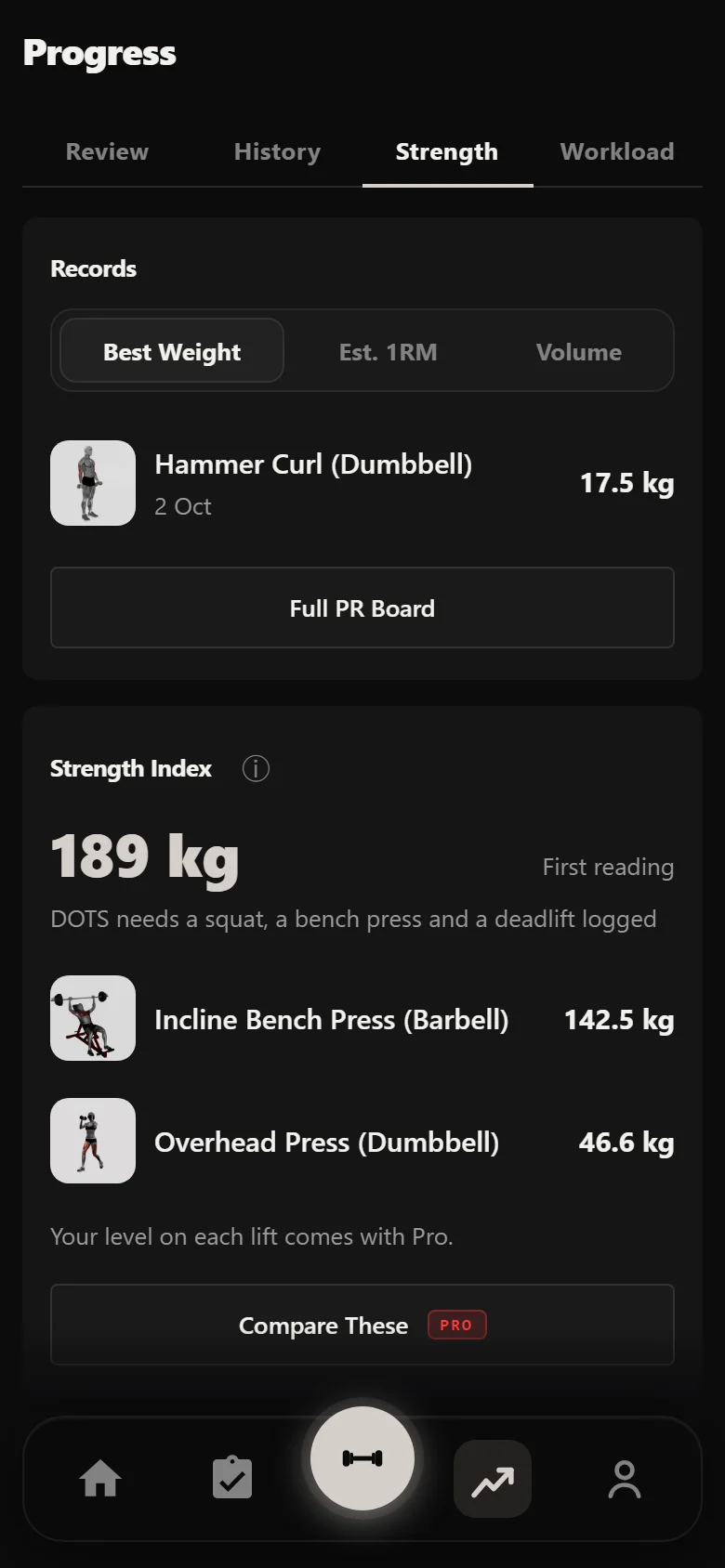
The Strength tab adds the presses up into one Strength Index: 189 kg on its first reading, made of a 142.5 kg estimated max on the incline bench and 46.6 kg on the dumbbell overhead press. It says what it is missing, too: the full DOTS score needs a squat, a bench press and a deadlift logged, and DC's quad slot is a hack squat.
The estimate chart for the incline bench is the one that tells the story of the block properly. It climbs, flattens through the stall, and then climbs past where it stopped, which is a shape that looks like nothing much on any single session and like real progress across twelve.
The volume total for the block sits well below what a five-day split would produce, and that is the trade DC is making: fewer sets, taken further, with more days between them. Whether the trade is right for you is not something four weeks of anybody else's data can answer, but the block will tell you inside two rotations, because the misses arrive early and they arrive honestly.
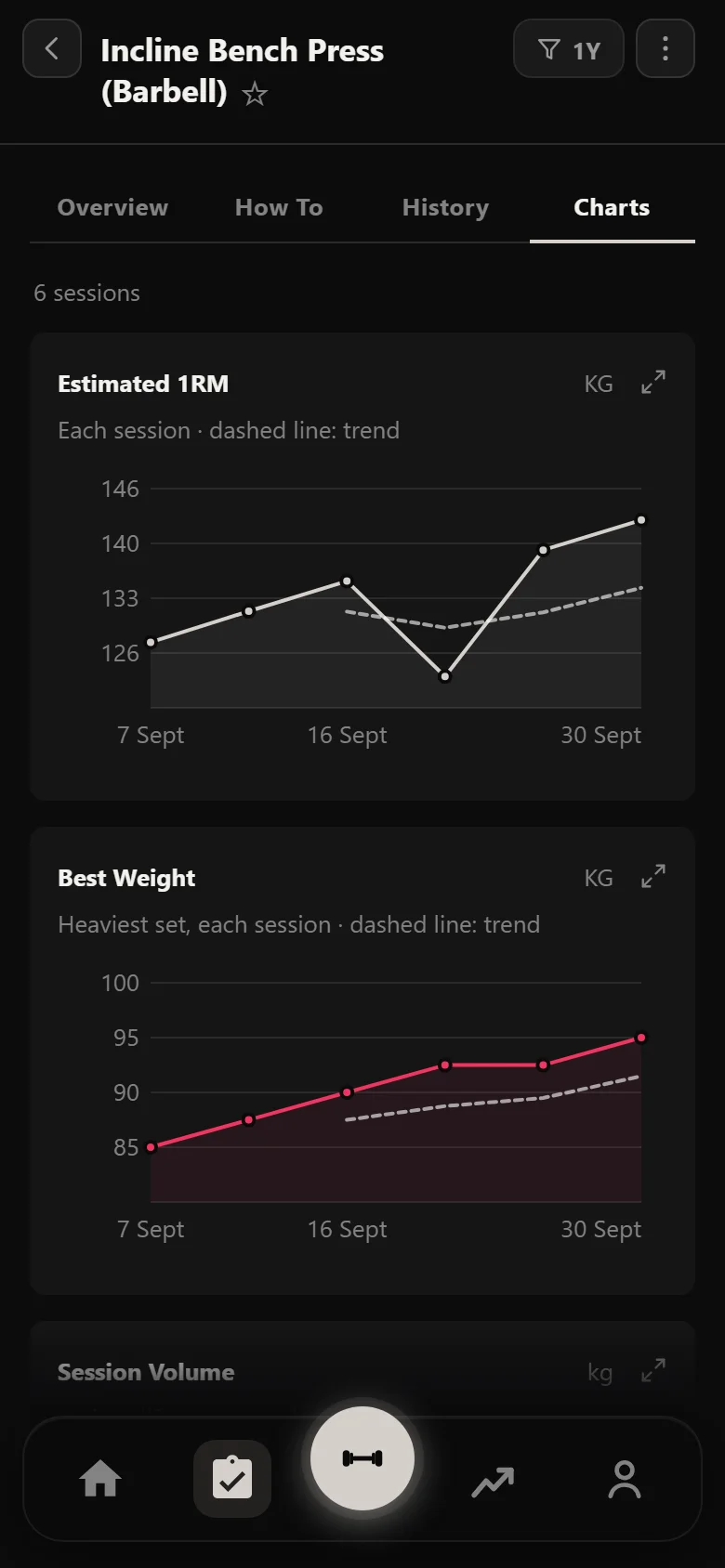
The payoff: session one against session eleven
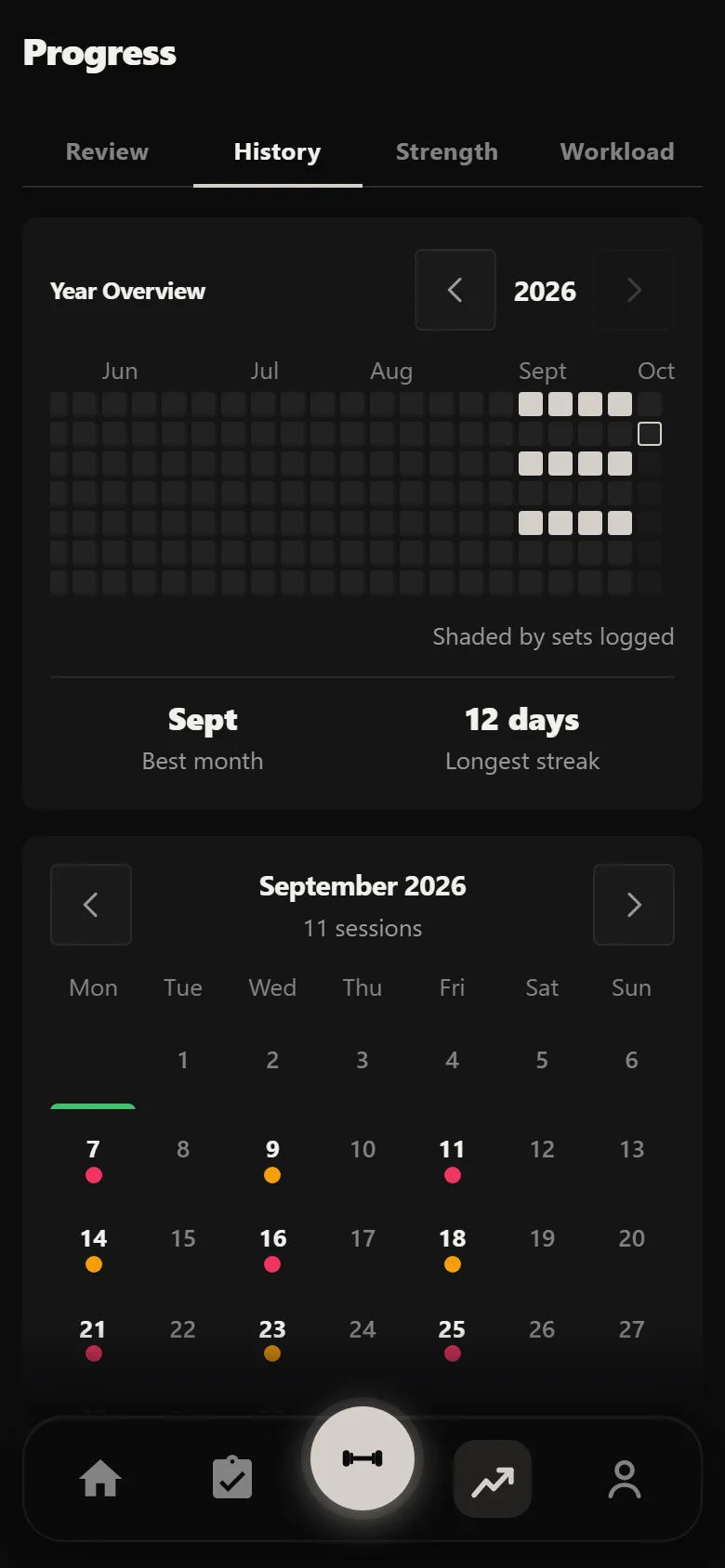
The same lift, the same single set, four weeks apart. Nothing in between was chosen by hand: every step came out of the reps that got logged, and the one session that did not earn its step did not get one.
One miss along the way, held rather than cut, and the block finished above where the stall happened.
Common questions
What is DoggCrapp (DC Training)?
Dante Trudel's advanced hypertrophy method. One all-out rest-pause set per movement, five movements a session, three sessions a week across two rotating workouts, so each muscle comes round roughly every fifth day. Every muscle is followed by a deep loaded stretch held for a minute or more. You run it as a six to eight week blast, then a lighter cruise of a week or two before the next one.
What is a rest-pause set?
One weight, taken to failure, then about fifteen deep breaths, then more reps to failure, then another rest and a third go. The three bursts together count as one set and are logged as one set. It is the reason a DC session has so few entries in it and still leaves you sitting down afterwards.
Why does the hack squat never move?
Because it is the one lift in the program that is not rest-paused. Quads get a heavy straight set in a four to eight range plus a twenty-rep widowmaker, and the rule over that pair only advances when both sets top out in the same session. Across this four-week drive that never happened, and the weight sat at 145 kg from first session to last. It is the program working as designed, not the app failing to notice.
Do I need training maxes for DC?
No. The setup sheet asks for a working weight per lift and that is the last number you enter by hand. There are no percentages in DoggCrapp, which is exactly why the logbook is not optional: your previous session is the entire prescription for your next one.
What happens when I miss a target?
The weight is held rather than advanced, and the rule chip shows you the count. A second miss at the same weight cuts it 10% and you rebuild. In this run the incline bench missed once at 92.5 kg, held, cleared it next time, and stepped up to 95 kg.
Is Durata free?
Yes. Durata is free to use, with the full program catalogue, rest timers, rule chips and PR tracking. Everything in this walkthrough is in the app.
Put it into practice
Durata is free to use — 50 proven programs, automatic progression, rest timers and PR tracking, all on your phone.