


Strong Curves (Beginner) in Durata: the weight waits, the reps climb
Most beginner programs in the catalogue add weight on a schedule. Strong Curves (Beginner) does not. Every rule in it is double progression: the load stays where it is, session after session, and you climb inside the prescribed rep range until every set reaches the top of it. Only then does the weight move, once, and the reps drop back to the bottom.
That makes it an awkward program to follow in a notebook, because most of the sessions look identical on paper. It is a very easy one to follow in an app, because the condition is exact and the app is the thing checking it.
Every weight, rep and estimate below is computed by the real engine on a live twelve-week drive. The walkthrough follows the dumbbell overhead press, which is the only lift Strong Curves (Beginner) prescribes in all twelve weeks.
Starting the program
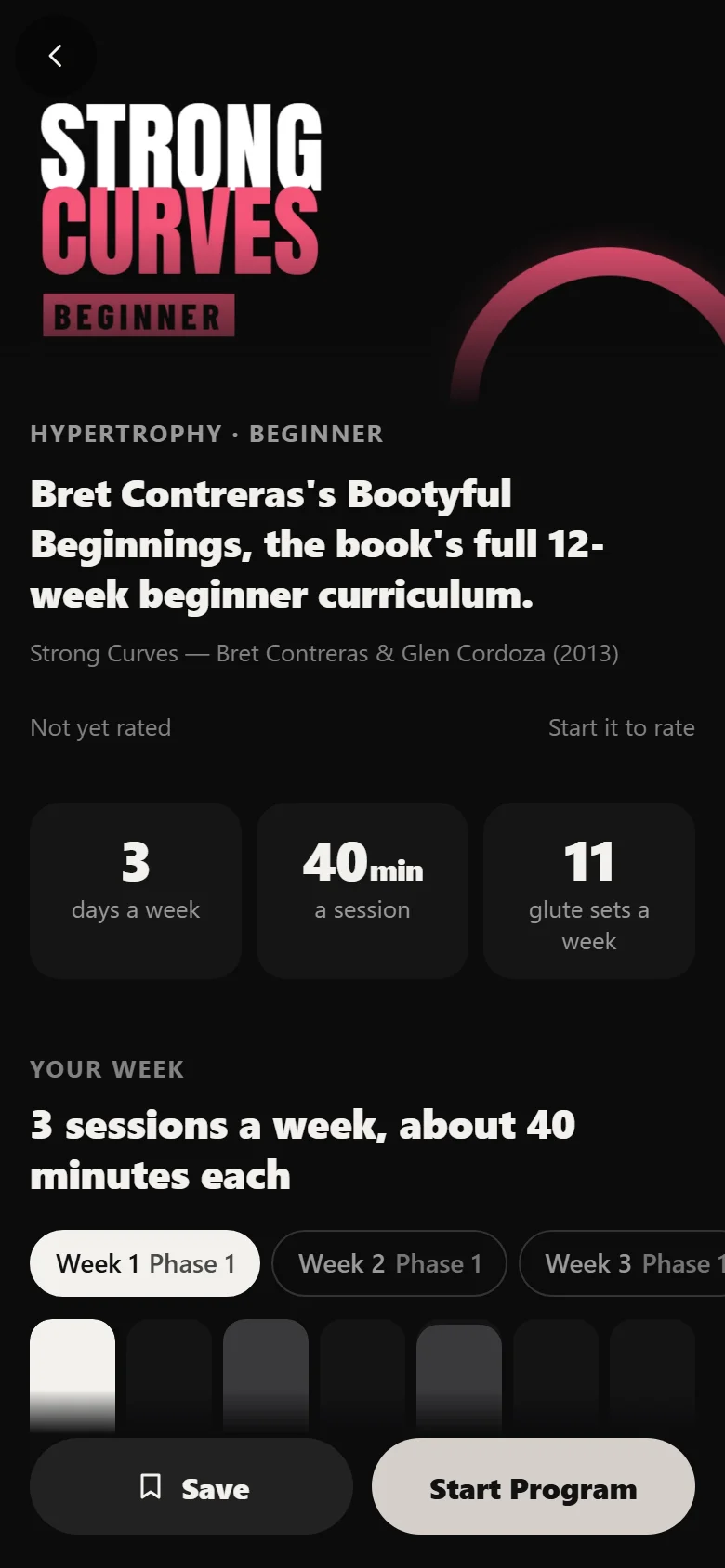
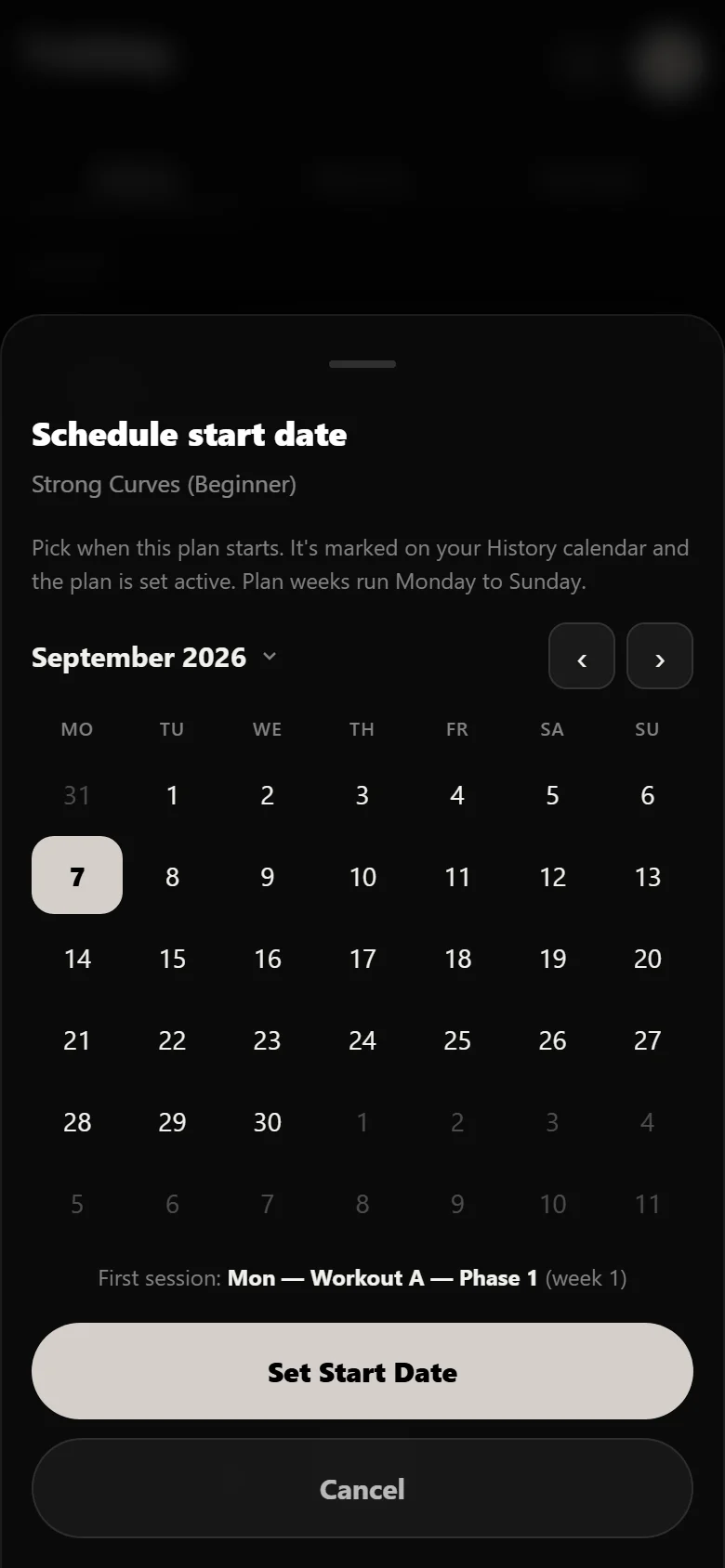
In Discover, Strong Curves (Beginner) sits on the Hypertrophy shelf, marked Beginner, at three days a week. Search finds it by name, or Filter narrows the shelves by level and days a week. Tap the cover for a quick look, then View Program for the full page.
It suits a lifter after hypertrophy, new to structured training, with three days to give it.
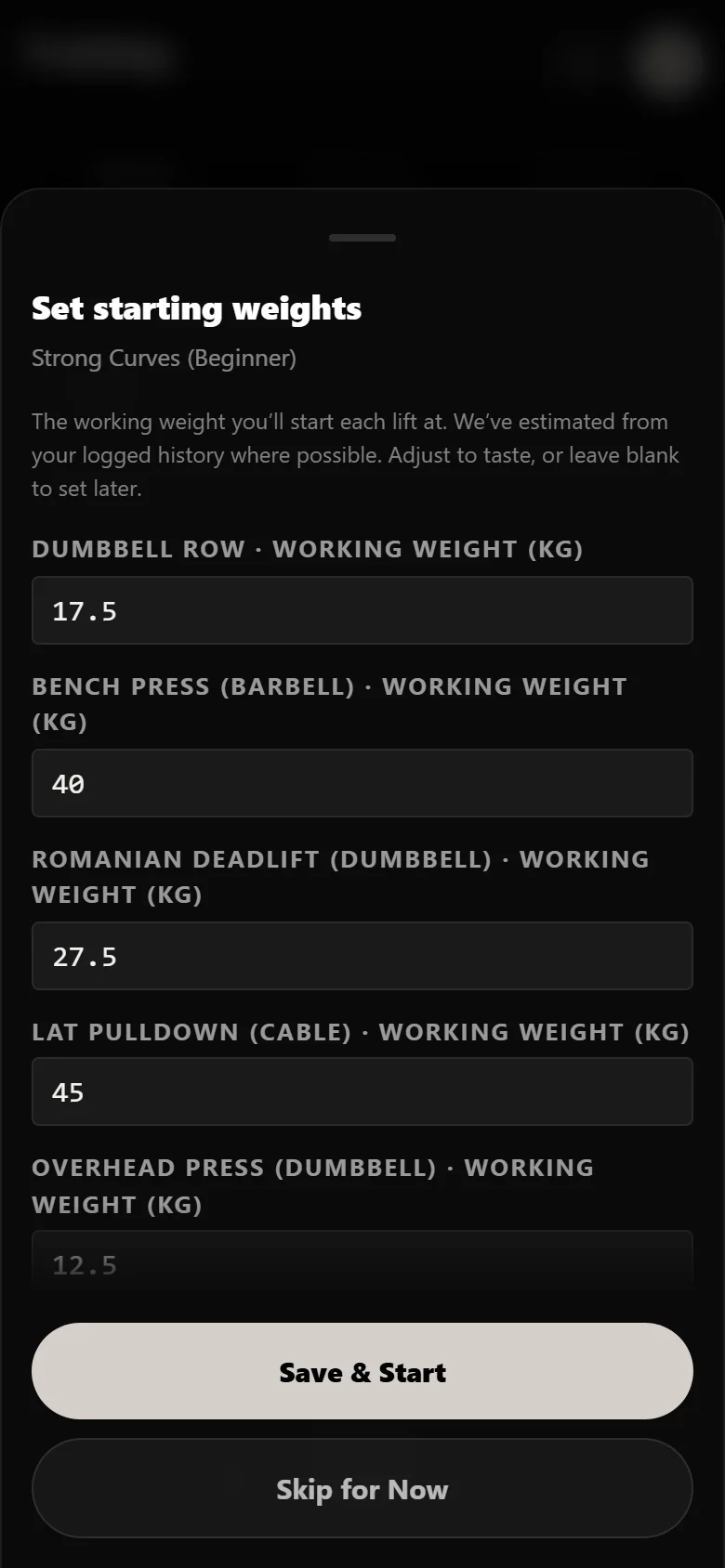
Setup is one screen. There are no training maxes anywhere in this program, so the app asks only what you can currently handle for the day's sets and reps. The overhead press starts at 12.5 kg, which is deliberately conservative: on a rule that waits for a rep ceiling, starting light costs you nothing except the first few sessions.
It is worth knowing what the program is before you start it, because the roster changes underneath you. Strong Curves (Beginner) runs three four-week phases and swaps most of the exercises at each boundary. The barbell hip thrust the program is famous for is not prescribed until week 9. The overhead press is the lift this article follows for the simple reason that it is the only one present from the first session to the last.
The weight that does not move
The first session opens at 12.5 kg for three sets, and the line under the lift states the rule outright: twelve reps on every set earns the next 2.5 kg. Eight reps is the bottom of the range, so the first session sits at the bottom of it too.
The second session opens at 12.5 kg. So does the third, and the fourth, and the fifth. On a linear program that would be a stall worth worrying about. Here it is the rule working exactly as written, and the thing that changes is the rep count: eight, then nine, then ten.
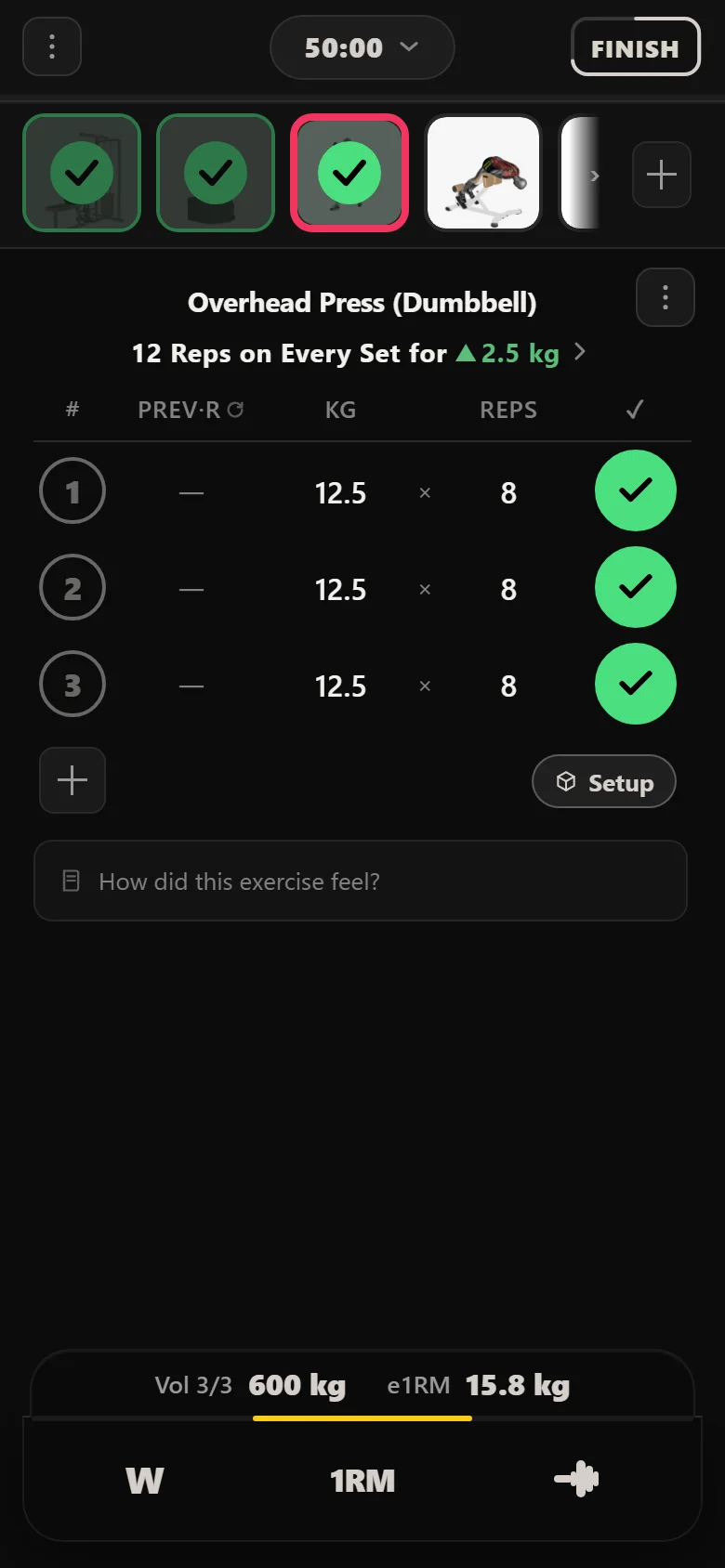
The app scores it that way as well. Session volume moves from 600 kg to 750 kg on the same load, and the estimated one-rep max climbs from 15.8 kg to 16.7 kg, because more reps at the same weight is more work and a better estimate. Nothing about the screen suggests you are standing still.
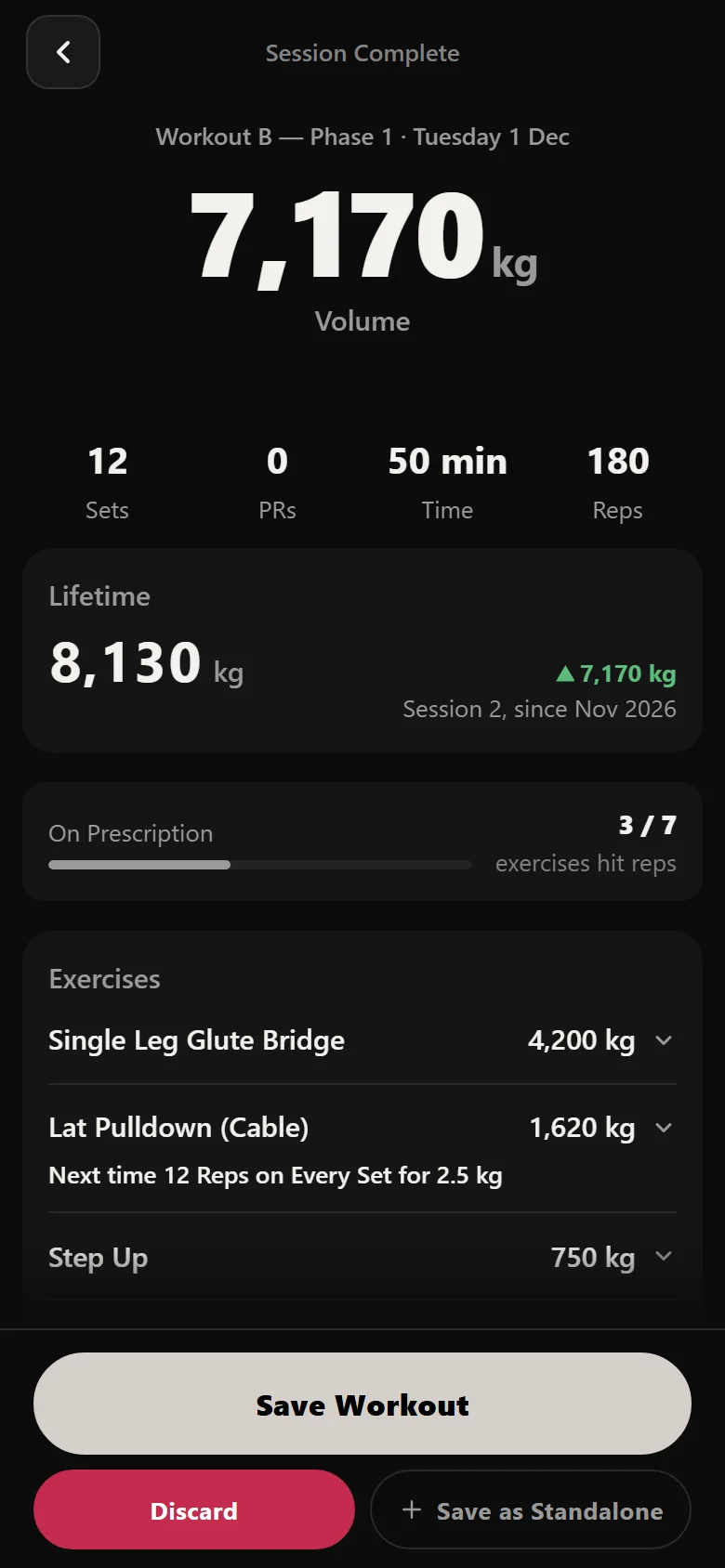
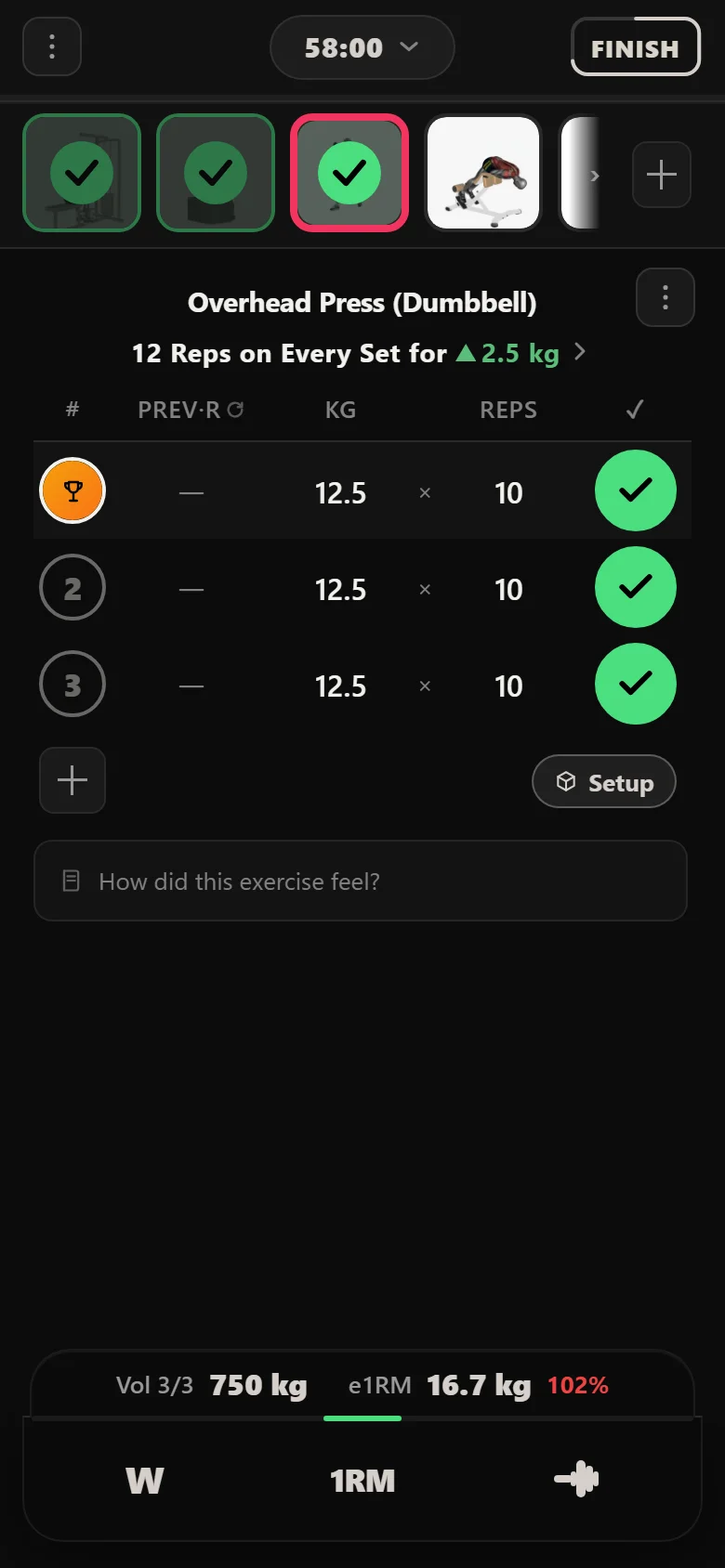
The session that earns it
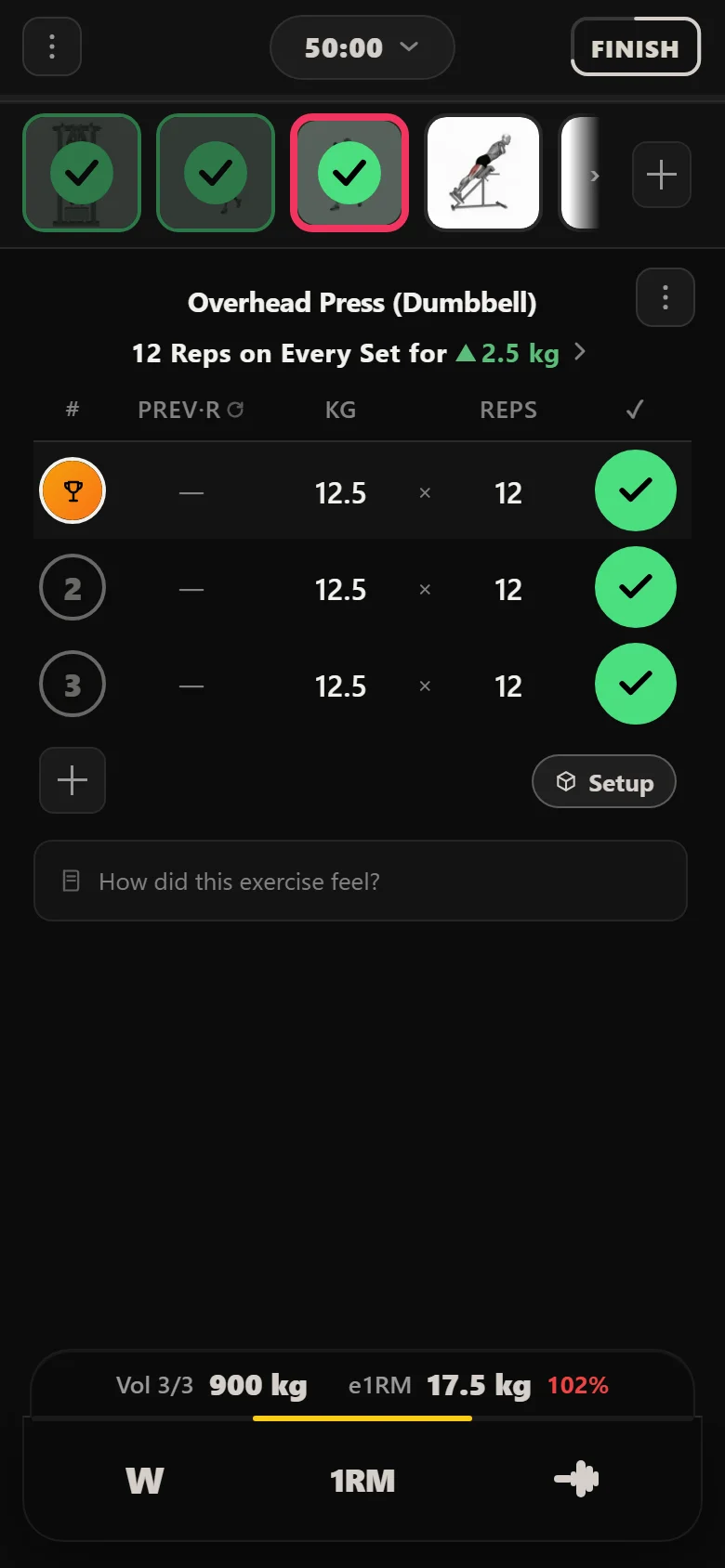
On the fifth session all three sets reach 12, and the condition the rule has been waiting for is met. Session volume is 900 kg, up from 600 kg, at a weight that has not changed since the first day.
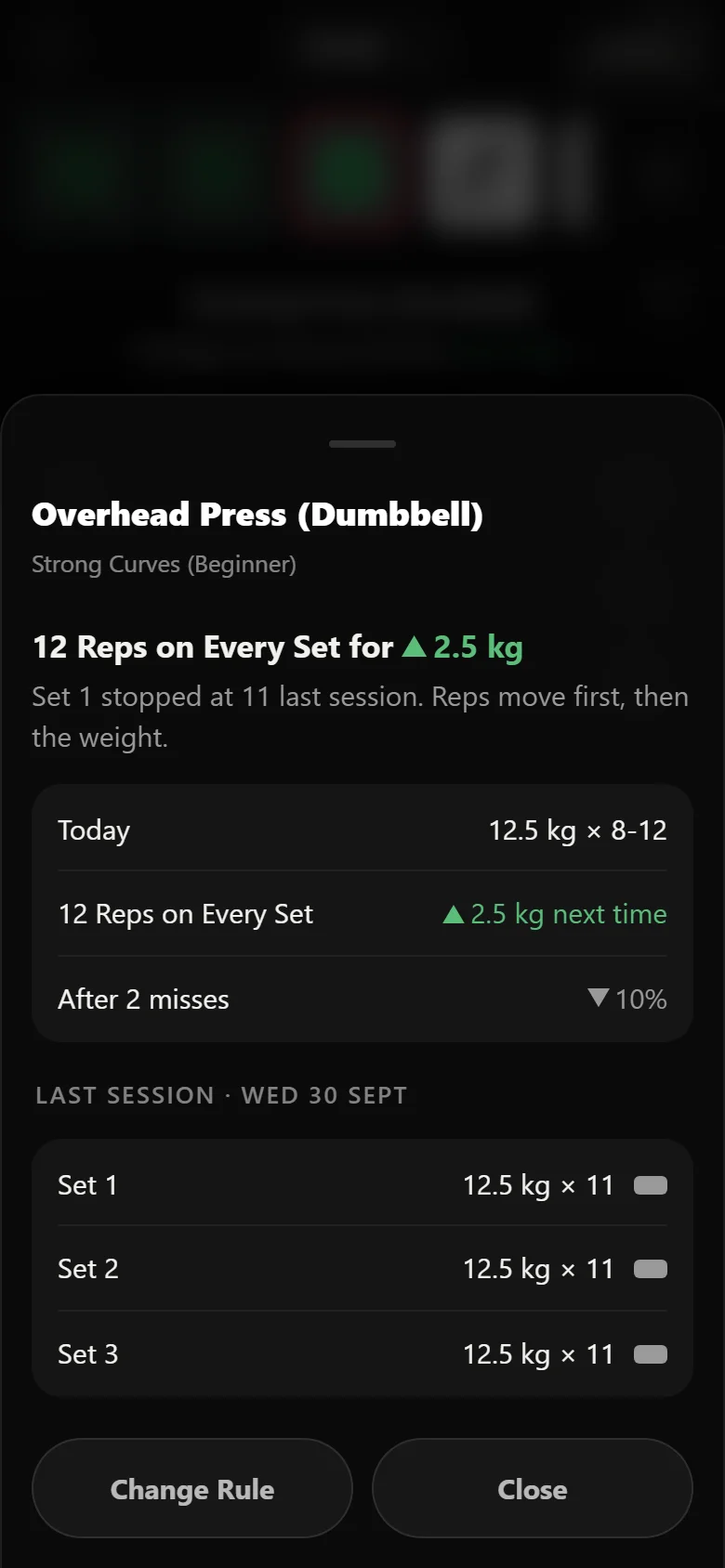
The rule chip is a button, and this is the program where it earns its place. Tapped, it shows both halves of the case at once: the last session's evidence and the law being applied to it. Set 1 stopped at 11 last session, so the weight holds at 12.5 kg. Reach 12 on all three sets and the next session loads 15 kg, back at the bottom of the range. Underneath, the rule card says the same thing in general terms — success means every set reaching the top of the rep range; until then, add reps inside the range and the load waits.
That sheet is the whole program in one screen, and it is the part that is genuinely hard to hold in your head across twelve weeks and three phases of changing exercises.
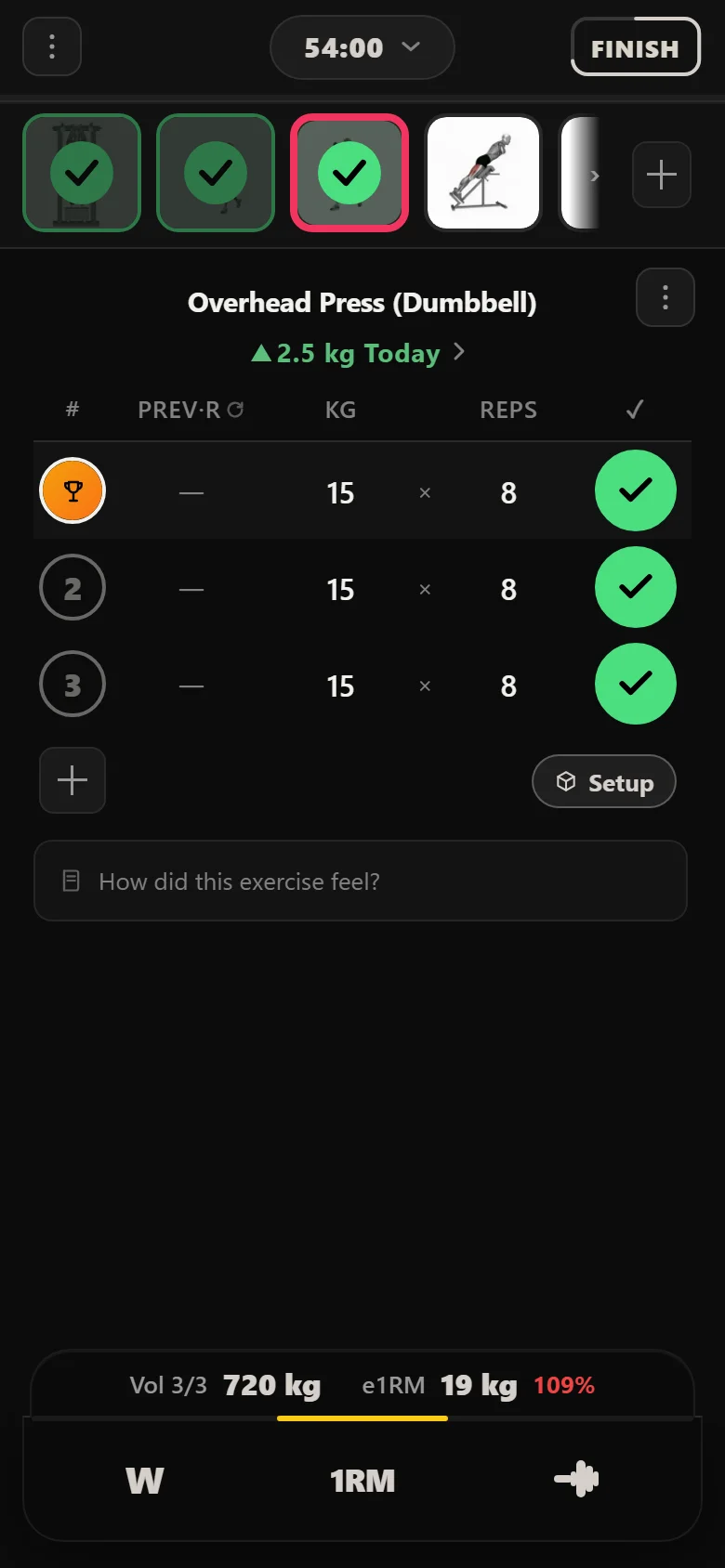
The next session opens at 15 kg and the reps are back at 8. One session earned the increment; the climb starts again from the bottom. Five sessions later it happens again, and the block finishes at 17.5 kg.
Twelve weeks of it
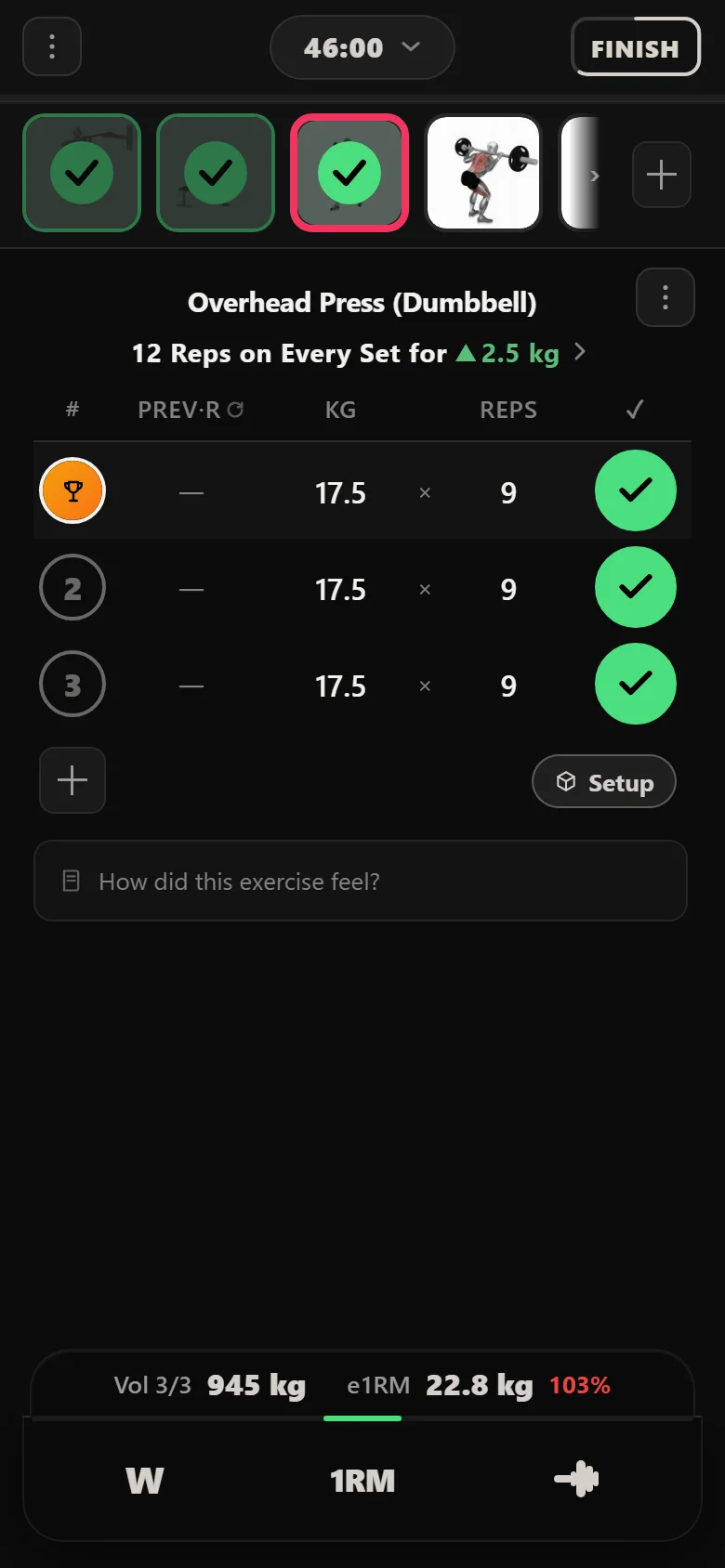
Two increments in twelve weeks reads as very little until you look at the shape of it. The overhead press went from 12.5 kg for 8 reps to 17.5 kg for 9: the same three sets, five kilos heavier, and more reps than the block opened with. The estimated one-rep max finished at 22.8 kg against 15.8 kg on day one.
The other lifts the run logged tell the same story at their own pace. The barbell bench press moved once, 40 kg to 42.5 kg, and the seated cable row once, 45 kg to 47.5 kg. The barbell hip thrust held at 70 kg for the whole of Phase 3 — it is prescribed 10 to 20 reps and only appears in the last four weeks, so its range was never topped out inside the block. On a rule like this, holding is not failing.
The strength view is where the flat weeks stop looking flat. The estimated one-rep max on the overhead press steps up on the rep sessions as well as the increment sessions, because the app is estimating from what was actually lifted rather than from the number on the dumbbell.
Overhead Press (Dumbbell): every session of the block
- 12.5S1 Session 1 — 8 reps
- 12.5S2 Session 2 — 9
- 12.5S3 Session 3 — 10
- 12.5S4 Session 4 — 11
- 12.5S5 Session 5 — 12, range topped
- 15S6 Session 6 — 8 reps, reset
- 15S7 Session 7 — 9
- 15S8 Session 8 — 10
- 15S9 Session 9 — 11
- 15S10 Session 10 — 12, range topped
- 17.5S11 Session 11 — 8 reps, reset
- 17.5S12 Session 12 — 9
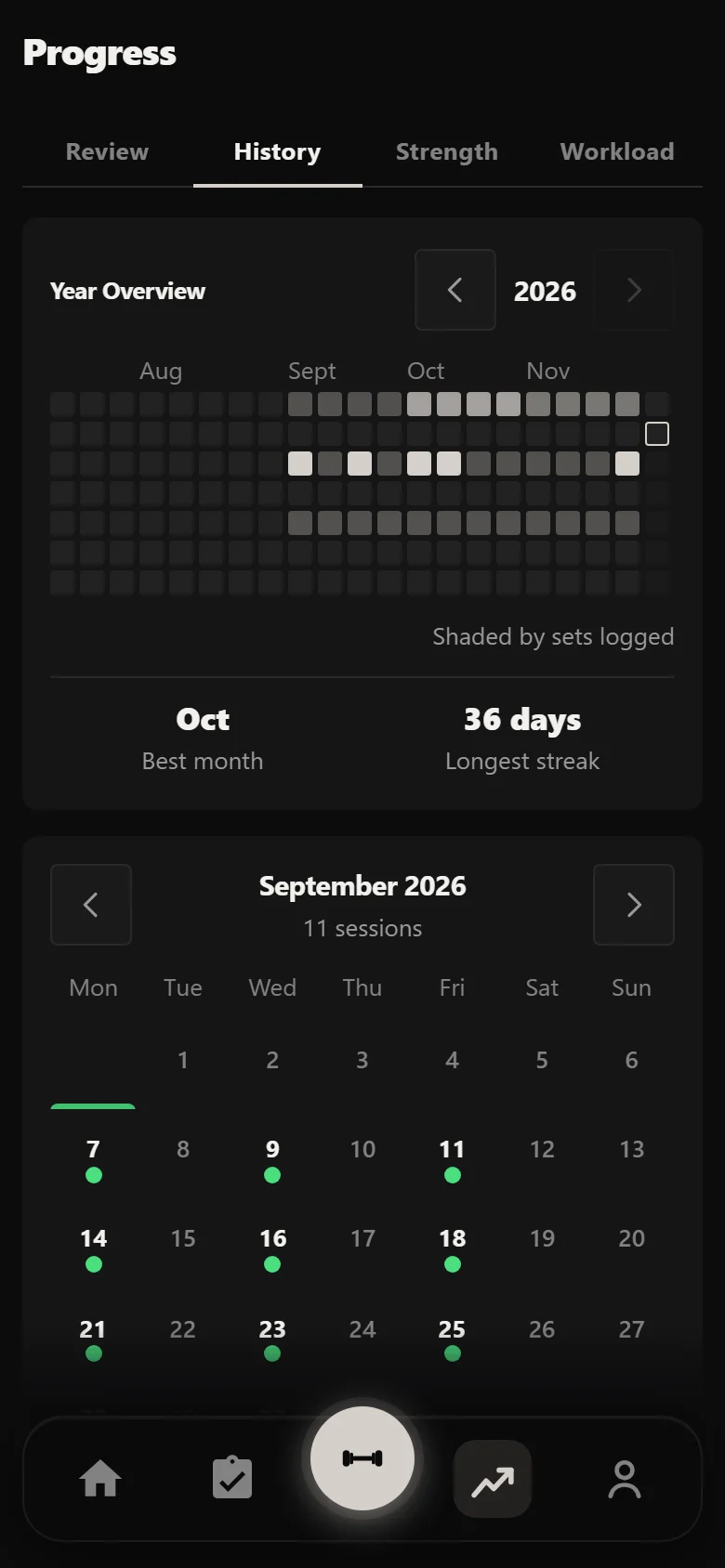
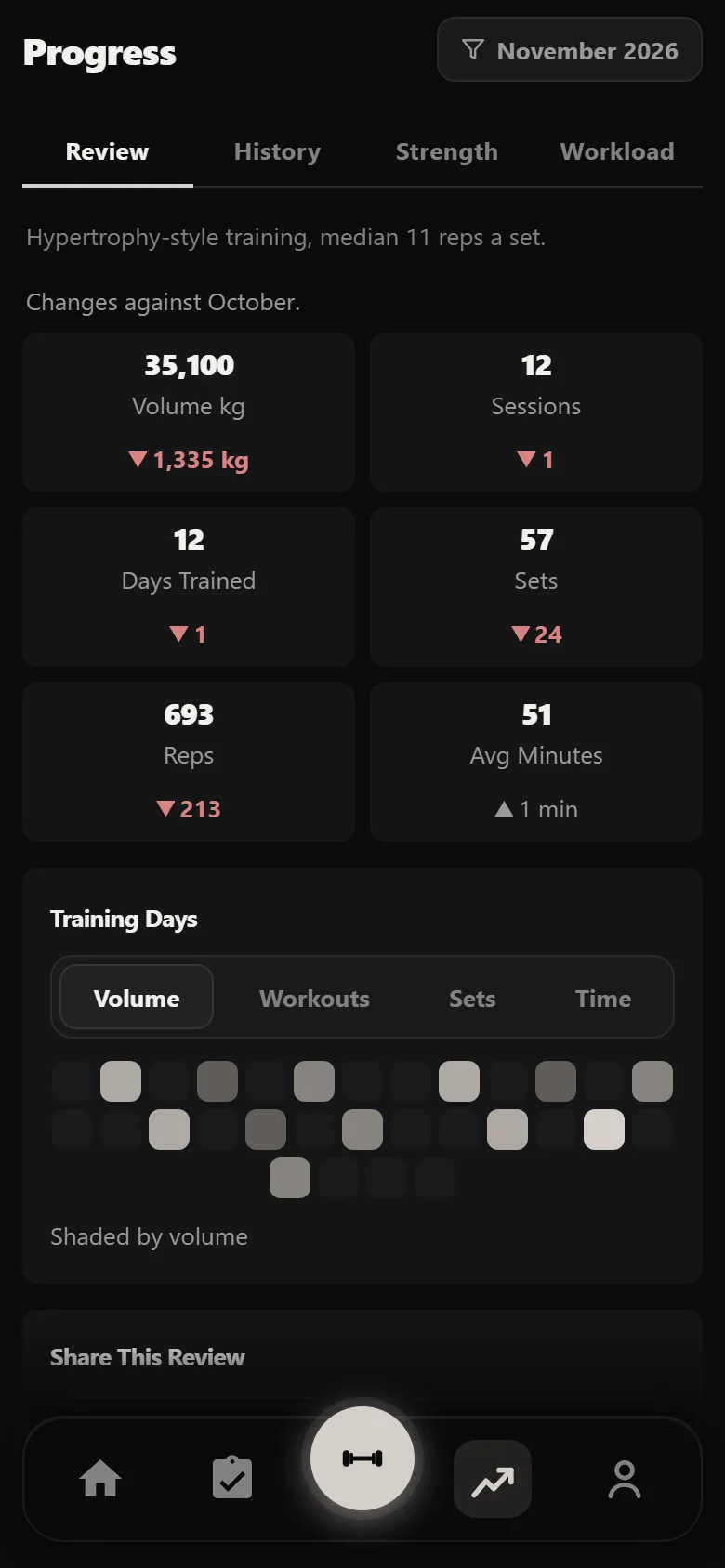
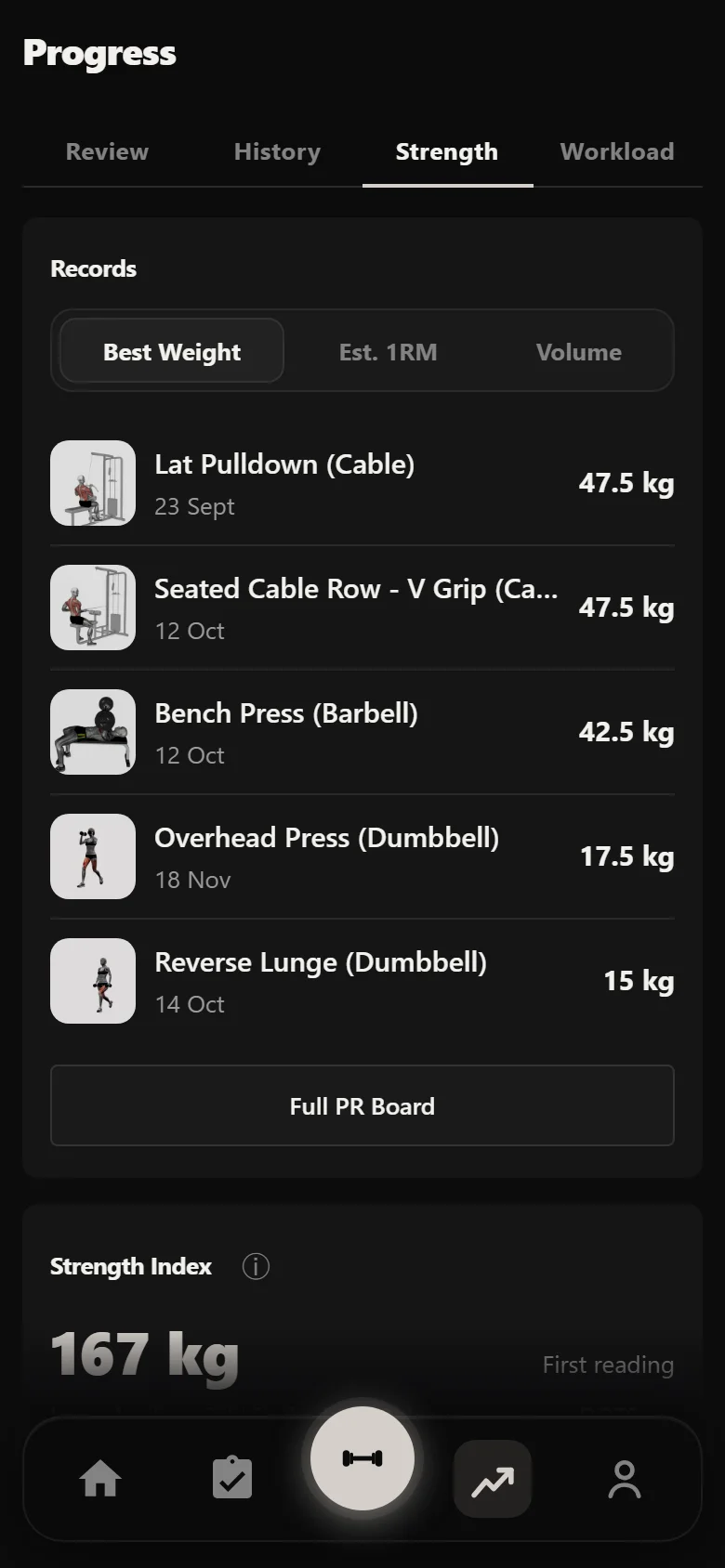
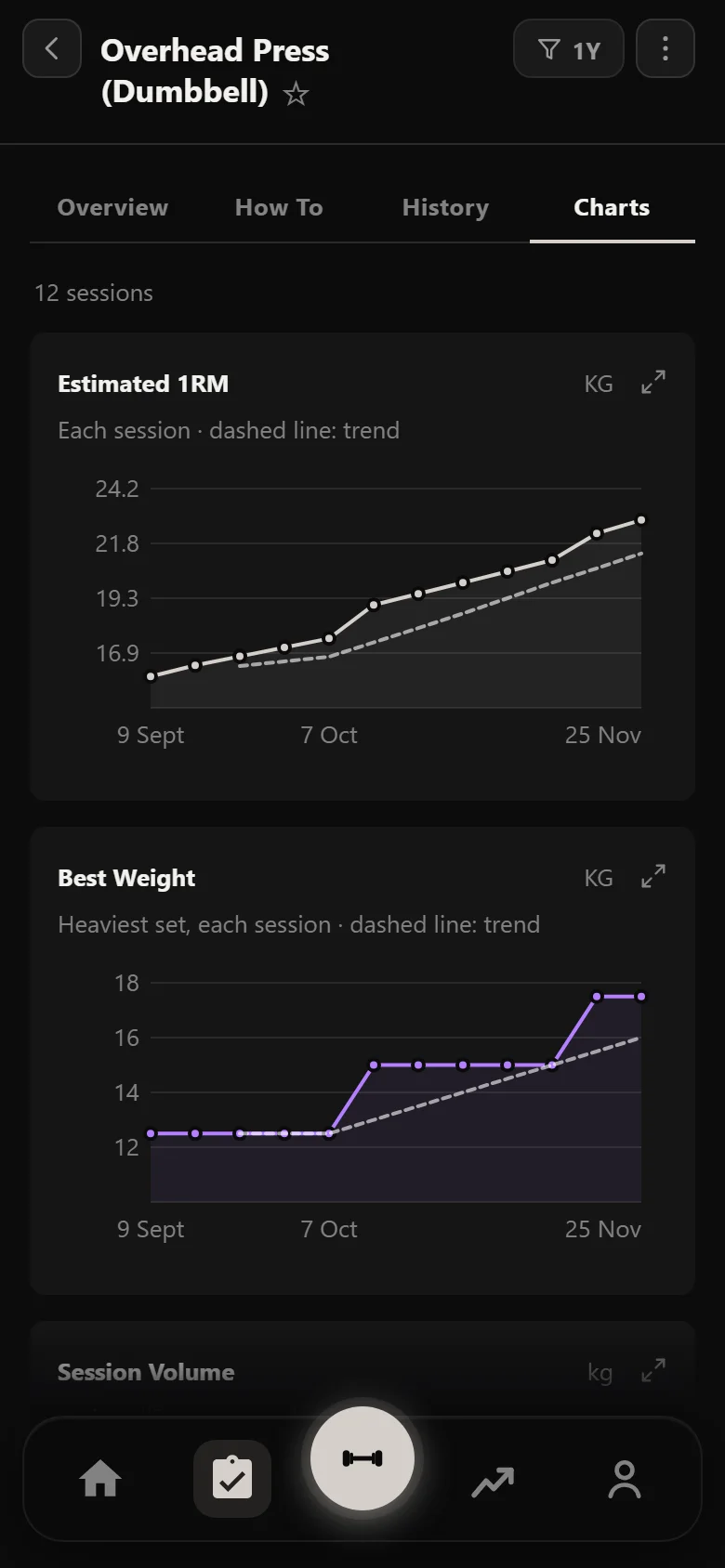
Same lift, same three sets, twelve weeks apart, and more reps on the right than on the left. Two increments earned it, both of them on a session where every set reached the top of the range, and the app decided both.
Common questions
Why does the weight stay the same for weeks?
Because that is the rule the program is written on. Double progression holds the load until every set reaches the top of the prescribed rep range (8 to 12 on the overhead press here) and only then adds an increment. The reps are the progress in between. Durata tracks the condition for you and shows you exactly what it is waiting for, so a flat weight reads as the program working rather than as a stall.
Where is the hip thrust?
In weeks 9 to 12. Strong Curves (Beginner) runs three four-week phases and changes most of the exercises at each boundary, so the barbell hip thrust the program is known for is prescribed in the last phase only. This walkthrough follows the dumbbell overhead press instead, because it is the one lift in all twelve weeks and so the only one that can trace the whole block.
What weight should I start with?
Light. On a rule that waits for a rep ceiling, an easy starting weight costs you a couple of sessions at most and a heavy one costs you the block. This run opens at 12.5 kg on the overhead press. Pick something you can complete every set with, and let the app decide when it goes up.
Is Durata free?
Yes. Durata is free to use, with the full program catalogue, automatic progression maths, rest timers and PR tracking. Everything in this walkthrough is in the app.
Put it into practice
Durata is free to use — 50 proven programs, automatic progression, rest timers and PR tracking, all on your phone.