


Leangains RPT in Durata: the heaviest set comes first
Most programs walk you up to a top set. Reverse pyramid training does the opposite: the heaviest set is the first working set of the exercise, and everything after it is a back-off at a lower weight and higher reps.
That inversion changes what you have to pay attention to. The top set is the only one the progression rule reads, it carries an AMRAP, and the number written on it is not the number you need. Six weeks of it in the app is a good way to see why.
Finding the program
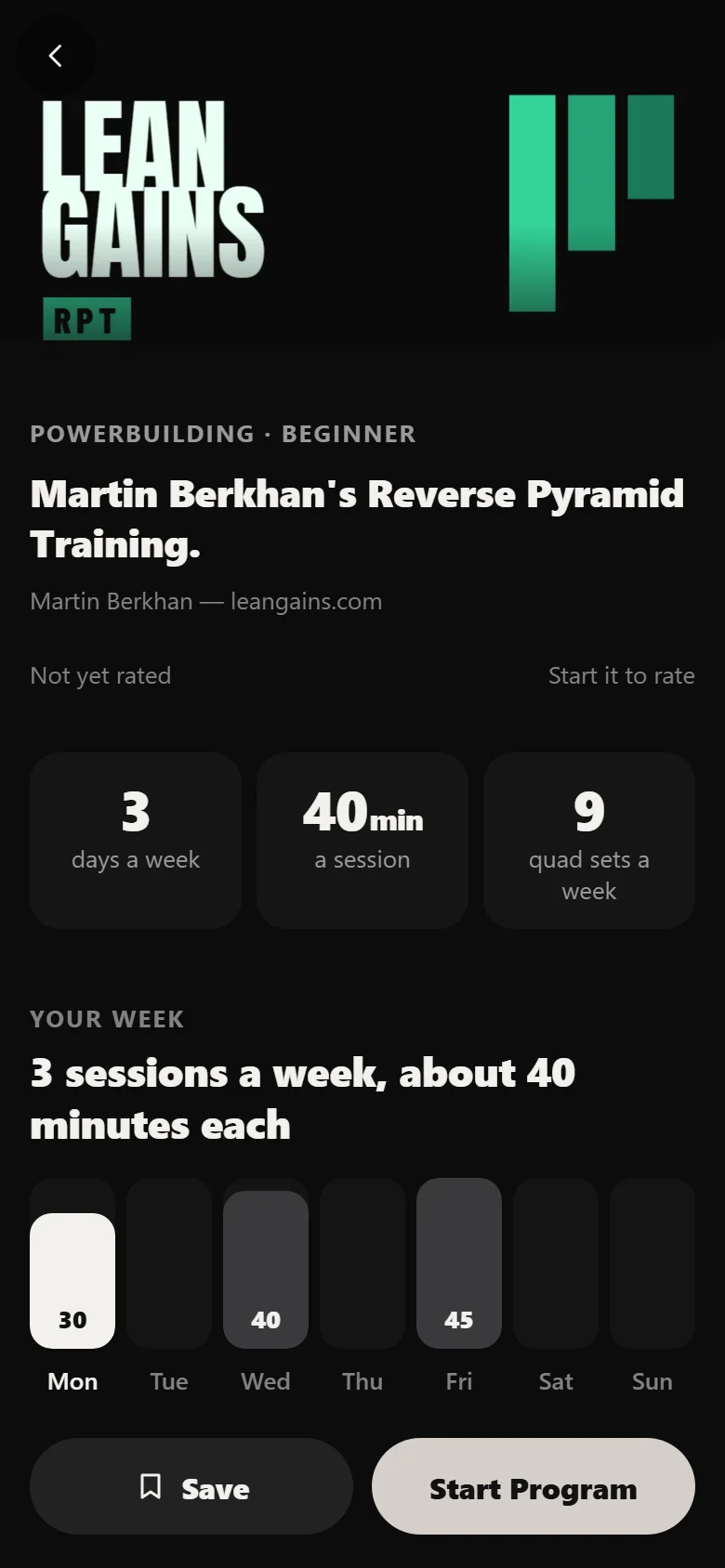
In Discover, Leangains RPT sits on the Powerbuilding shelf, marked Beginner, at three days a week. Search finds it by name, or Filter narrows the shelves by level and days a week. Tap the cover for a quick look, then View Program for the full page.
The program page lays out the shape before you commit: three sessions a week, and each lift written as a heavy top set followed by two lighter, longer back-off sets.
Setting the openers
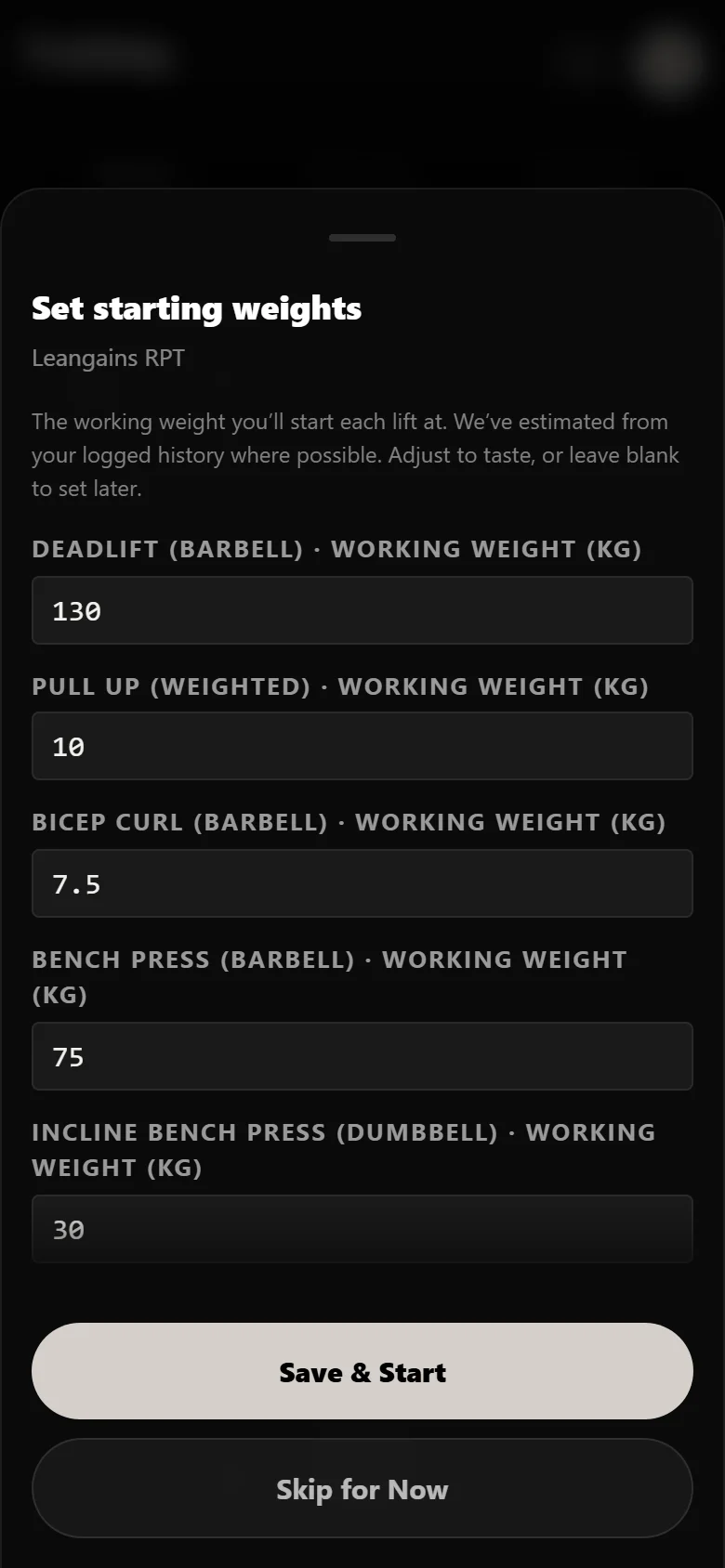
There are no training maxes and no percentages to calculate. The setup sheet asks for a working weight per lift, and that weight is the one you will put on the bar for the top set. The back-offs are computed from it.
This run opened with 100 kg on the squat, 130 kg on the deadlift, 75 kg on the bench, 10 kg added on the weighted pull-up and 7.5 kg on the isolation work.
Open lighter than you think. The top set carries an AMRAP and the rule wants the top of the rep range, so a weight you can only just move for the written number will hold you still.
Heaviest first, then down
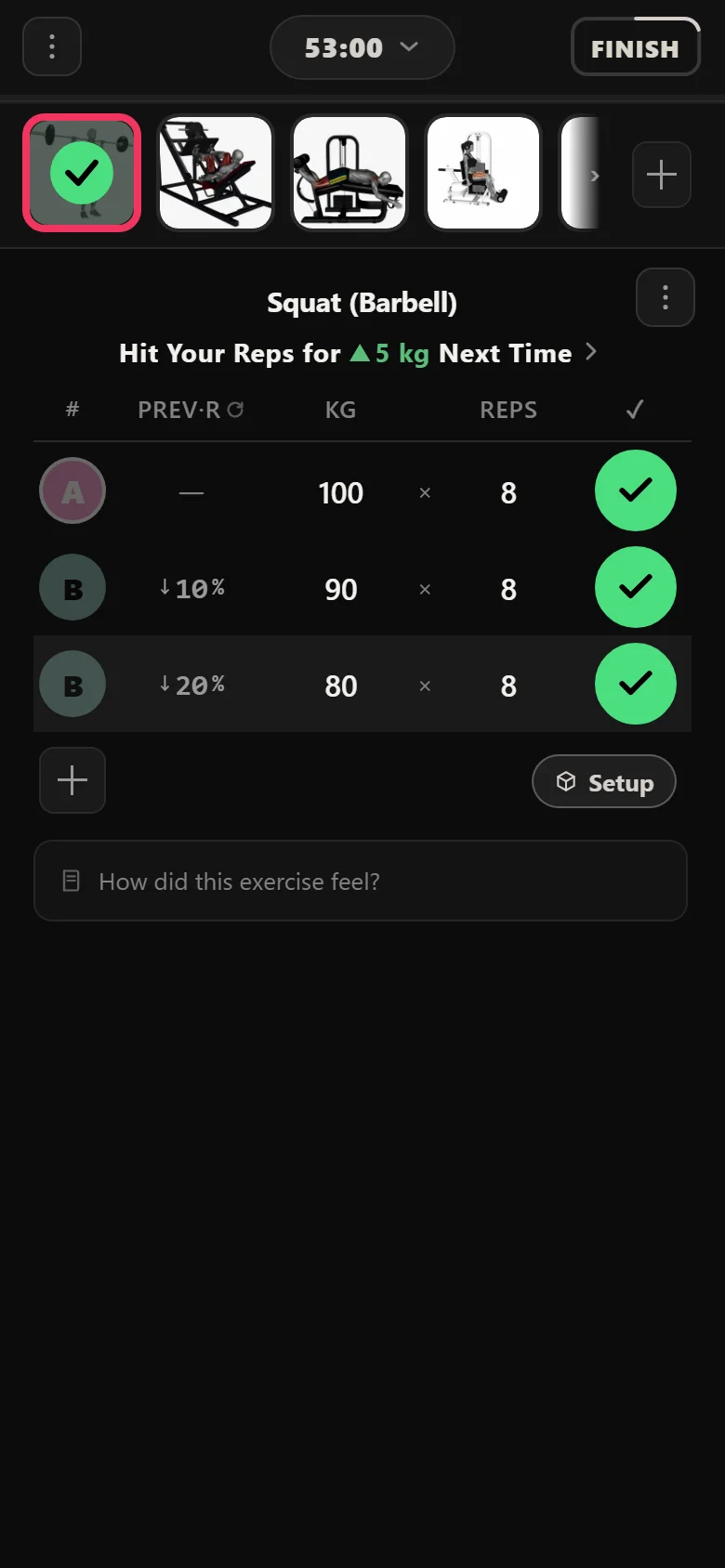
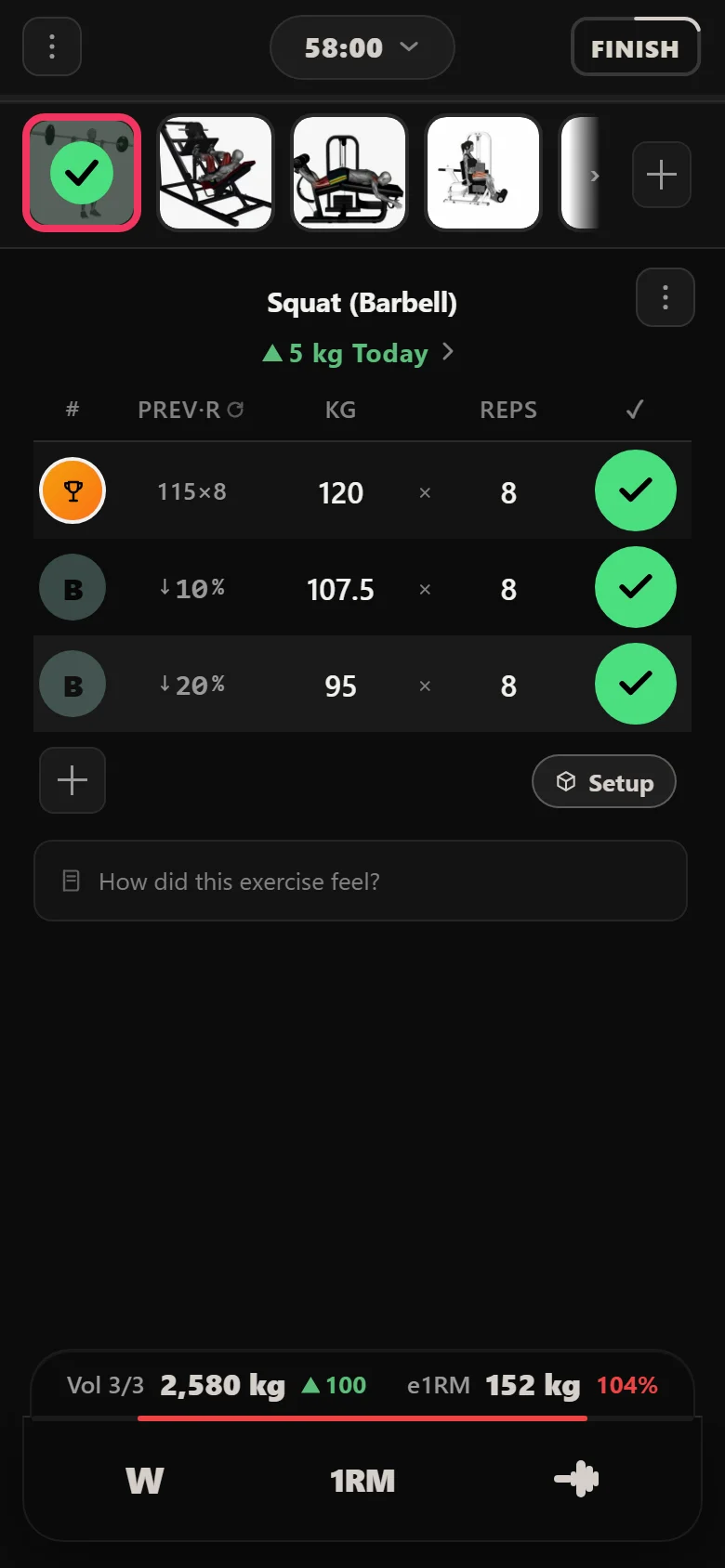
The squat opens the session at 100 kg for the top set, and the two sets after it are lighter and longer. They are Backoff sets: the app takes 10% and then 20% off whatever the top set weighed today, so the back-offs are set the moment the top set is, with nothing to calculate. The order is the point: you meet the heaviest weight while you are freshest, and the back-offs collect volume at a weight you can still control once the hard set is behind you.
It reads oddly at first if you are used to warming up into a top set. The warm-ups still happen, they just are not working sets. Once the first working set is logged, the session is downhill by design.
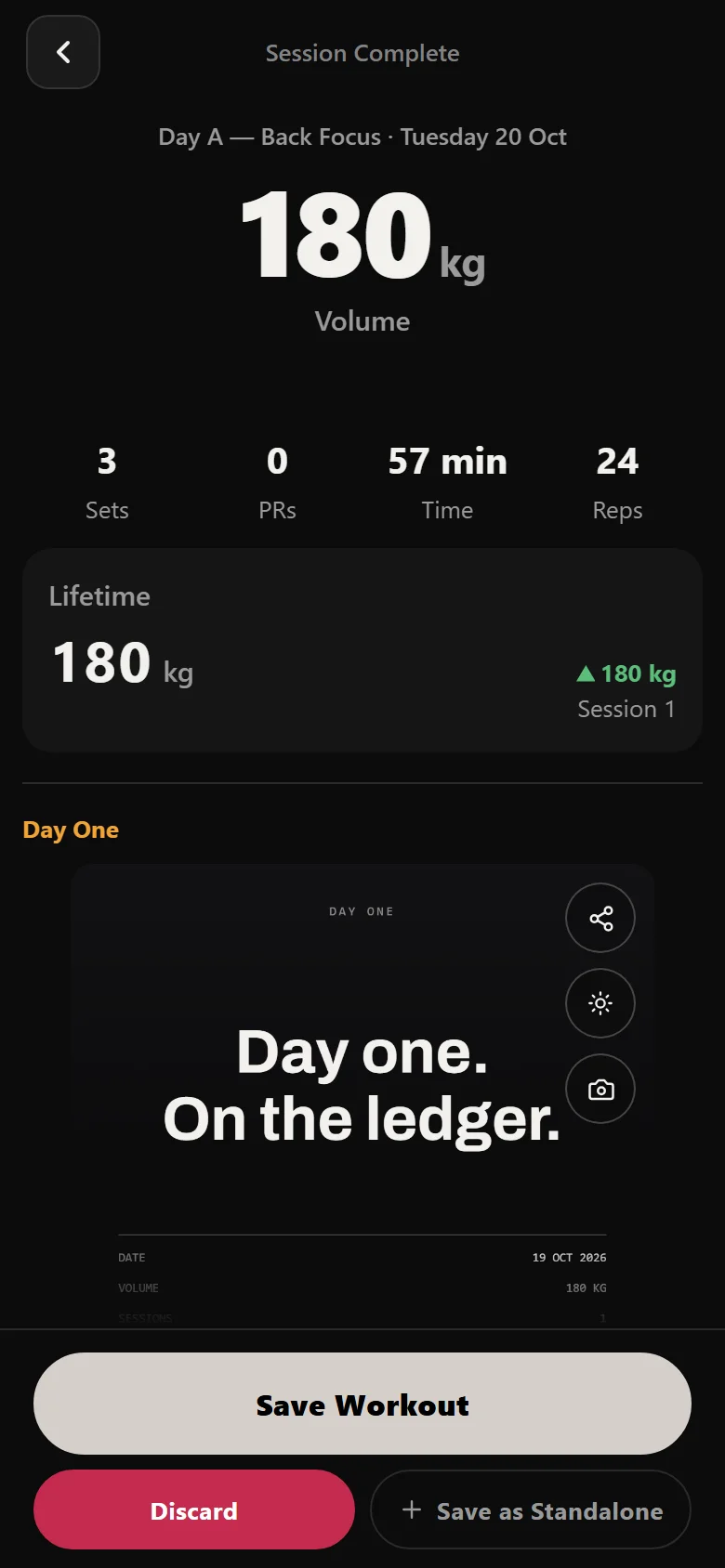
A whole session comes to 180 kg of tracked volume across its logged sets, which is a smaller number than a five-set program produces and is meant to be.
The written reps are not the target
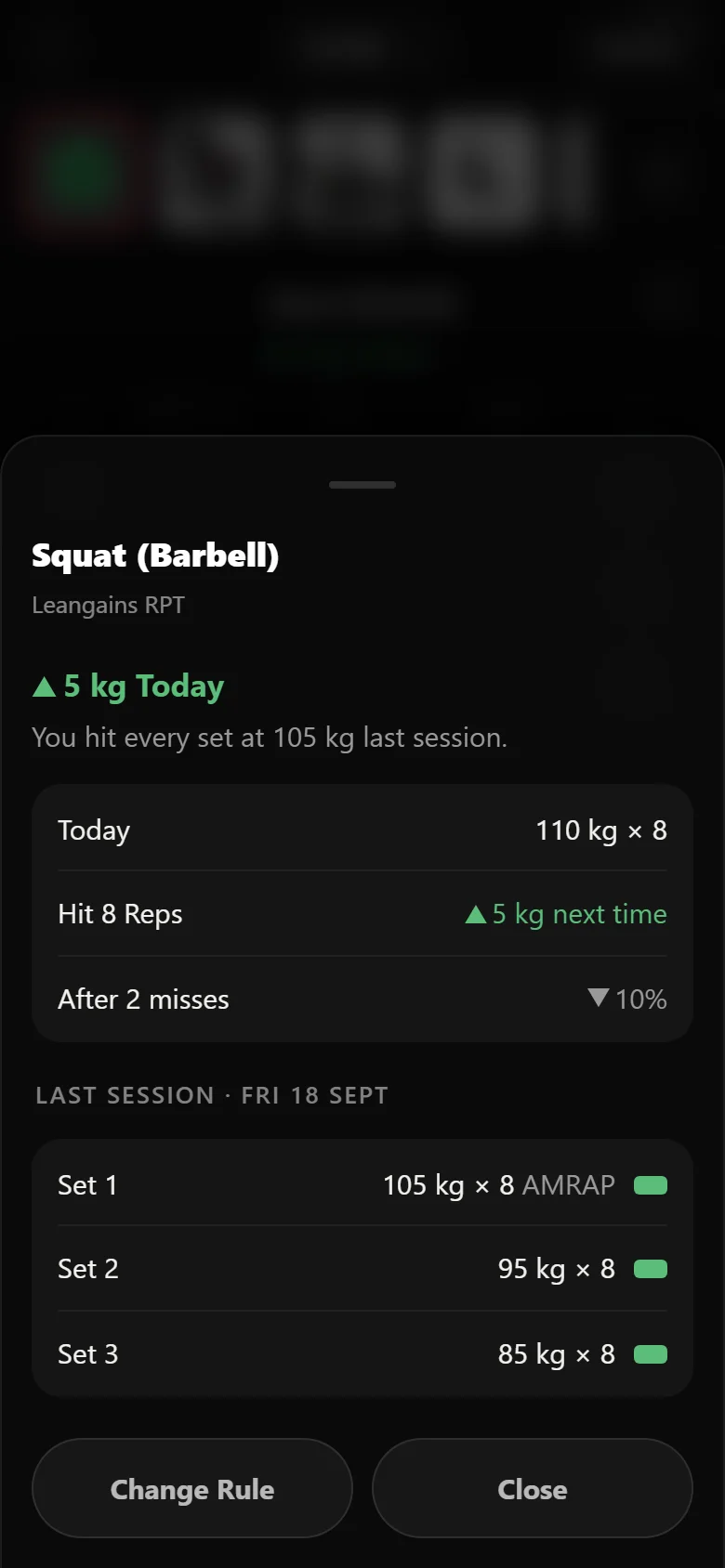
This is the part worth reading twice. The top set is written as 6 reps with a range of 6 to 8, and the rule that governs it wants 8. Log the six that are written on the screen and nothing moves. Reach eight and the app adds 5 kg to the next session.
So the prescribed number is a floor, not a target, and the AMRAP on that set is not decoration. It is the measurement the whole progression is made of. Every one of the back-off sets can be perfect and the weight will still sit where it is, because the rule never looks at them.
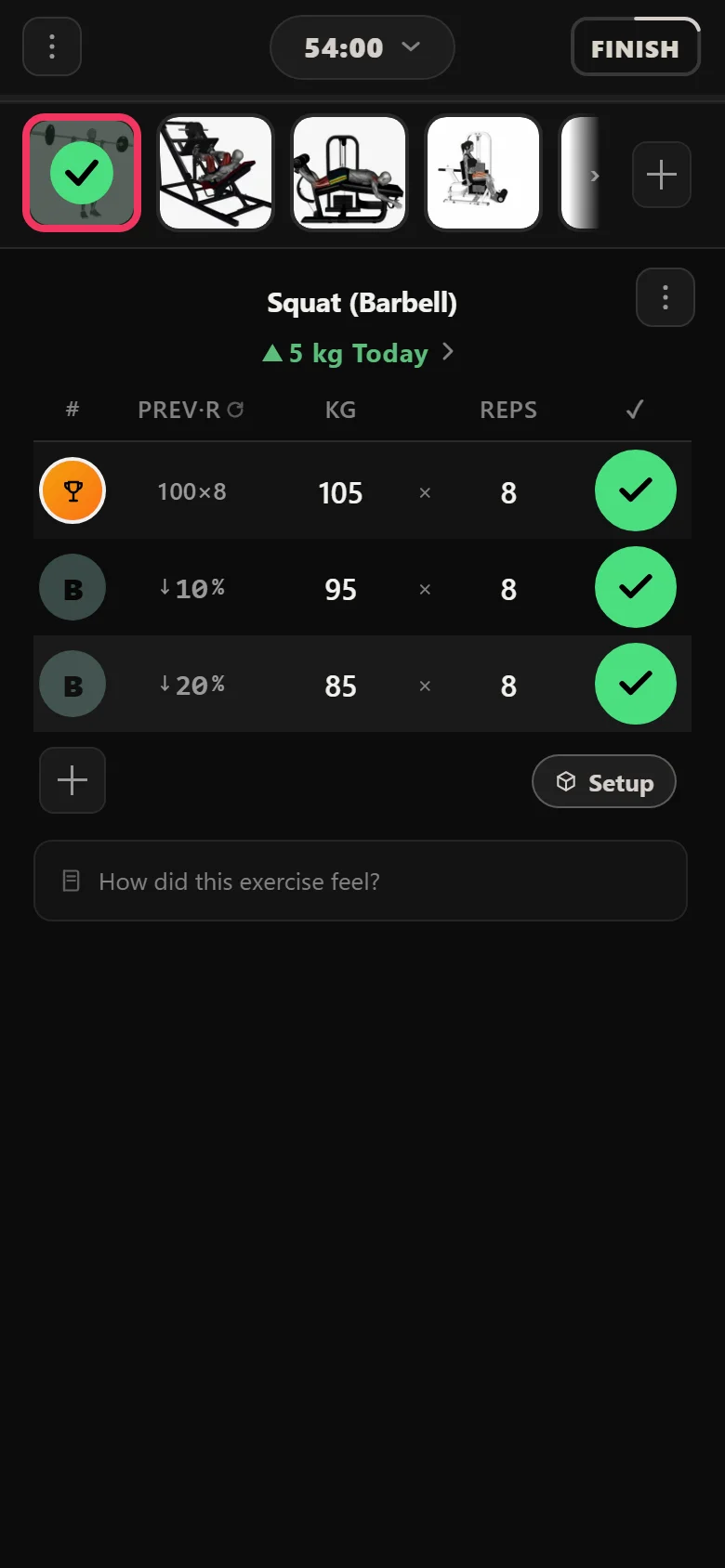
Six sessions in, the squat had gone from 100 kg to 105 kg on exactly that basis, and the back-offs moved with it to 95 kg and 85 kg.
The accessories run the other way
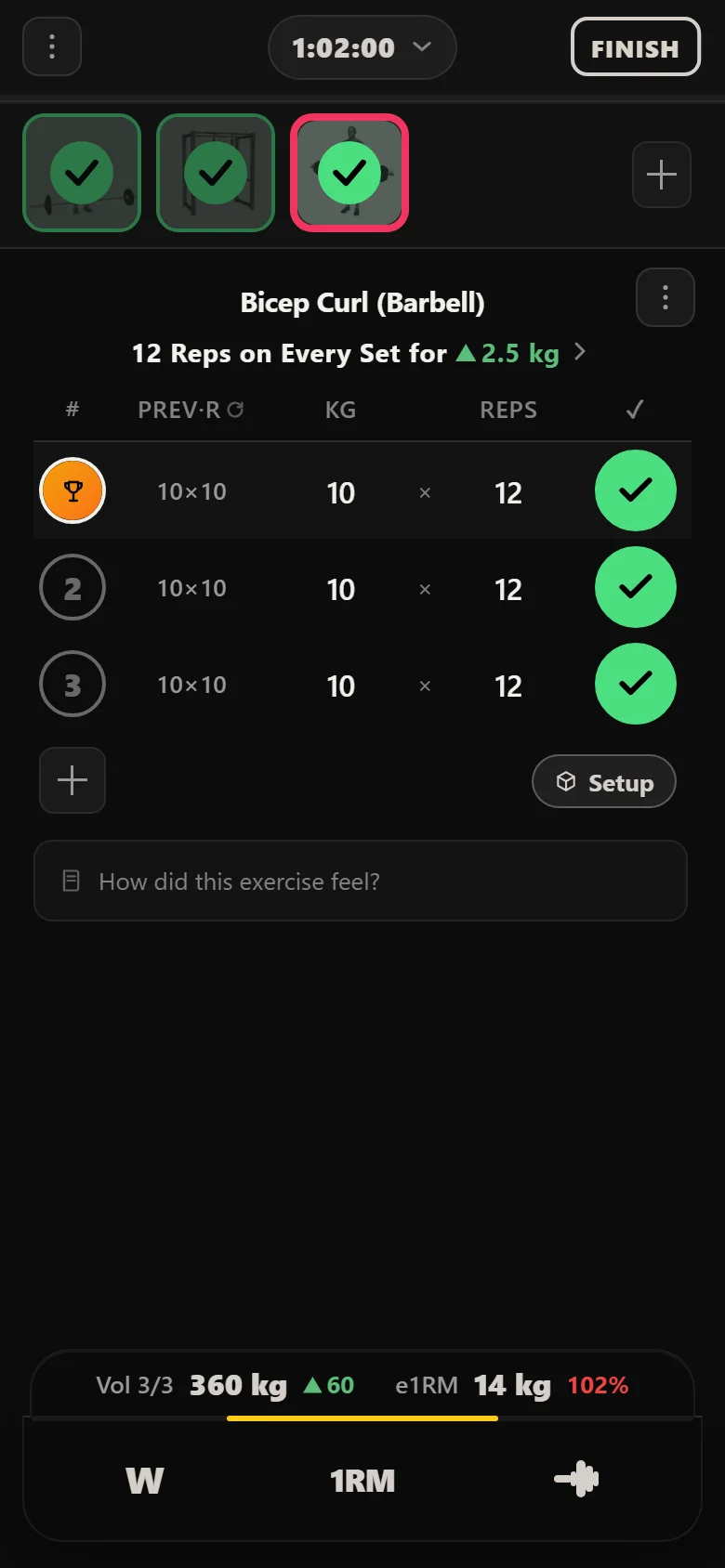
The isolation work is not on the same rule. It runs double progression instead: the weight stays put while you climb an 8 to 12 rep range, and only when every set reaches 12 does the load move by 2.5 kg and the reps reset to 8.
Two rules in one session sounds like a complication, and it is worth knowing which is which, because they fail in opposite ways. On the compound lifts a weight that will not move means you are not repping the top set out. On the accessories a weight that will not move usually means it is doing exactly what it should.
One miss holds, two would cut
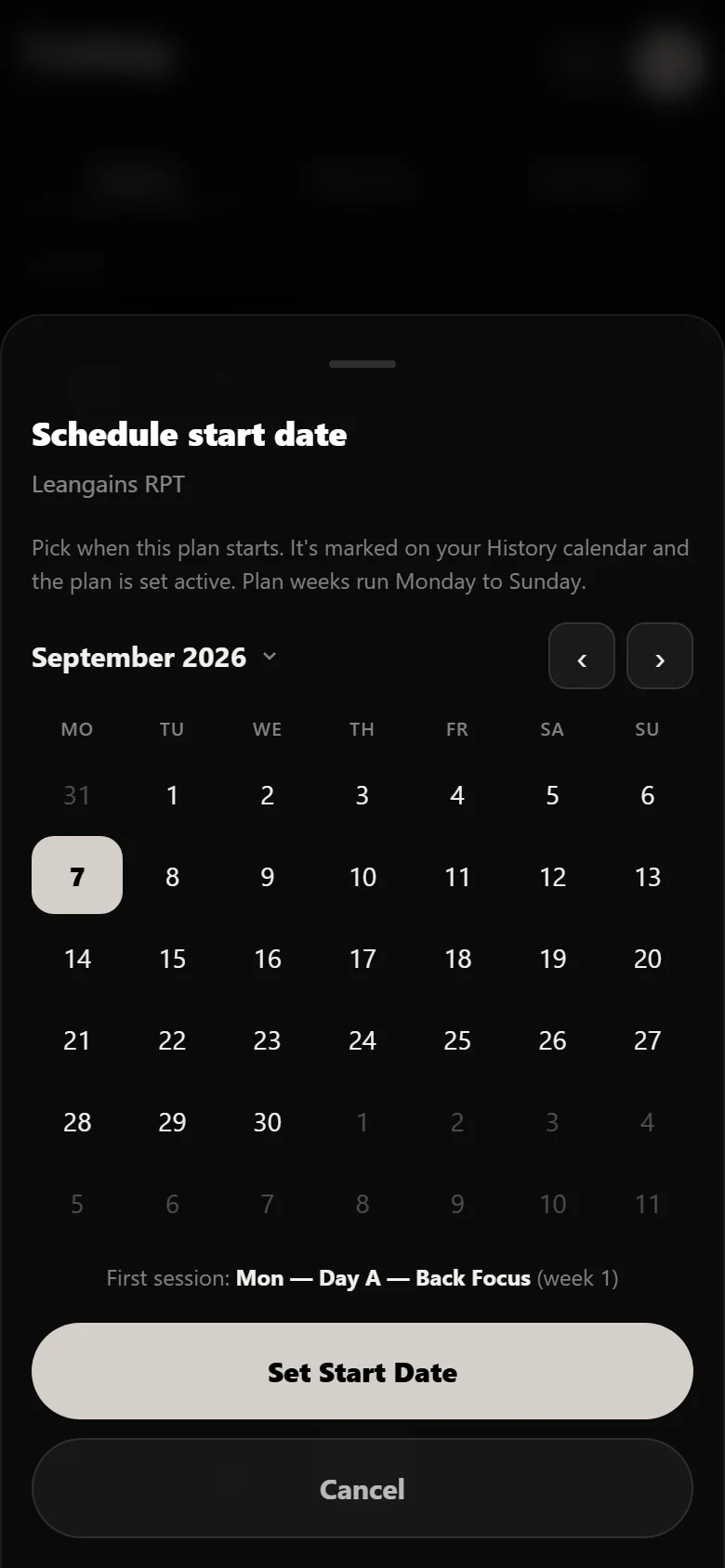
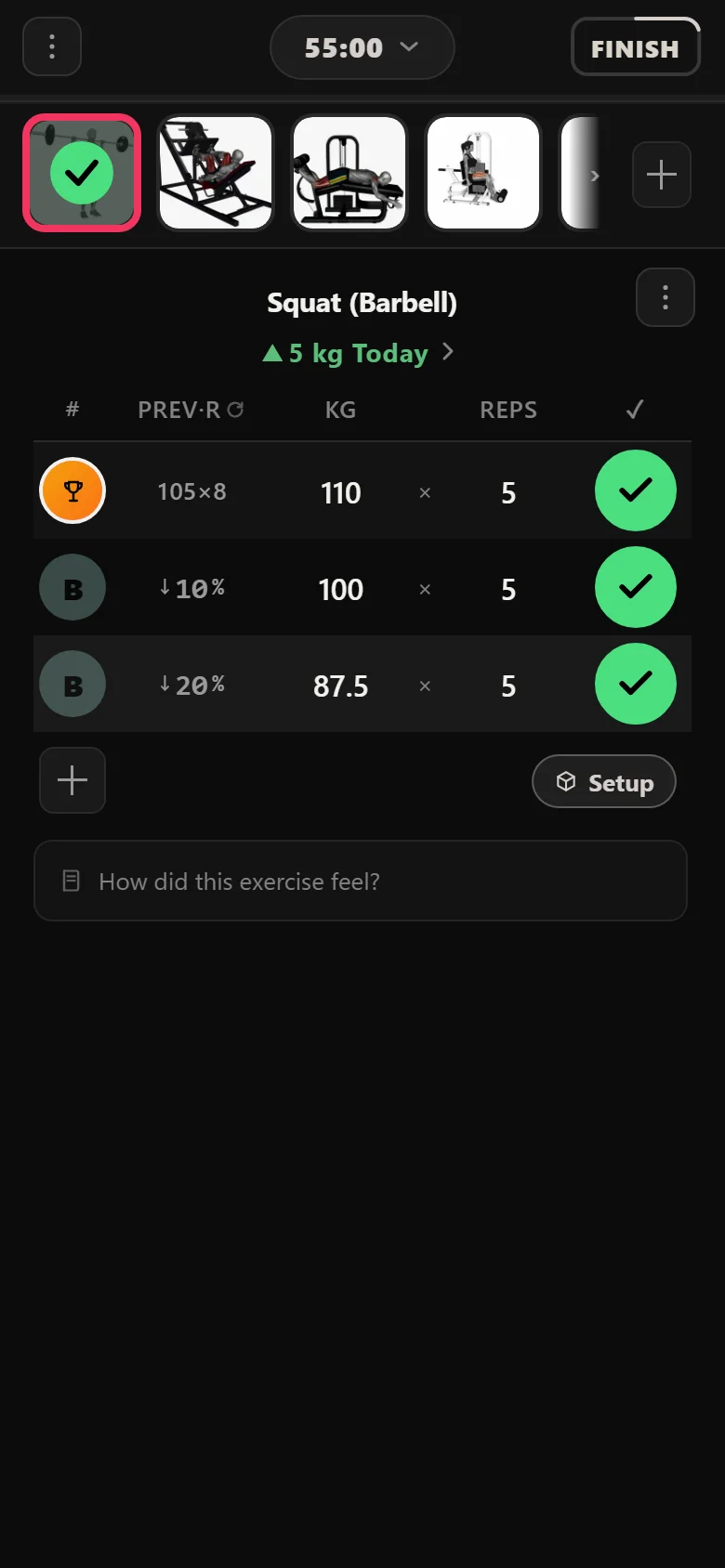
At session 9 the squat reached 110 kg and the top set came up short. Under this rule a missed session does not cost you the weight. It holds it: same load next time, another attempt at the range.
The rule chip is a button, and tapping it shows the case being made: why the bar went up today, what earns the next 5 kg, and the 10% cut that waits behind two misses at the same weight.
That patience turned out to be right. 110 kg was held at session 12, cleared, and the block carried on to 115 kg and then 120 kg. Nothing was ever cut. The instinct to strip weight off the bar after one bad session is the instinct this rule exists to overrule.
Squat (Barbell) top set across the block
- 100S3 Session 3 — start
- 105S6 Session 6
- 110S9 Session 9 — short of the range
- 110S12 Session 12 — held, then cleared
- 115S15 Session 15
- 120S18 Session 18
Six weeks of it
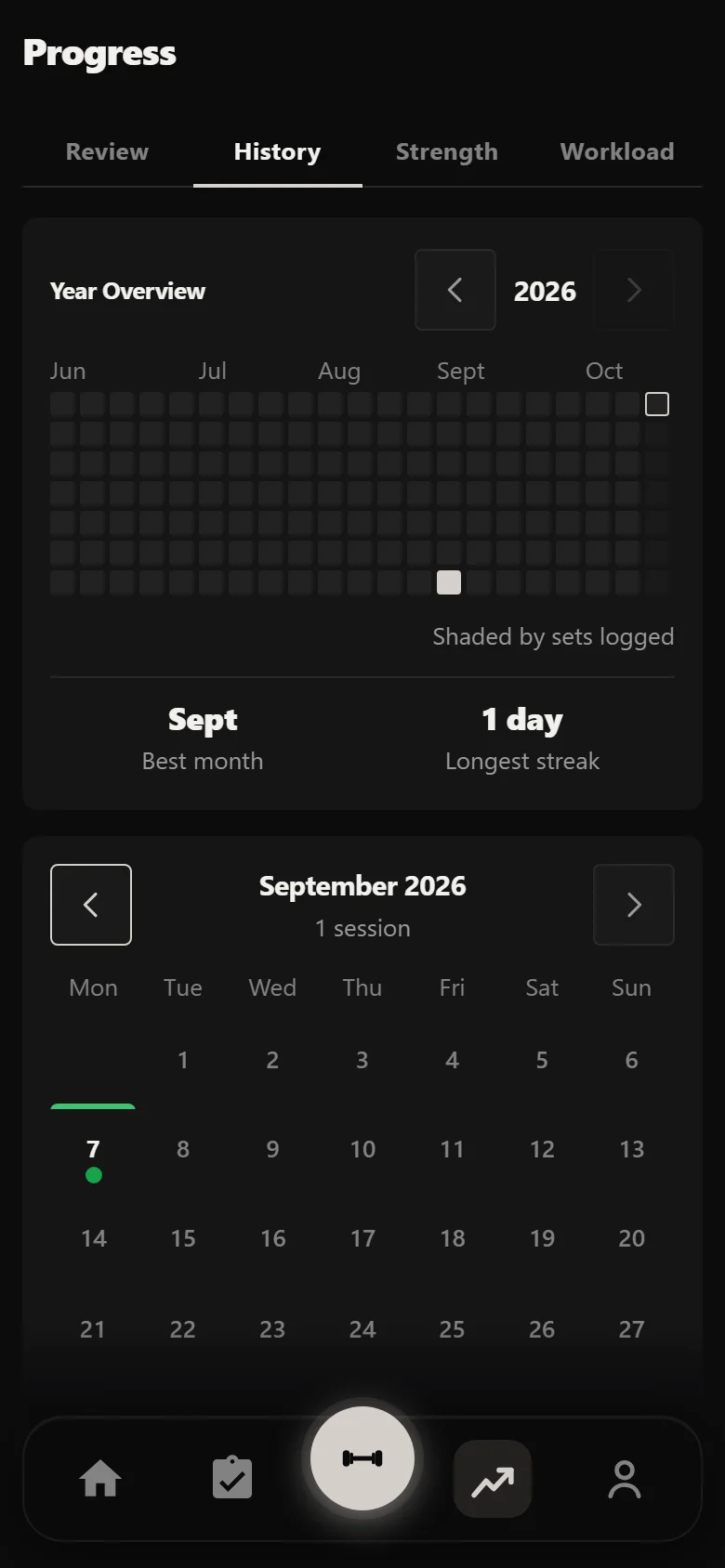
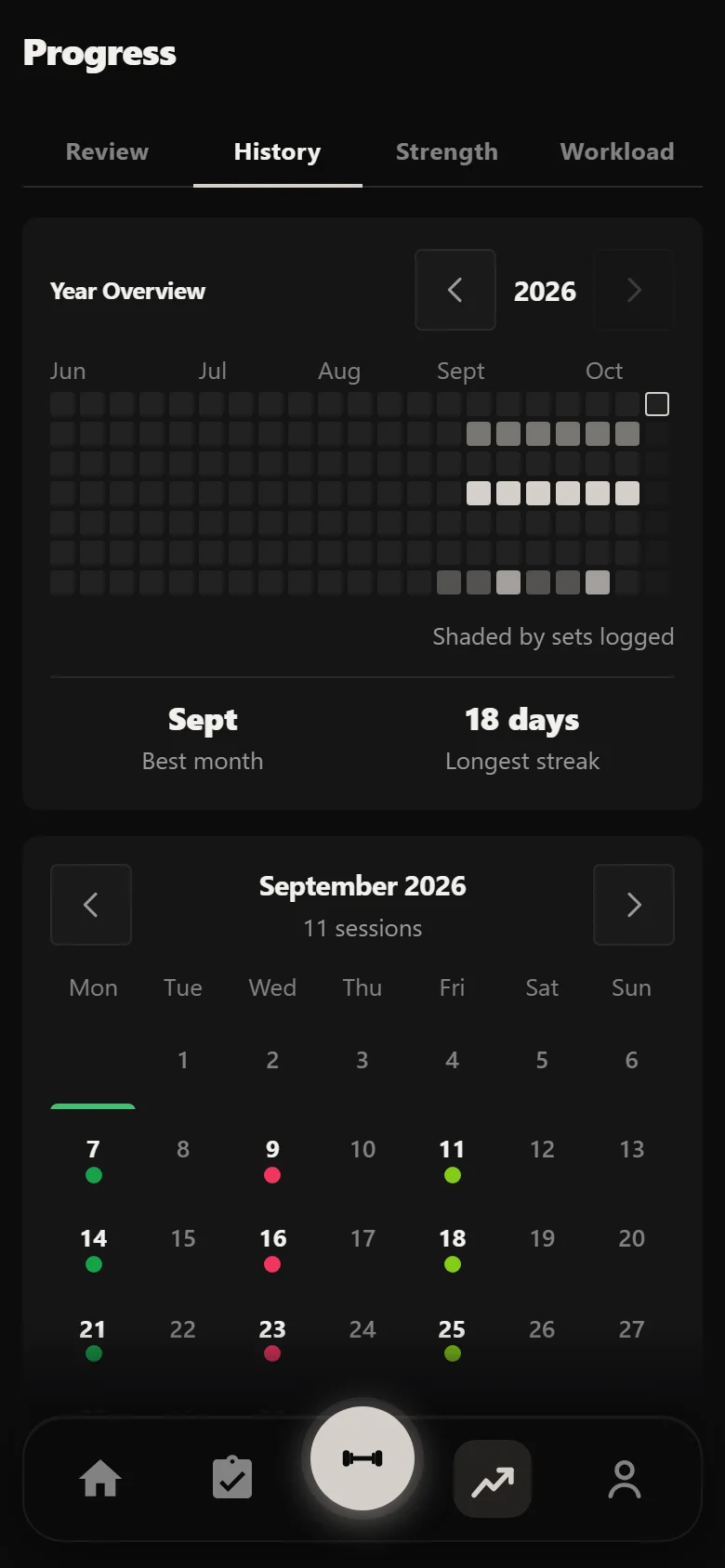
18 sessions on the calendar, three a week, with the held session sitting in the middle of the run rather than at the end of it.
Each day's square is shaded by the sets logged, three training days a week for six weeks. These are small totals next to a high-volume program, which is the trade reverse pyramid makes. Fewer working sets, all of them heavy enough to matter.
Where it ended up
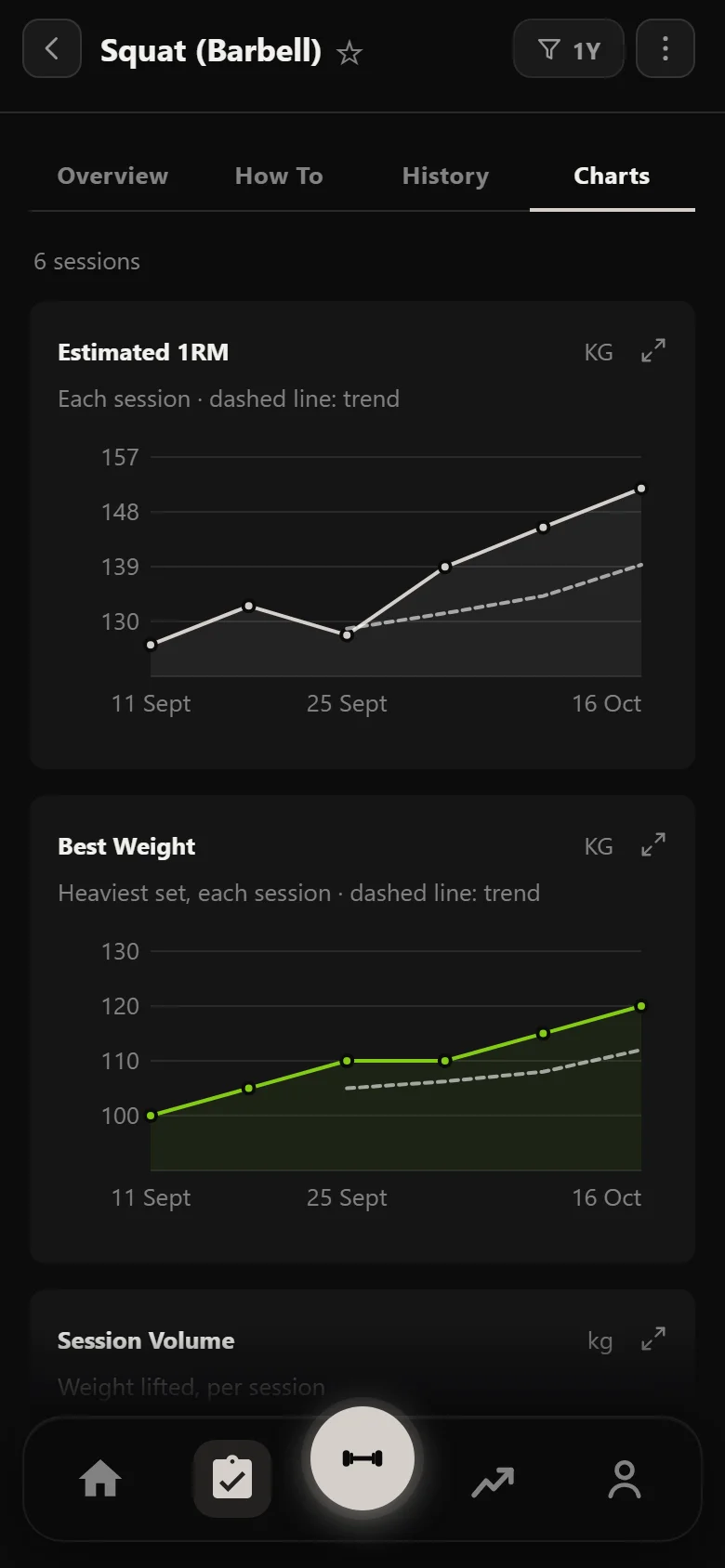
The squat finished the block at 120 kg on the top set, with 125 kg queued for the session after. Its estimate climbed to 152 kg by the last session, and the one dip in that line is the session that came up short at 110 kg.
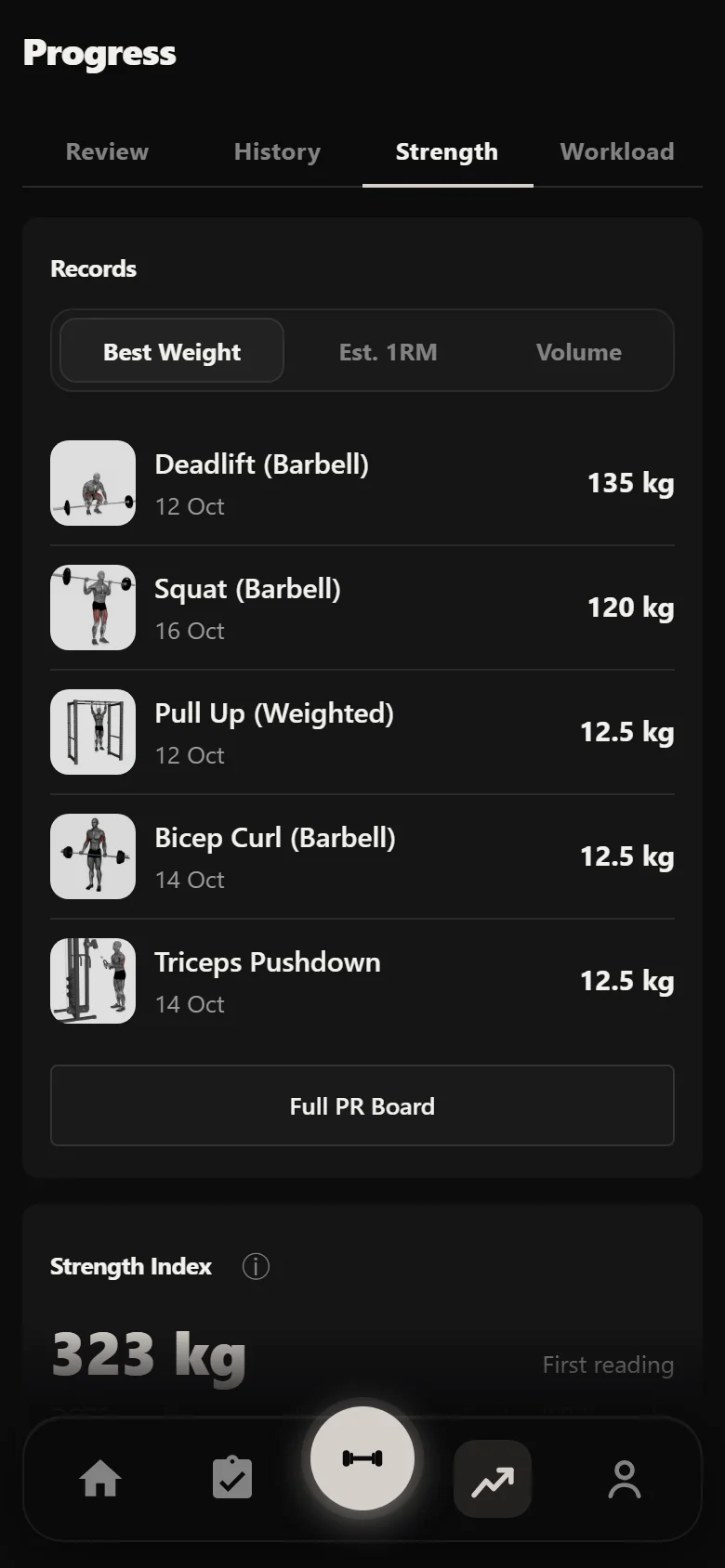
The Strength tab lists the records by best weight: the deadlift at 135 kg, the squat at 120 kg, then 12.5 kg on the weighted pull-up, the curl and the pushdown, over a Strength Index of 323 kg. September alone came to 15,028 kg over 11 sessions, 78 sets and 771 reps.
The payoff: first top set against last
The same lift and the same first-and-heaviest working set, six weeks apart, with one held session in between and nothing ever cut.
Every step decided by the reps logged on the top set, and none of them by the back-offs.
Common questions
What is reverse pyramid training?
A set scheme that puts the heaviest set first. Instead of working up to a top set, you warm up, do your hardest working set immediately, then drop the weight for two back-off sets, 10% and 20% lighter than it, with the reps rising as the weight falls. Durata works the back-off weights out from the top set you actually lifted that day.
Why is my weight not going up when I hit the prescribed reps?
Because the prescribed number is the bottom of the range, not the target. The top set is written as 6 reps with a range of 6 to 8, and the rule wants 8 before it adds weight. That is what the AMRAP on the top set is for: it is the measurement the progression is made of.
Do the back-off sets affect progression?
No. The rule reads the top set only. The back-offs are there for volume, and doing them well is worth doing, but they will never move the weight on their own and a bad one will never hold it back.
What happens when I miss the top set?
The weight is held, not cut. You get the same load next session and another attempt at the range. Only after a second miss at the same weight does the app cut it by 10% and restart the climb from there.
How much weight does it add?
5 kg a session on lower-body lifts and 2.5 kg on upper-body lifts, each time you reach the top of the range on the top set. The isolation work runs a different rule: double progression up an 8 to 12 range at a fixed weight, moving 2.5 kg once every set reaches 12.
Is Durata free?
Yes. Durata is free to use, with the full program catalogue, rest timers, rule chips and PR tracking. Everything in this walkthrough is in the app.
Put it into practice
Durata is free to use — 50 proven programs, automatic progression, rest timers and PR tracking, all on your phone.