


Madcow 5×5 in Durata: one number moves the whole week
Madcow 5×5 is the usual step up once novice linear progression stalls. You squat three times a week, but not at three different weights you choose: Monday, Wednesday and Friday are all percentages of one number, the training max. Monday ramps to a heavy top set at the full max, Wednesday is deliberately light, and Friday goes slightly over the max for a rep-out. Beat that rep-out and the training max moves, which moves every squat session that follows.
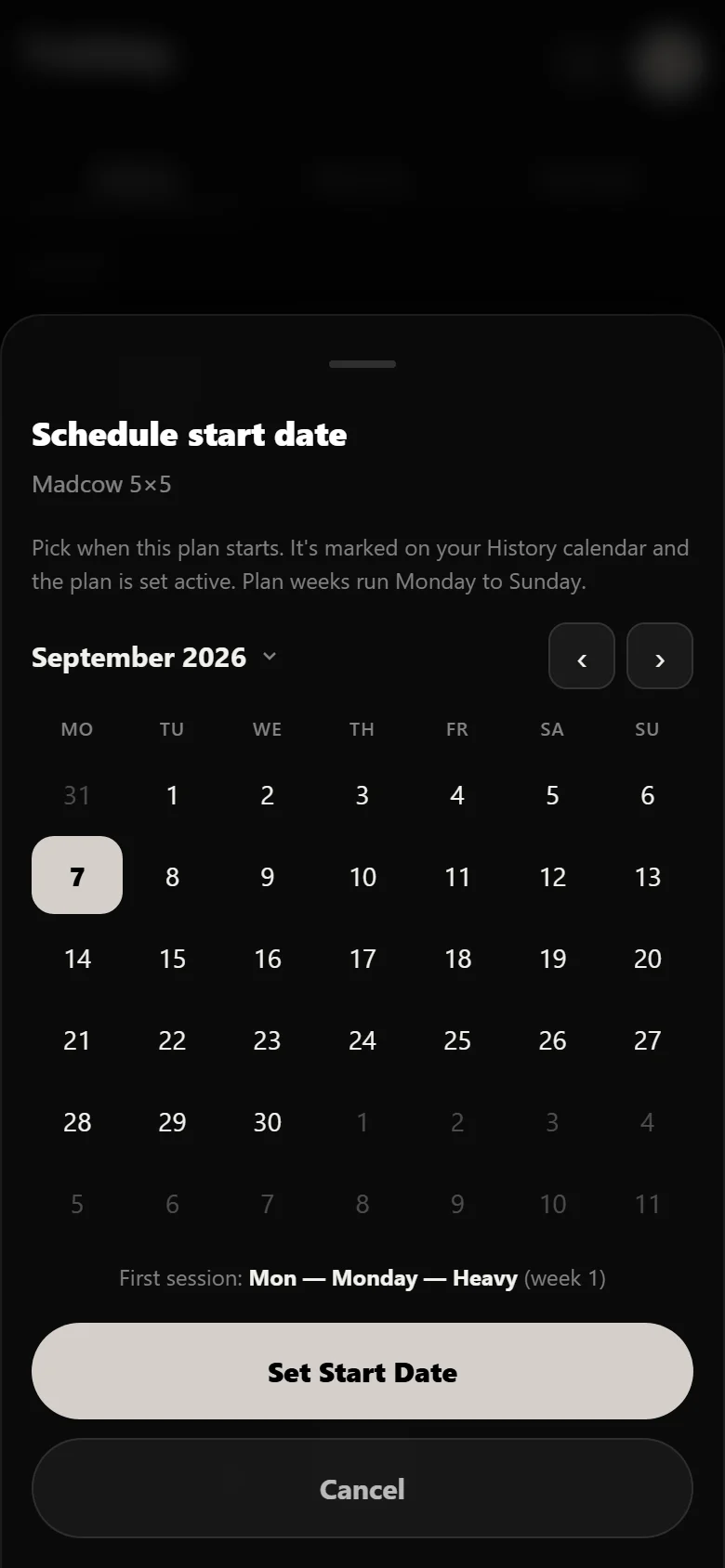
Every weight, rep and estimate below was computed by the real engine on a live drive: six weeks, eighteen sessions, one training max doing all the arithmetic. The squat opens off a 140 kg max.
Starting the program
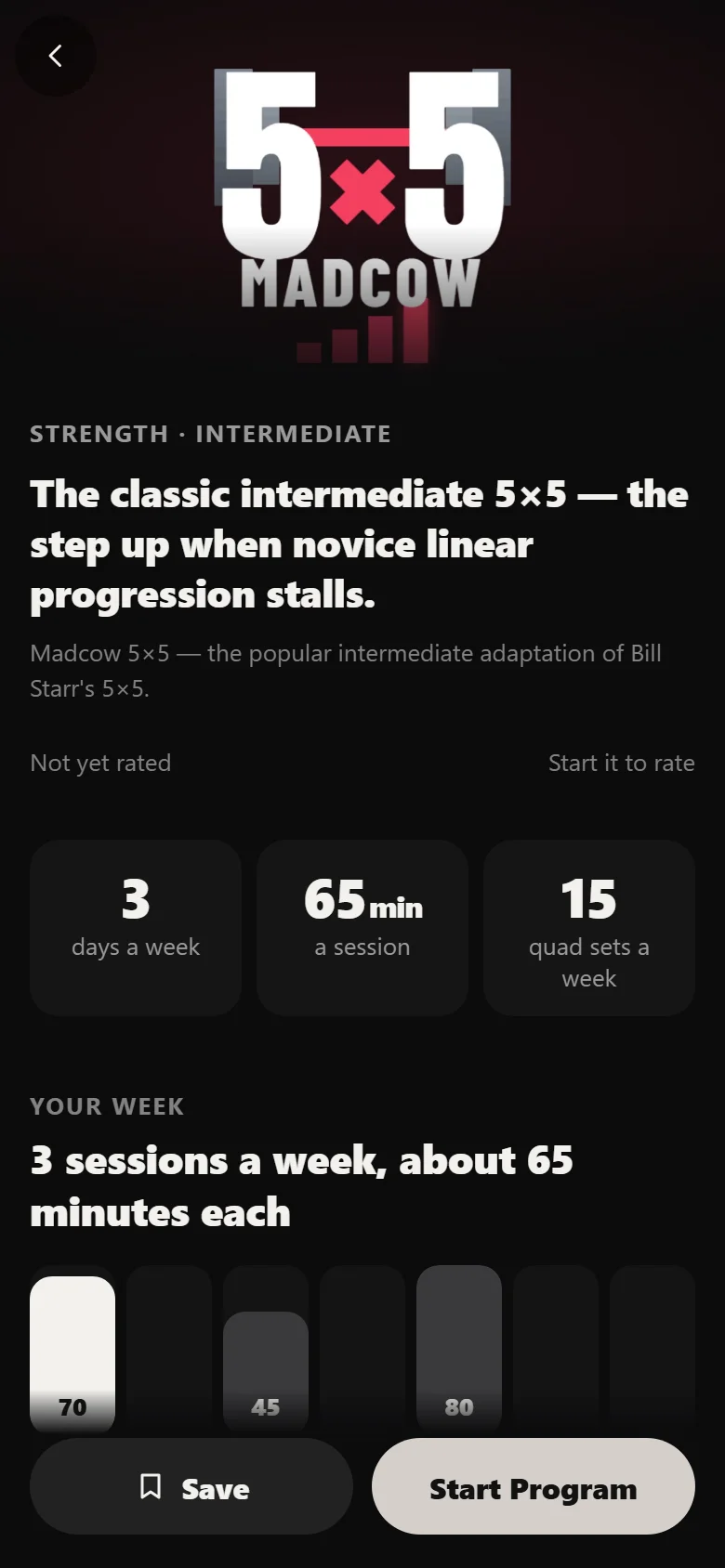
In Discover, Madcow 5×5 sits on the Strength shelf, marked Intermediate, at three days a week. Search finds it by name, or Filter narrows the shelves by level and days a week. Tap the cover for a quick look, then View Program for the full page.
It is for a lifter who has outgrown a beginner routine and wants the classic Heavy/Light/Intensity week.
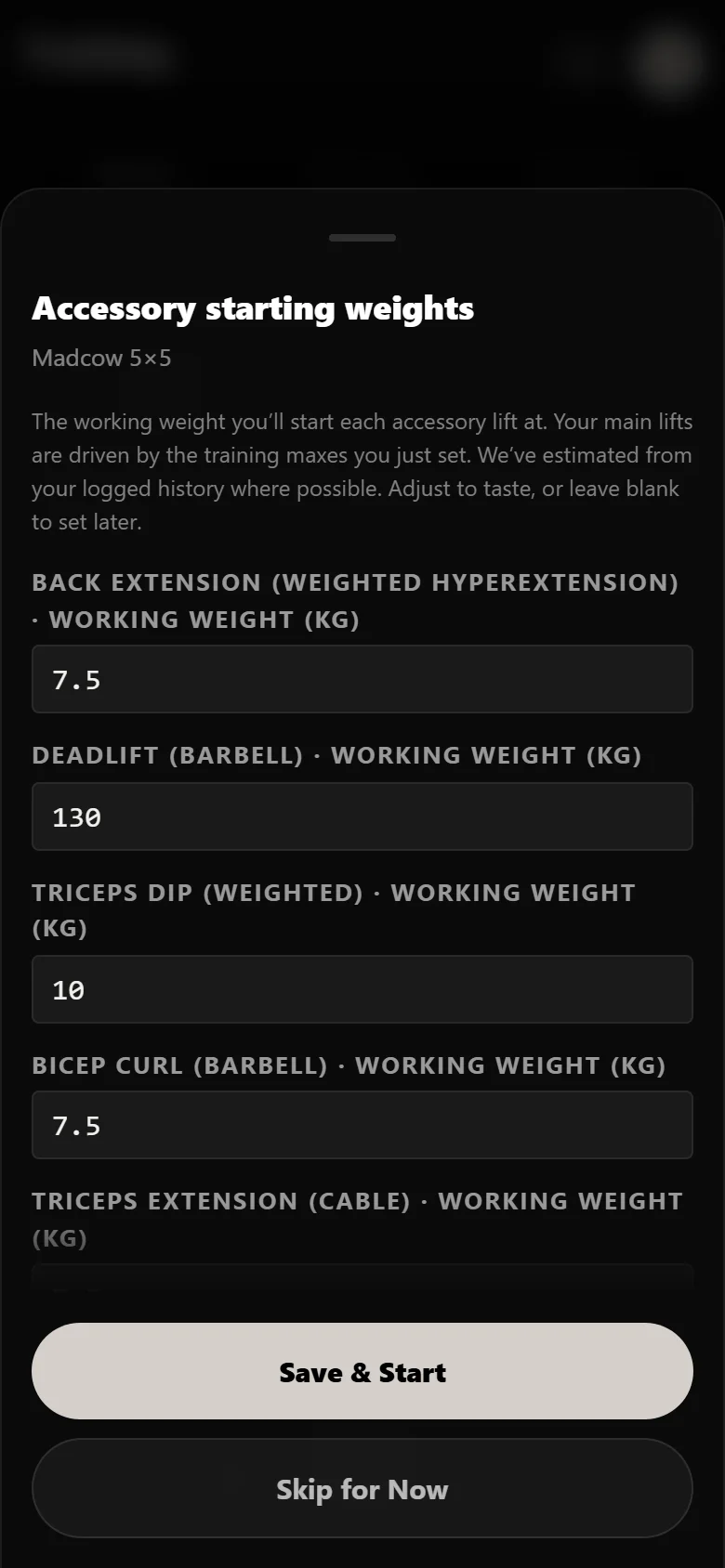
Setup is where Madcow differs from a beginner program. The squat, bench press and bent over row are not given a starting weight at all. They are given a training max, and every set they ever prescribe is a percentage of it. The lifts that sit outside that system still get a plain working weight, which is why the deadlift is asked for separately and opens at 130 kg.
Madcow deliberately starts you under your current best, so the opening weeks feel easy on purpose. The climb is what the program is for.
Heavy, light, intensity
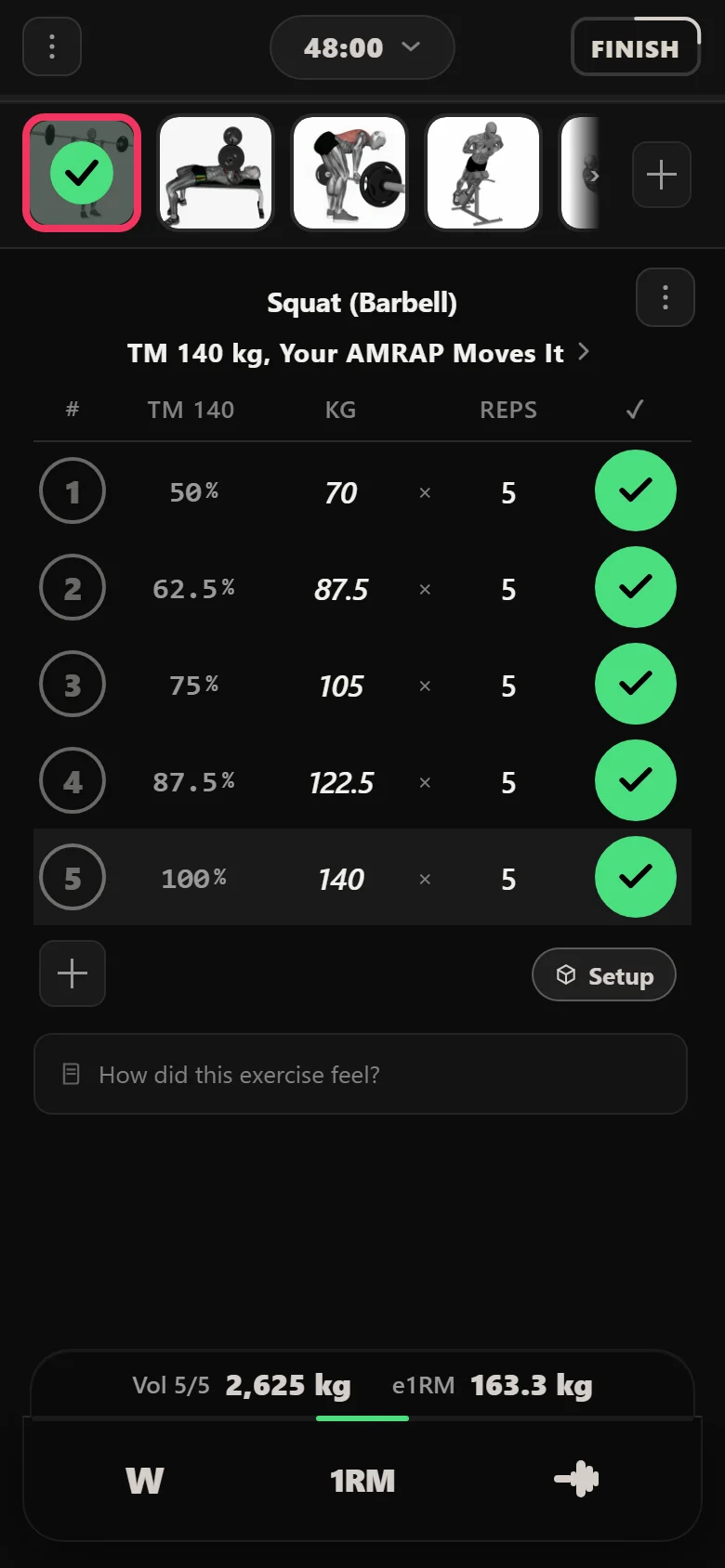
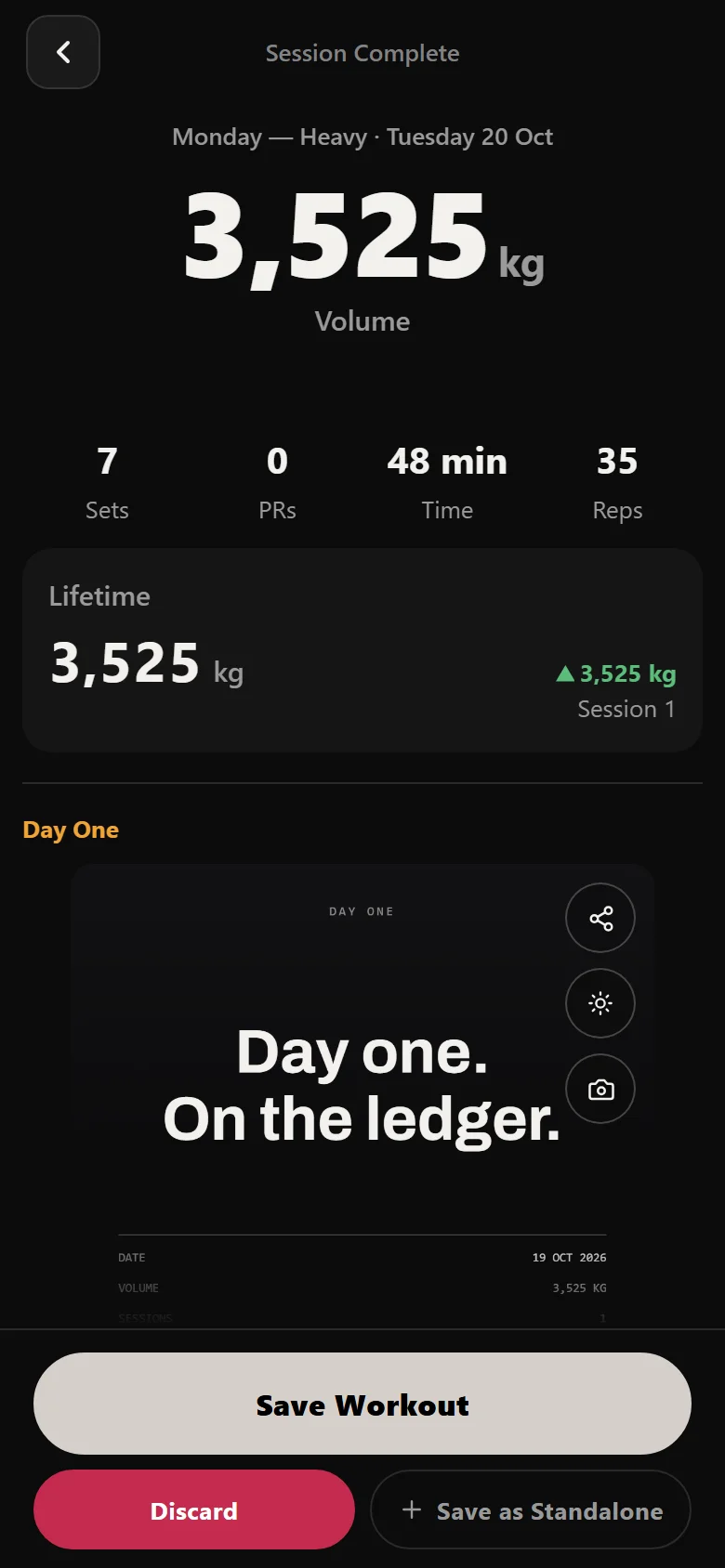
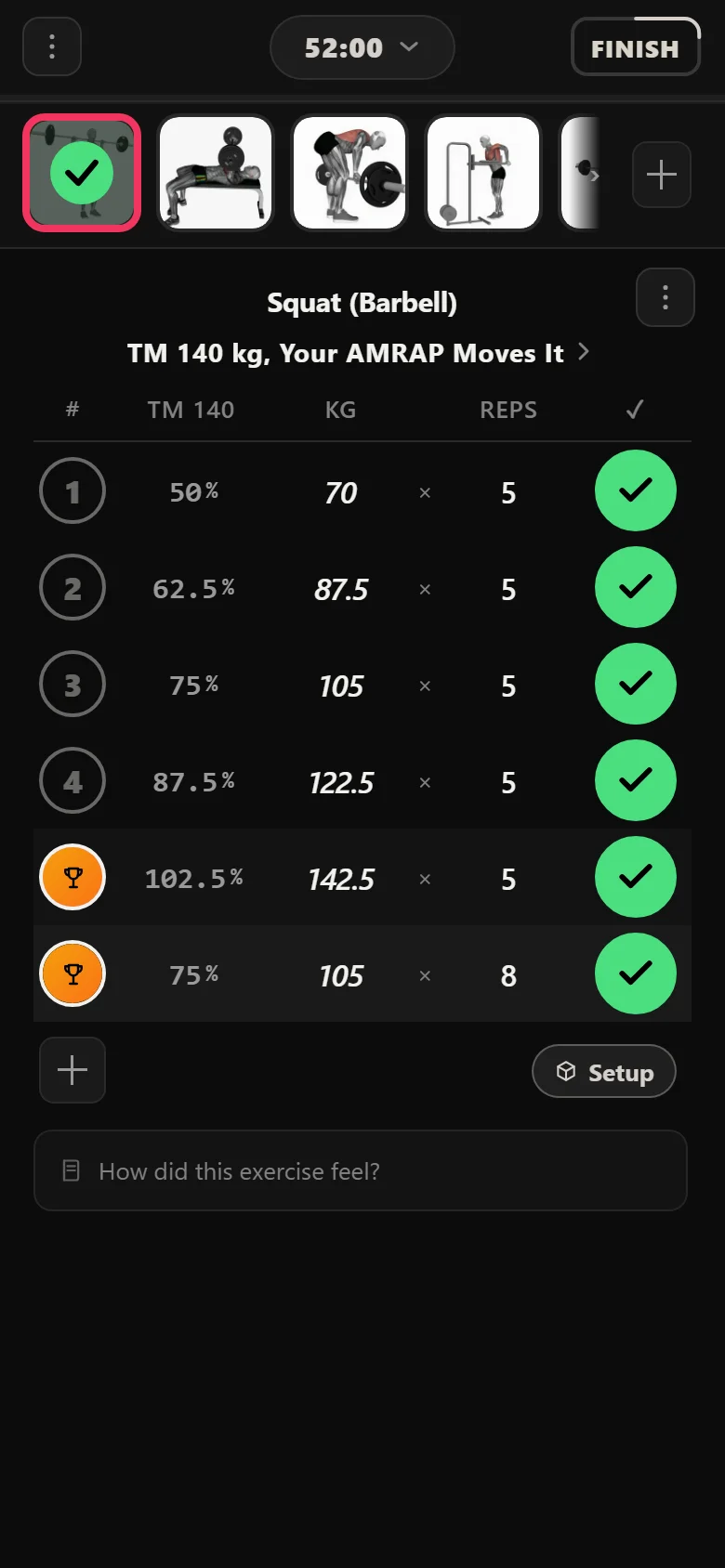
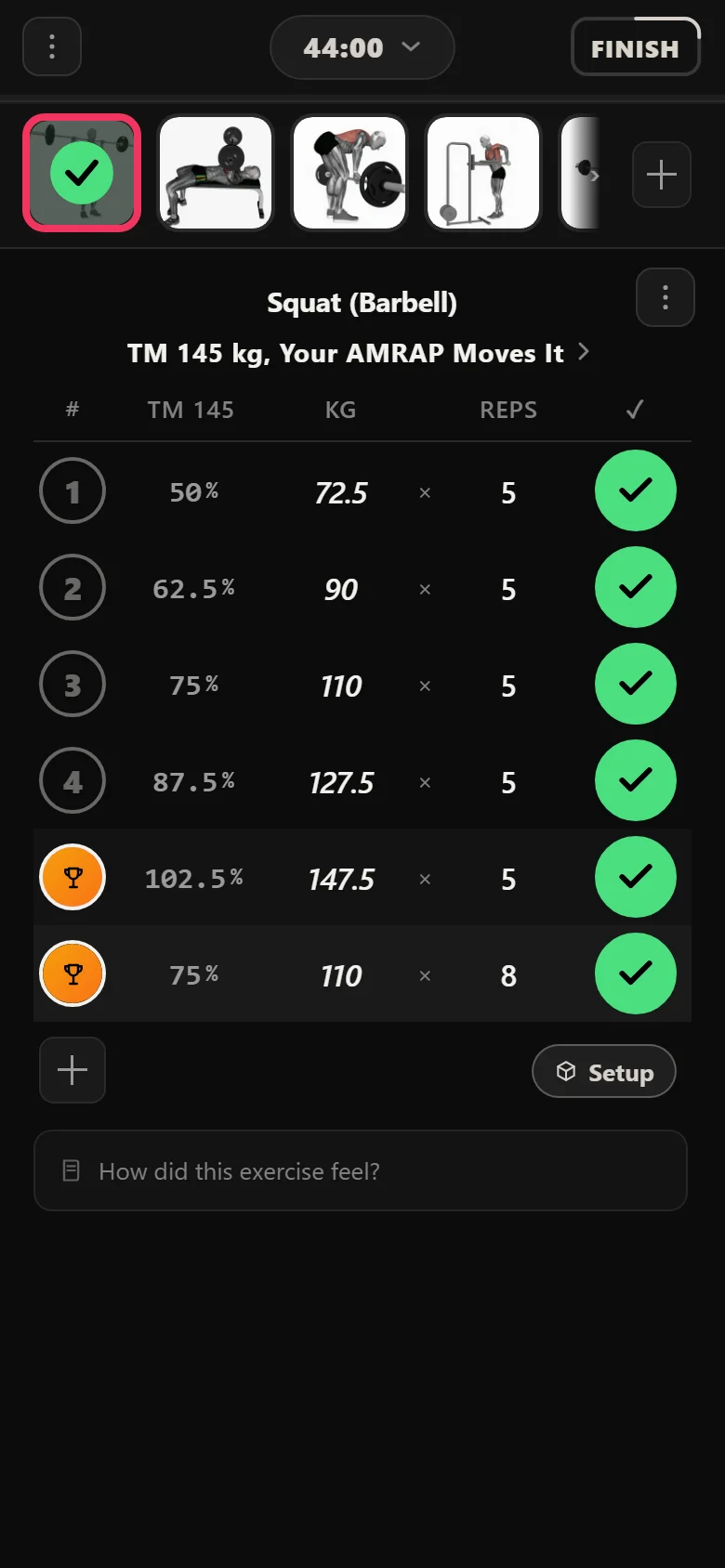
Monday is the heavy day: a ramp of five sets of five up to the full training max, so the first session's top set is 140 kg on a 140 kg max. Nothing about that number was typed in. It is the max, and the app resolved the ramp beneath it.
Wednesday is the same lift at 105 kg. That is not a bad session or a missed one. It is three quarters of the same training max, prescribed light on purpose so the week has a recovery day in the middle of it without dropping the squat frequency. The gap between Monday and Wednesday is the whole Heavy/Light idea, and it is visible in the logger rather than left to the lifter to remember.
Because the light day is a rounded percentage, it does not move every single week. It reads 110 kg in week three and 110 kg again in week four while the heavy day climbs from 145 kg to 147.5 kg underneath it. The ladder is still moving; the rounding just has not caught up on that one day.
The set that moves the ladder
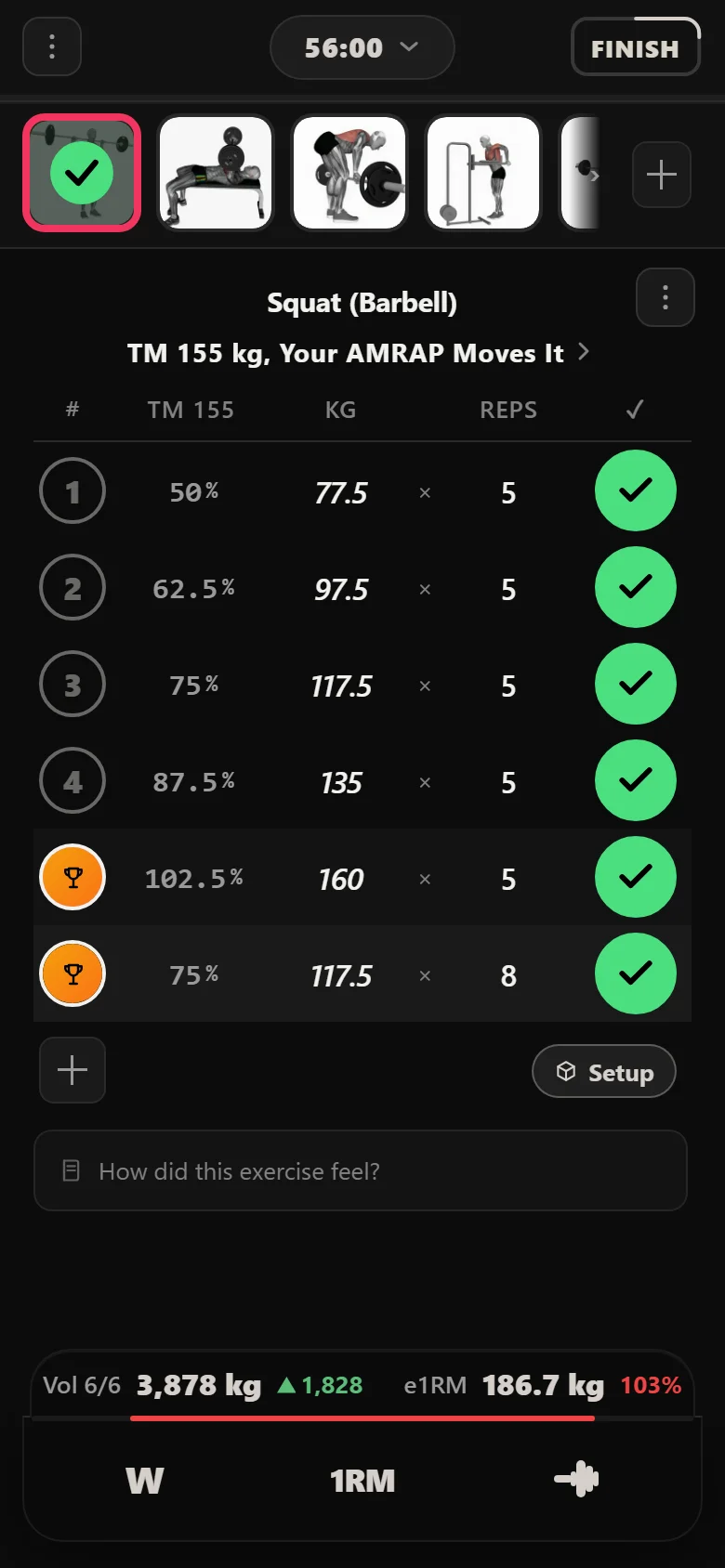
Friday is the only session in the week that changes anything. It ramps to a top set slightly above the training max and asks for a rep-out: three reps prescribed, more if you have them. This run logged five.
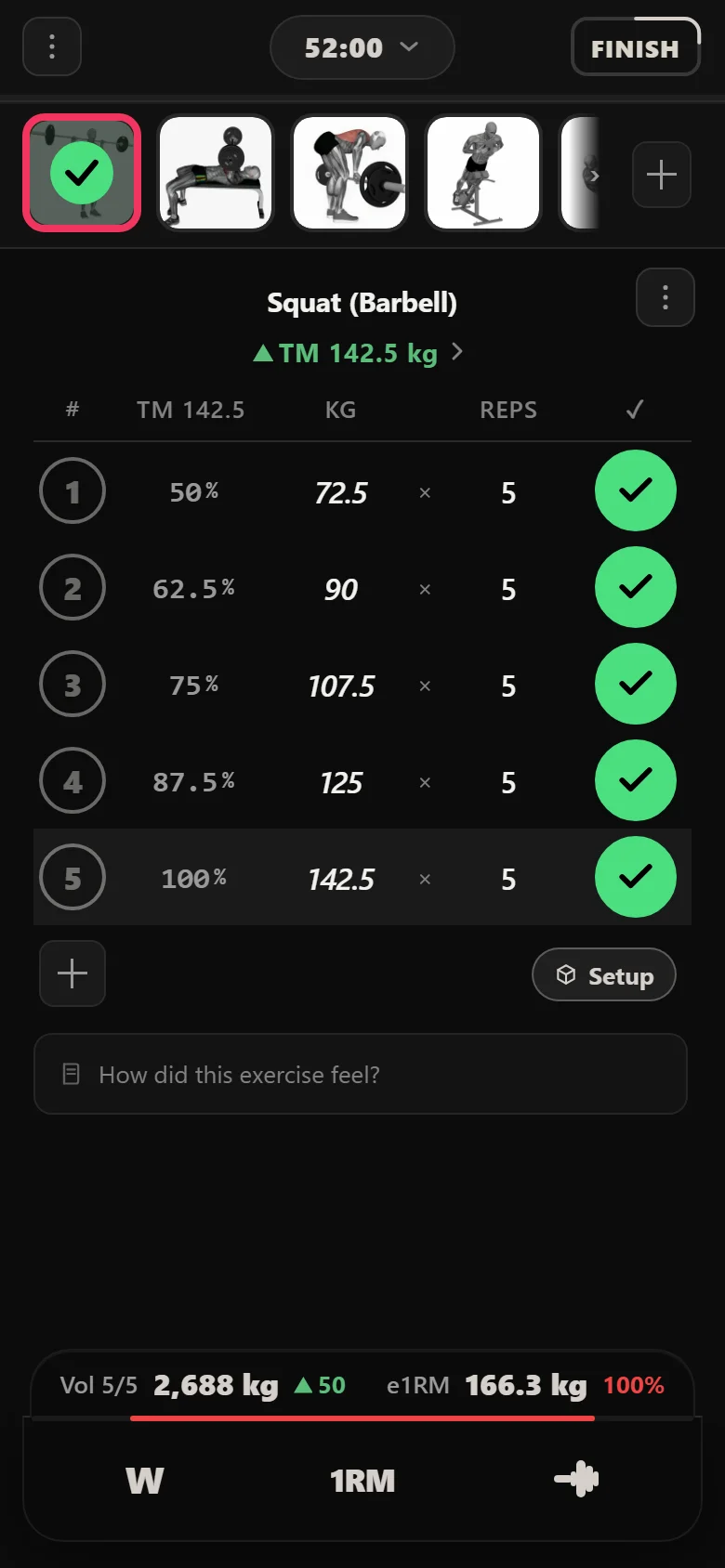
That is the entire progression rule. There is no weekly increment to apply and no decision to make at the end of the session. Clear the rep-out and the app raises the training max by a small percentage, and because every squat weight in the week is derived from that max, all three sessions move together. Monday's top set goes from 140 kg to 142.5 kg without anything else being touched.
It works the same way on the other lifts that carry a max. Bench press went from 100 kg to 115 kg over the block and the bent over row from 80 kg to 95 kg, each on its own Friday rep-out. The deadlift sits outside the training-max system entirely and climbs on plain linear progression, 130 kg to 145 kg.
Six weeks of it
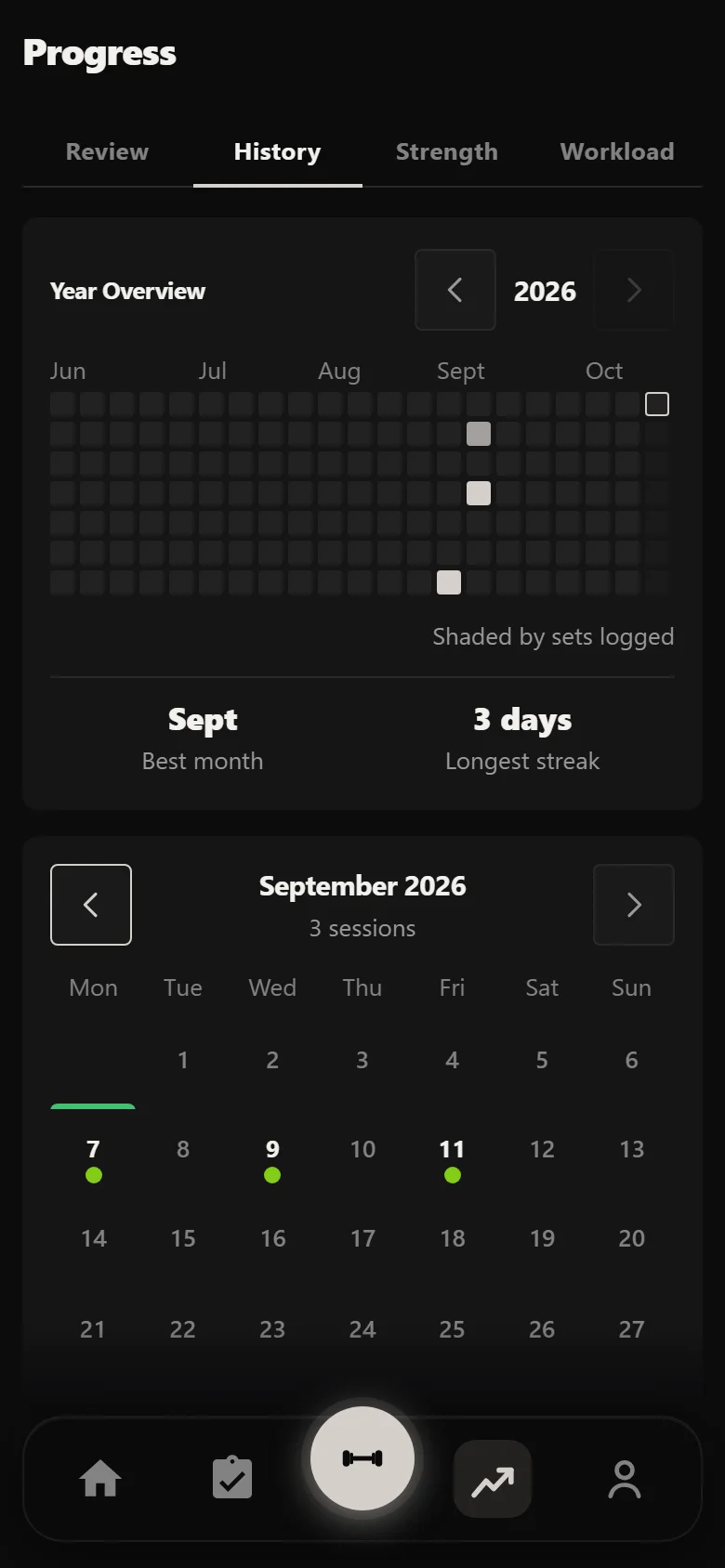
Repeated for six weeks, the rep-out fires every Friday and the max climbs each time. The squat's training max finishes at 160 kg, having started at 140 kg, and the top set on the final Friday is 160 kg.
The estimated one-rep max chart shows the shape this produces: a step rather than a smooth curve. It holds flat across Monday and Wednesday, then moves again after each Friday, because that is genuinely when the number changed.
None of the twenty kilos was decided by hand. The lifter's only input was the rep count on one set a week.
Squat (Barbell): top set, every session
- 140S1 Session 1 — wk 1 heavy
- 105S2 Session 2 — light
- 142.5S3 Session 3 — rep-out
- 142.5S4 Session 4 — wk 2 heavy
- 107.5S5 Session 5
- 145S6 Session 6 — rep-out
- 145S7 Session 7 — wk 3 heavy
- 110S8 Session 8
- 147.5S9 Session 9 — rep-out
- 147.5S10 Session 10 — wk 4 heavy
- 110S11 Session 11 — same as wk 3, rounding
- 150S12 Session 12 — rep-out
- 150S13 Session 13 — wk 5 heavy
- 112.5S14 Session 14
- 155S15 Session 15 — rep-out
- 155S16 Session 16 — wk 6 heavy
- 117.5S17 Session 17
- 160S18 Session 18 — last rep-out
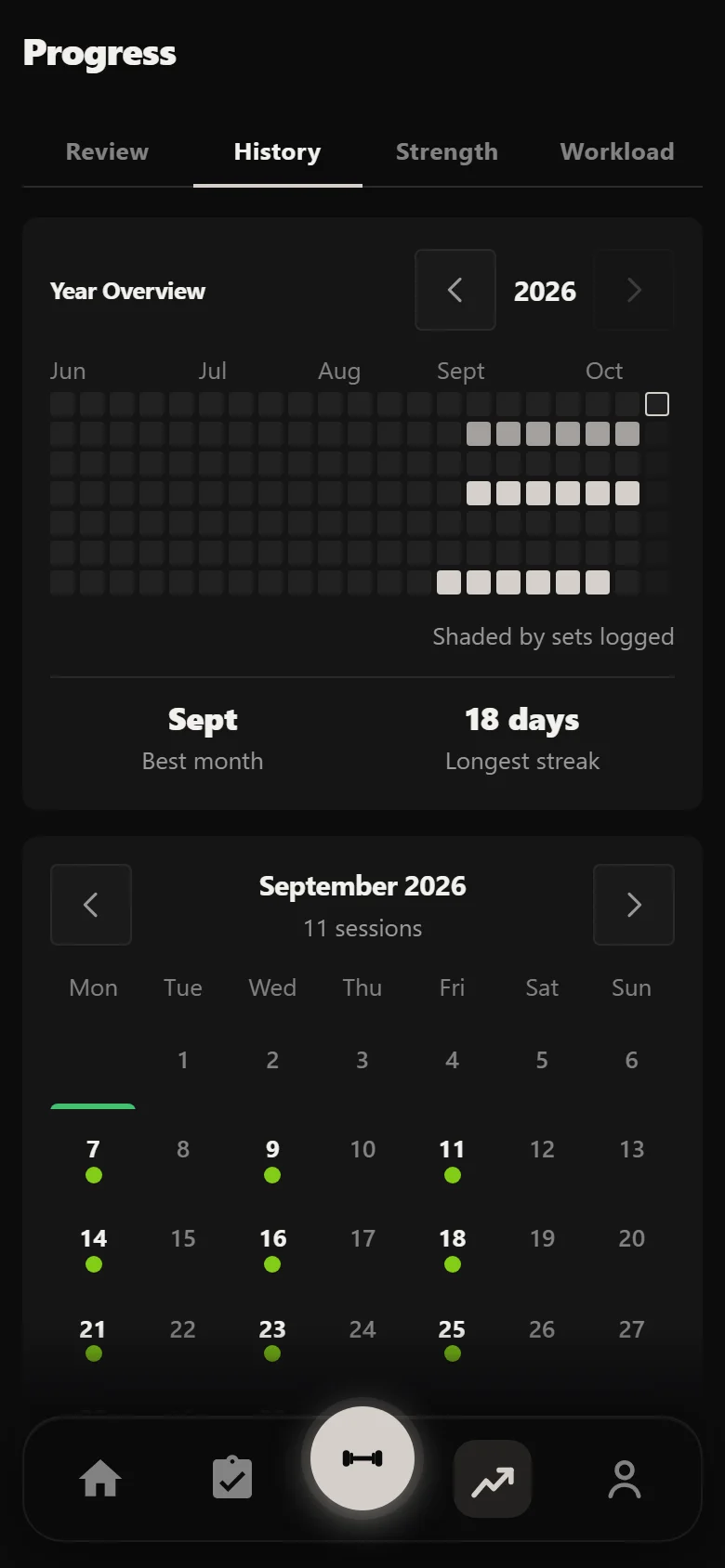
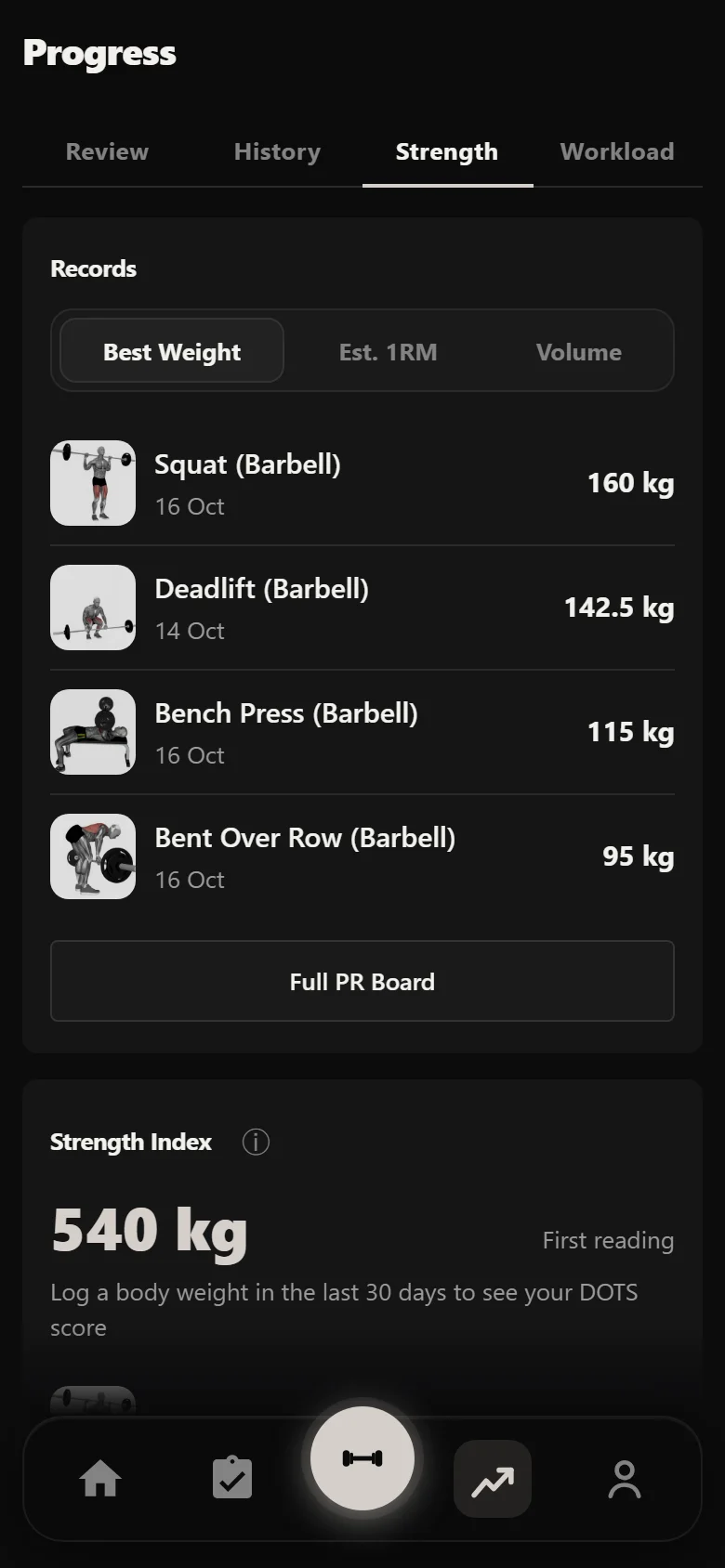
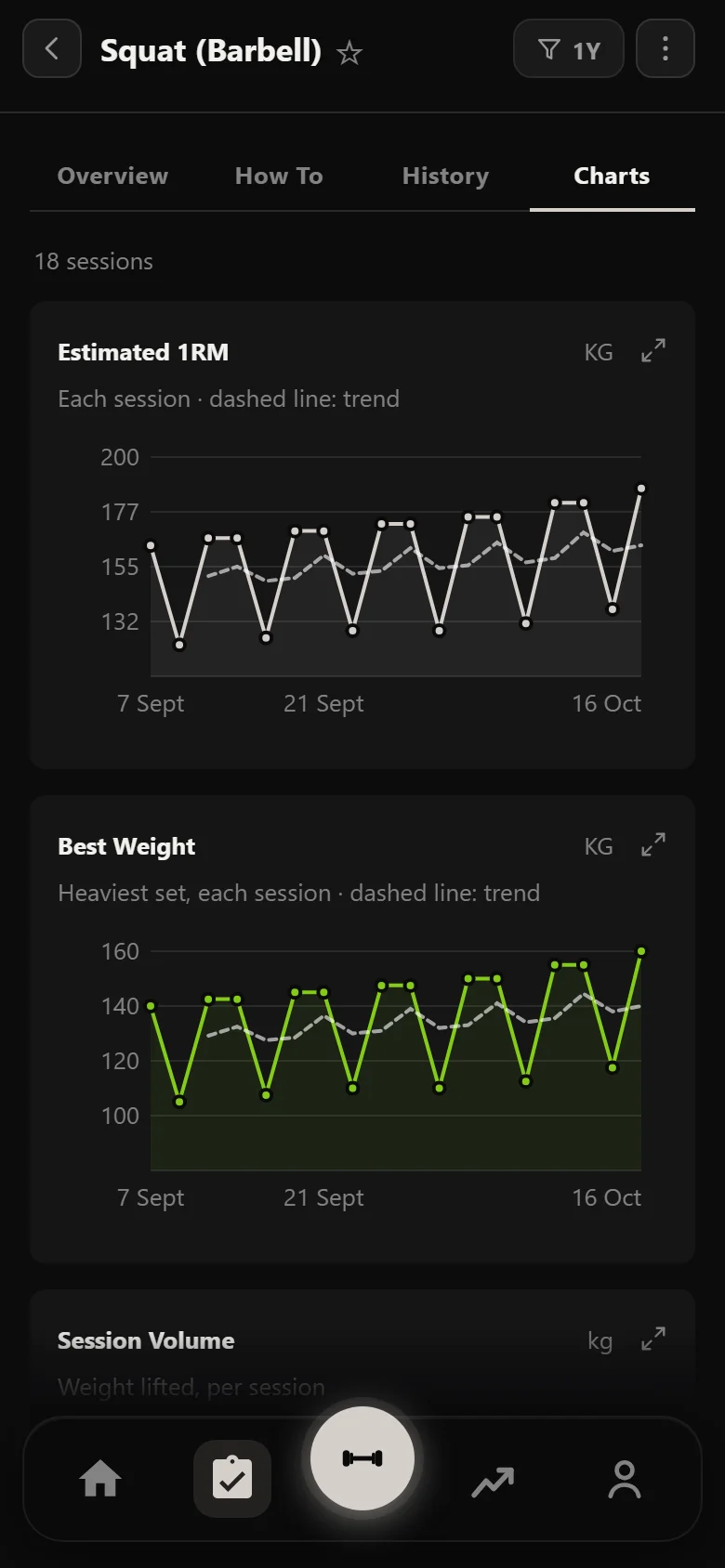
Six weeks of Heavy/Light/Intensity: 140 kg to 160 kg, every jump driven by one rep-out a week.
Common questions
What is Madcow 5×5?
The popular intermediate adaptation of Bill Starr's 5×5. Squat, bench and bent over row are trained three days a week as percentages of a training max, in a Heavy/Light/Intensity pattern, and Friday's set is built to beat the week before for a small automatic bump. It is the usual next step once novice linear progression on those lifts stalls.
What is a training max, and why doesn't Madcow just ask for a weight?
A training max is one number per lift that every prescribed weight is a percentage of. Madcow squats three times a week at three different intensities, so asking for three separate weights would mean keeping three ladders in step by hand. One max keeps them in step automatically: raise it once and Monday, Wednesday and Friday all move together.
Why is Wednesday so much lighter than Monday?
By design. Wednesday is three quarters of the same training max, so it opens at 105 kg against Monday's 140 kg. It keeps the squat frequency at three days a week without three heavy days, which is what makes the weekly climb sustainable.
What happens if I miss the Friday rep-out?
The training max holds rather than climbing, and the following week runs at the same weights. Madcow starts you under your current best precisely so that the early rep-outs are comfortable and the climb has room to run before that happens.
Is Durata free?
Yes. Durata is free to use, with the full program catalogue, automatic progression maths, rest timers and PR tracking. Everything in this walkthrough is in the app.
Put it into practice
Durata is free to use — 50 proven programs, automatic progression, rest timers and PR tracking, all on your phone.