


Kettlebell Full Body in Durata: every step is a bell you own
This is the most portable program in the catalogue. One full-body session, run three times a week, built out of swings, goblet squats, cleans, presses, rows, high pulls, get-ups and carries. One bell will do it. Two is better. Nothing else is required.
Kettlebells come in fixed sizes, so the app never asks for a weight between them. When a movement earns its next step, the next step is the next bell: the bells you have listed in Settings, or the common 4 kg ladder from 8 to 32 kg if you have not listed any. This drive ran on that ladder, and it ran all the way to the top of it.
Finding the program
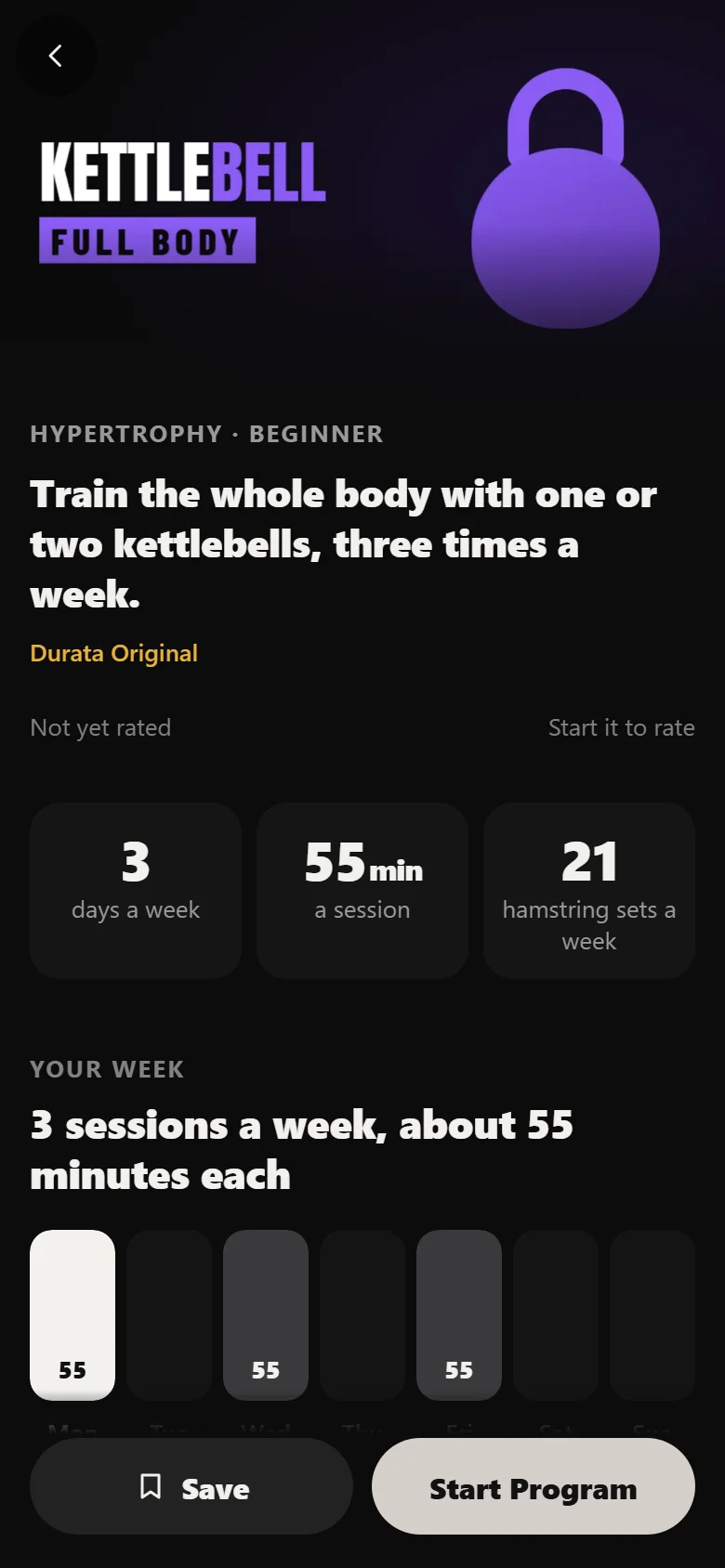
In Discover, Kettlebell Full Body sits on the Hypertrophy shelf, marked Beginner, at three days a week. Search finds it by name, or Filter narrows the shelves by level and days a week. Tap the cover for a quick look, then View Program for the full page.
The only kit it asks for is in the name.
The program page shows the shape before you commit: three identical full-body days, eight movements, and a progression that works by adding reps before it moves you to a heavier bell.
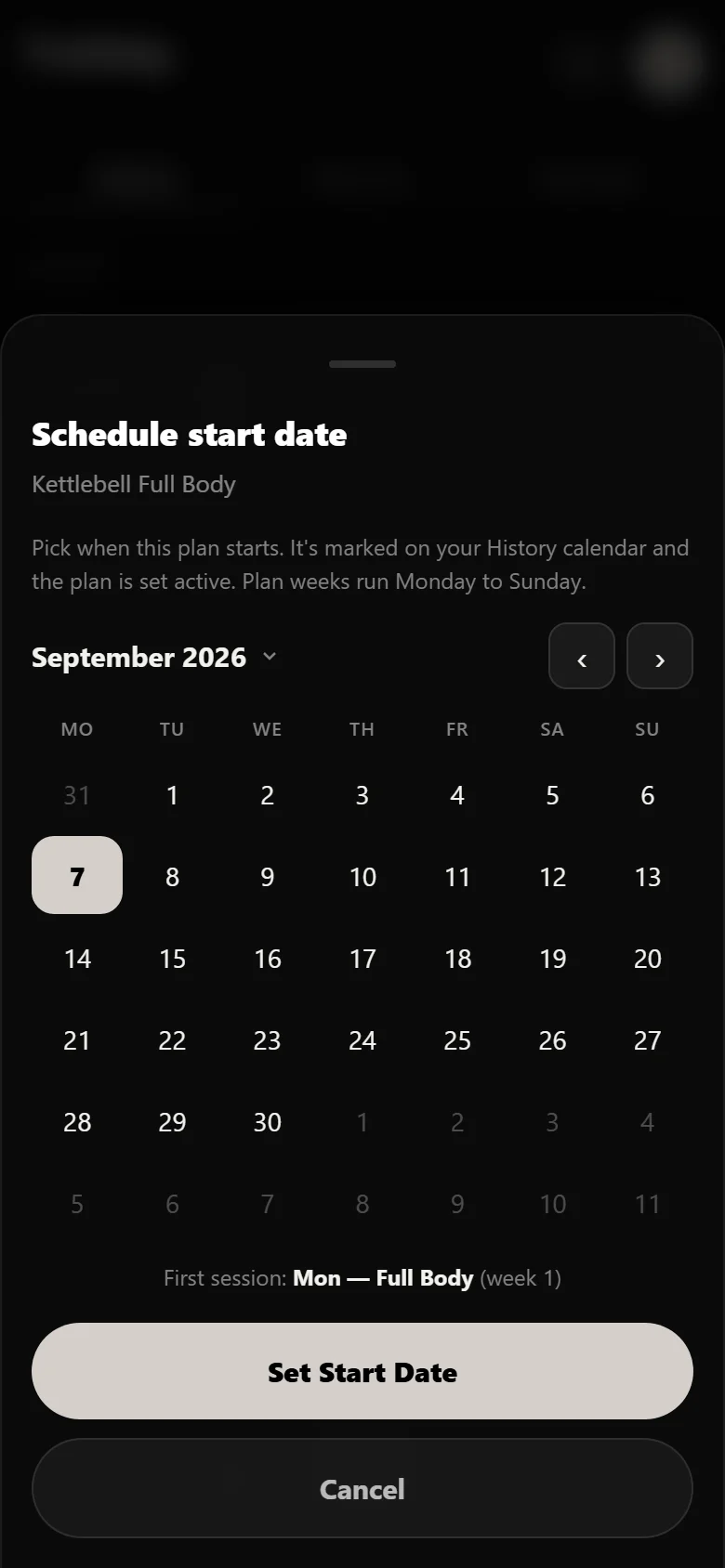
The first session: log the bell you own
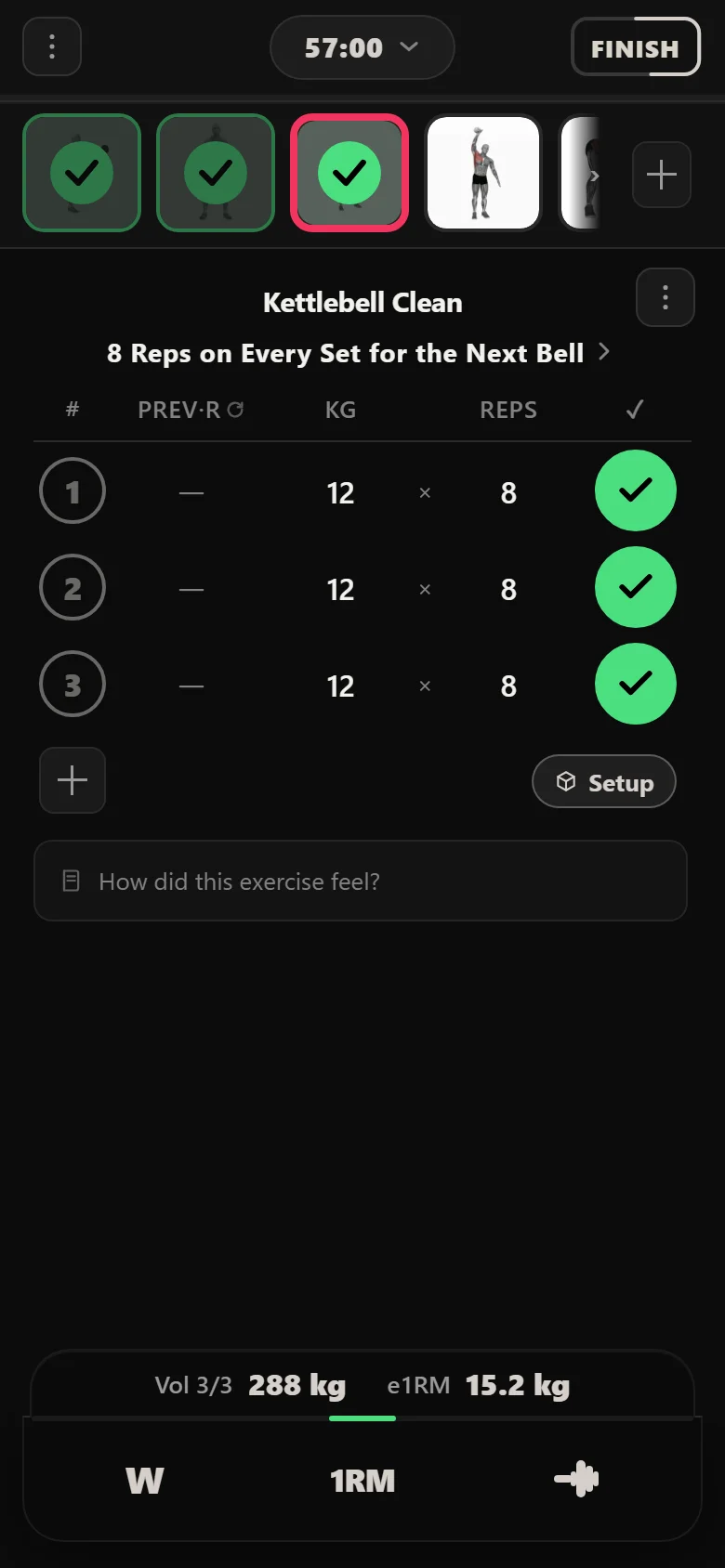
There is no setup sheet asking for weights. You open the first session and log the bell you actually picked up. This run used a 12 kg bell for the clean, three sets of eight, and that first logged bell becomes the movement's working weight.
The line under the clean says what it is waiting for: 8 reps on every set for the next bell. It says the next bell rather than a figure because, on day one, there is no working weight yet to count up from.
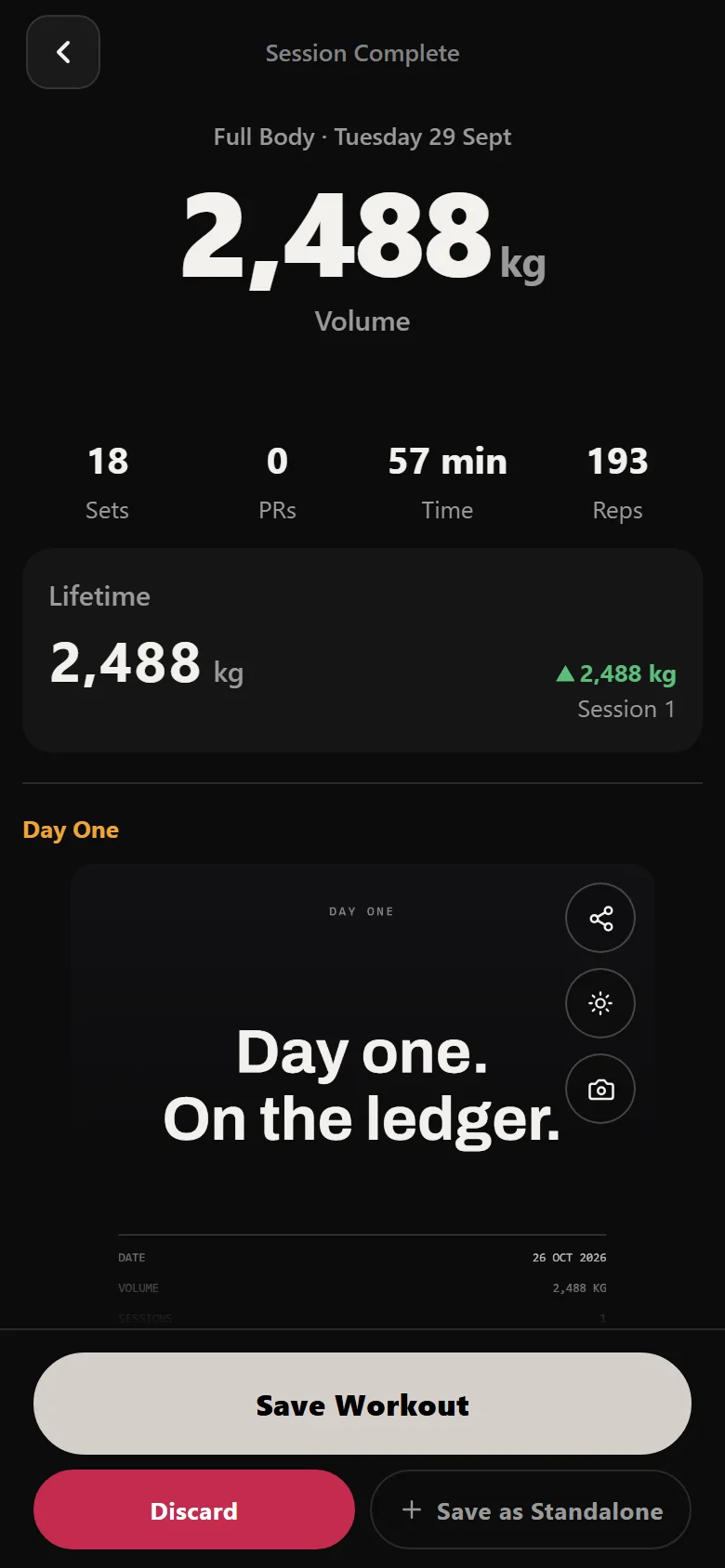
The session tallies at 2,488 kg across 18 sets and 193 reps. The rep count is the striking number. Kettlebell work is high-rep by nature, and a session that would be forty reps with a barbell runs to nearly two hundred here.
One bell at a time
Eight on every set at 12 kg, and the next session opens on 16. Eight on every set at 16, and the one after opens on 20. Each step is 4 kg, because each step is the next bell on the ladder, and every number the app puts in the weight column is a bell you could buy.
It is worth saying plainly that this rate is temporary. A beginner whose opening bells are honest clears the range every session for a while, and a 4 kg jump is a big one on a 12 kg bell. The first stall is not the program breaking, it is the program arriving at the part where the reps do the work.
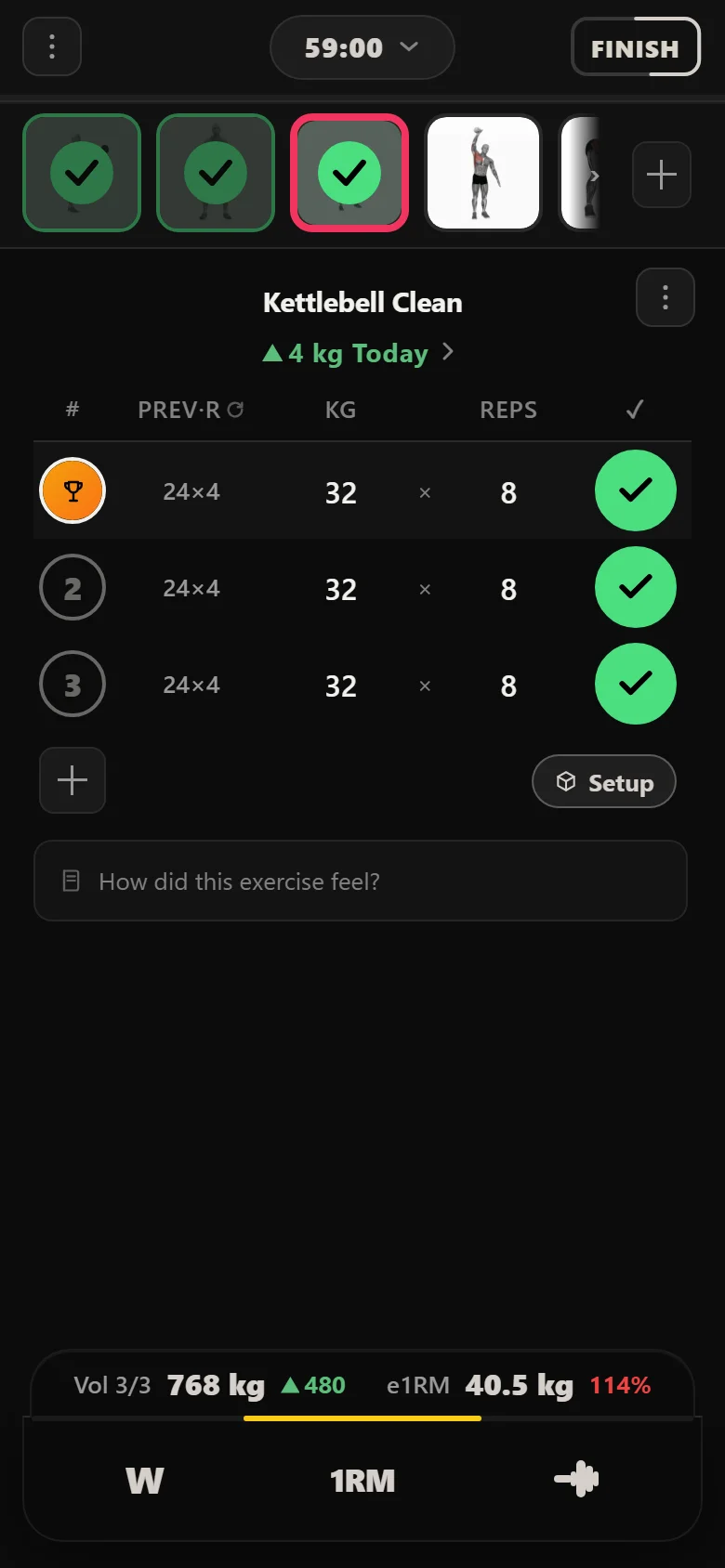
By session three the app already has the next bell on screen when you open it, with the move it made named on the line: 4 kg today.
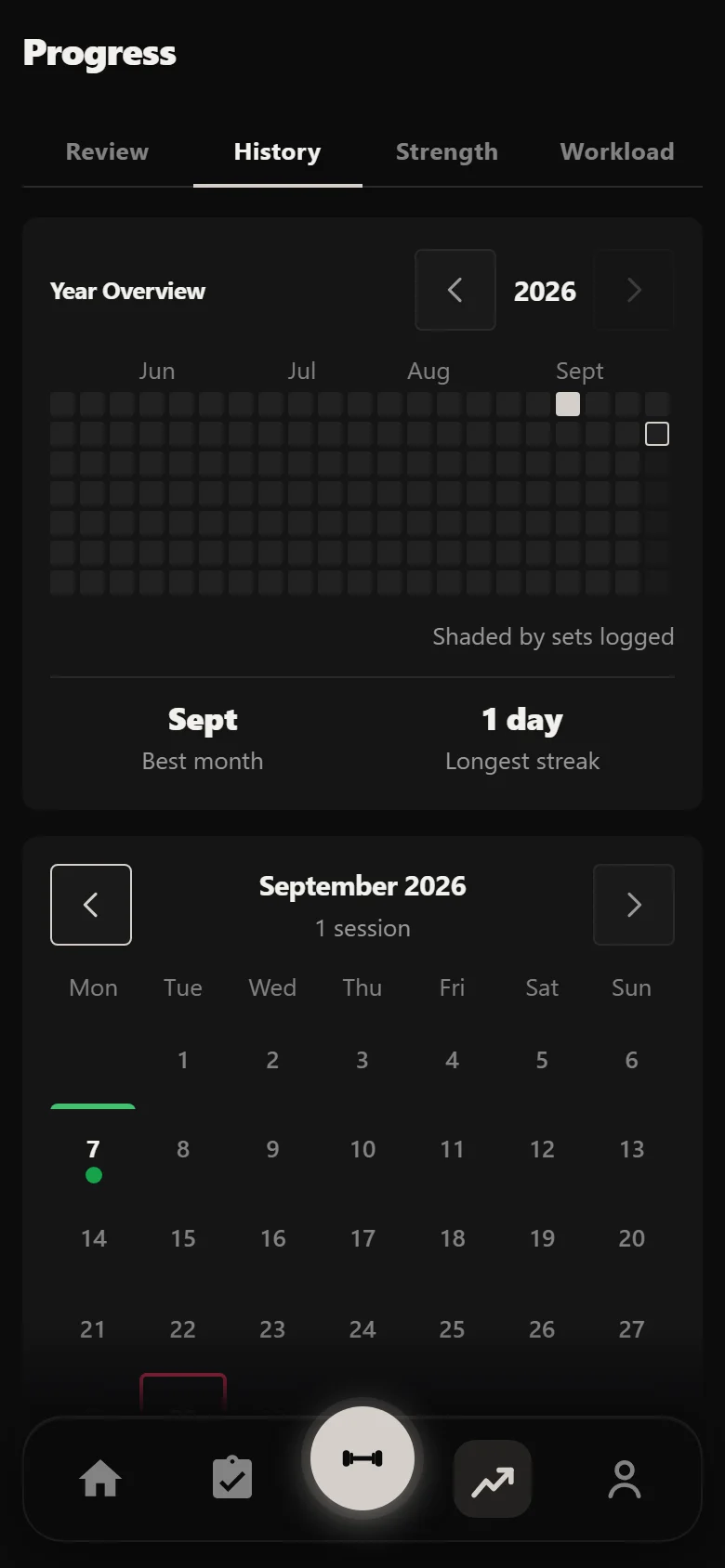
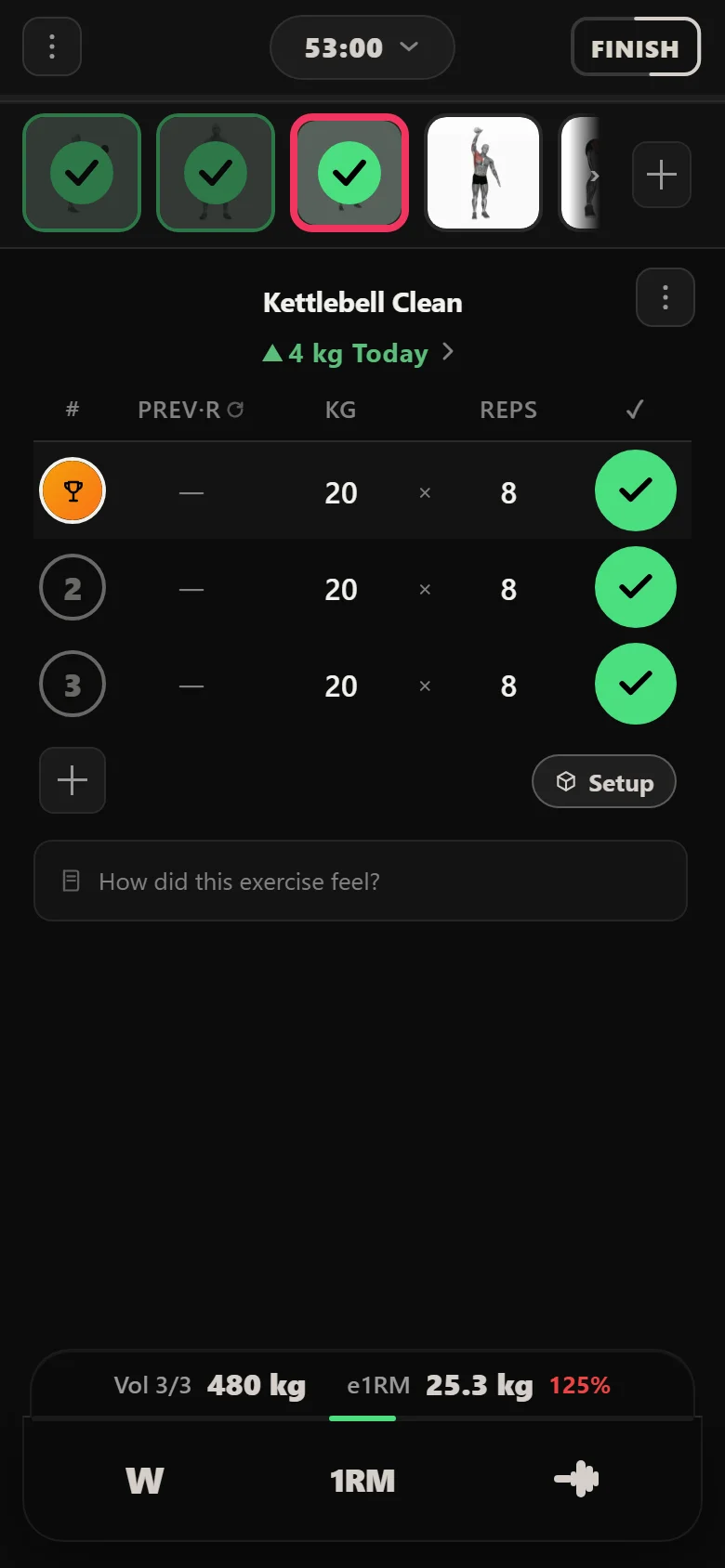
24 kg, and the first honest session
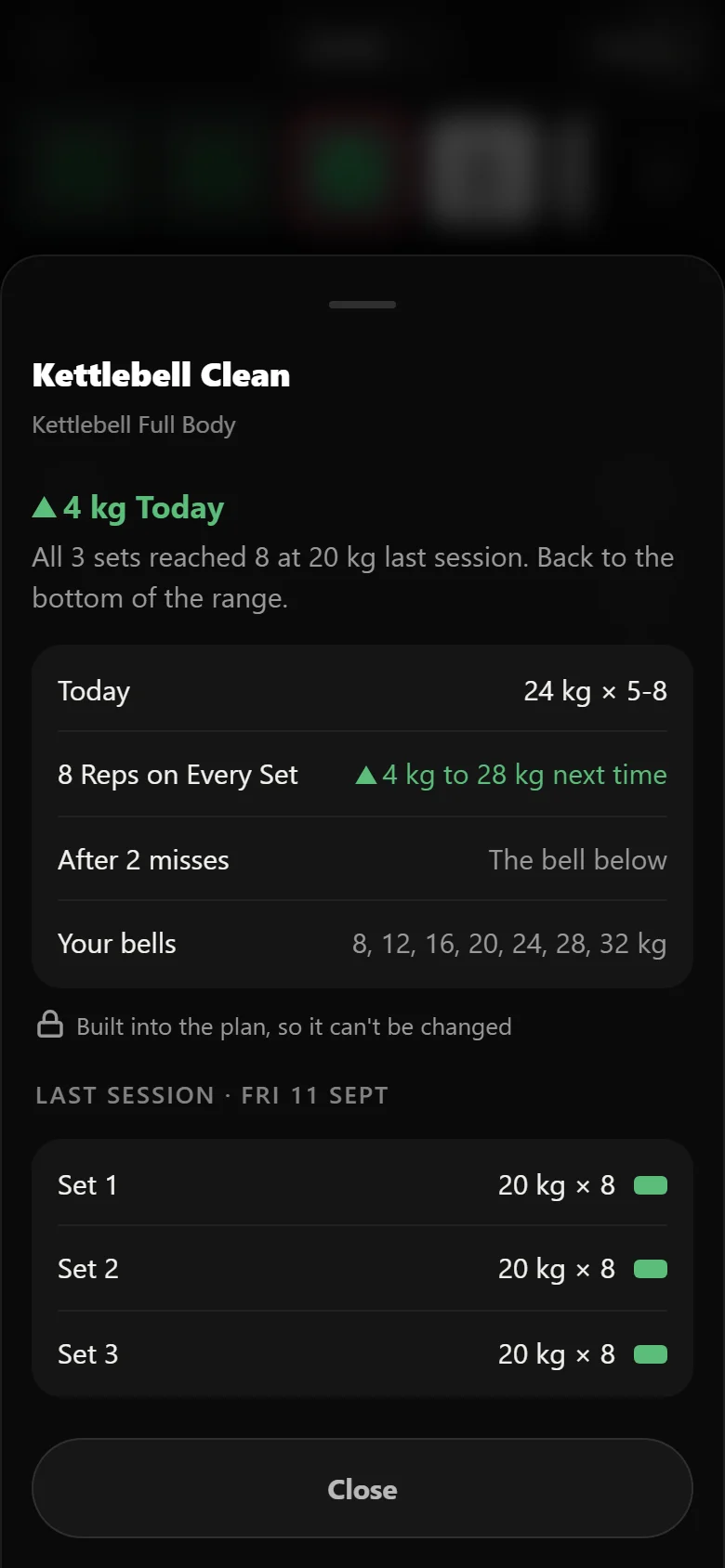
The rule chip is a button. Opened at the start of session four, it shows the case for that day's bell: all three sets reached 8 at 20 kg last time, so the clean moved to 24 kg and the reps went back to the bottom of the five to eight range. Under that it states the rest of the rule in bells, not percentages: 8 reps on every set takes you 4 kg to 28 kg, two misses send you to the bell below, and the bells it is working from are listed, 8 to 32 kg.
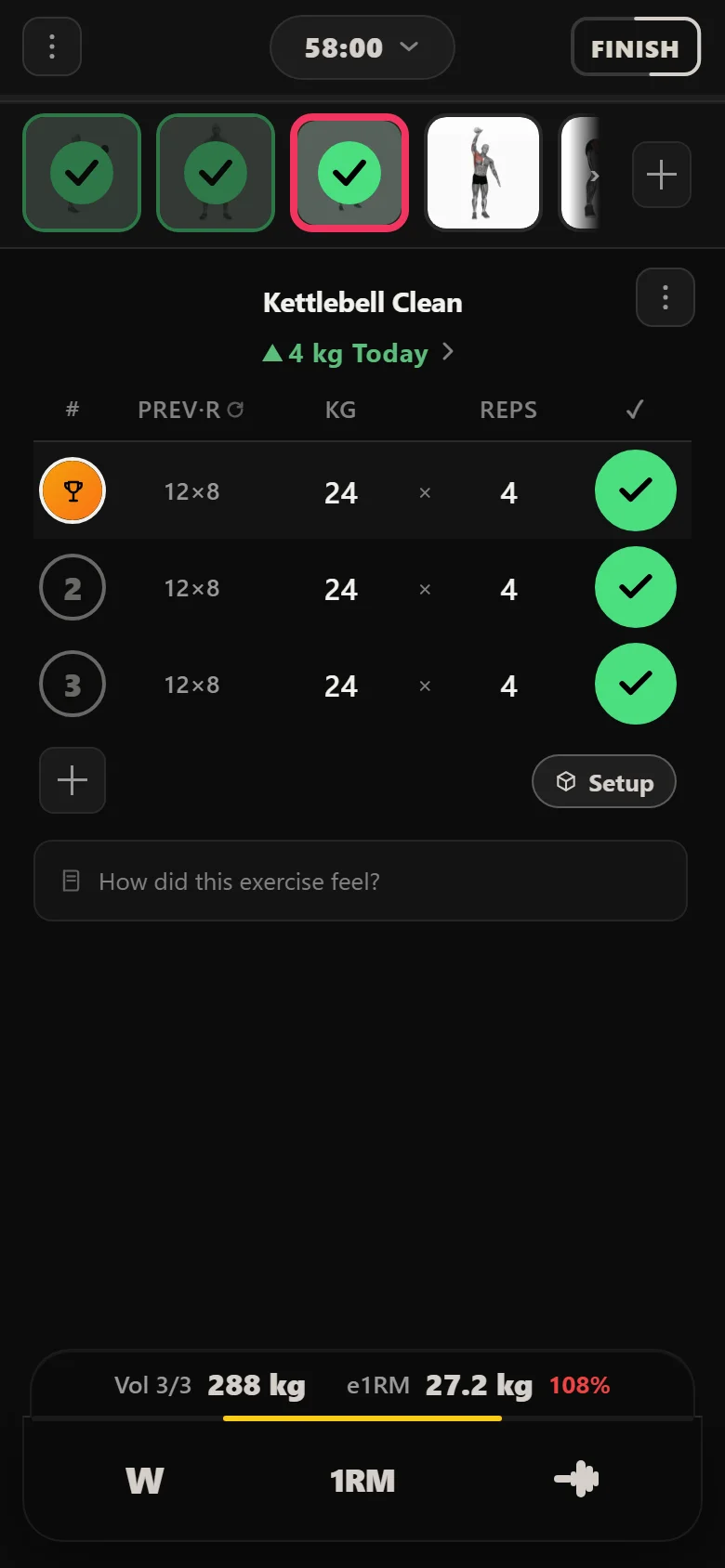
24 kg is where the run stopped. The clean produced 4 reps against a floor of five, which is a miss, and the bell was held rather than advanced.
The second miss did not land. The next session cleared 24 kg and the climb resumed. One miss buys a repeat rather than a step down, which for a beginner is exactly the right amount of patience: enough to absorb a bad day, not so much that a genuine ceiling goes unnoticed.
The strip below is the clean across all nine sessions.
Kettlebell Clean across nine sessions
- 12S1 Session 1 — start
- 16S2 Session 2
- 20S3 Session 3
- 24S4 Session 4 — 4 reps of 5
- 24S5 Session 5 — held, then cleared
- 28S6 Session 6
- 32S7 Session 7
- 32S8 Session 8 — heaviest bell
- 32S9 Session 9
The ladder is yours to set
This drive used the app's standard ladder, 8, 12, 16, 20, 24, 28 and 32 kg, because no bells were listed. Most people do not own all seven. Under Settings, Plate Calculator, Kettlebells you list the bells you actually have, and from then on the next step is the next bell you own: with a 16 and a 24 but no 20, a finished 16 goes to 24.
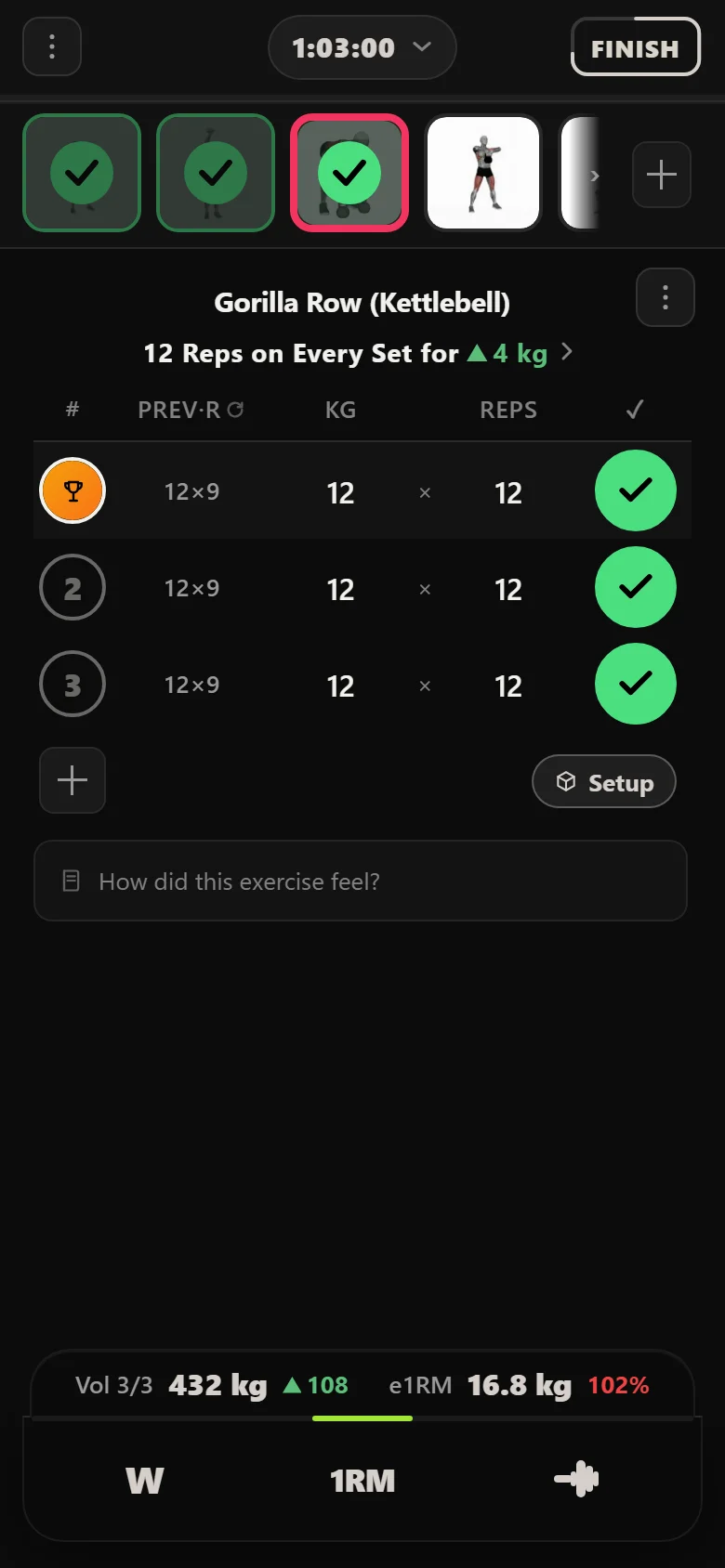
That makes the rep range more important, not less. The gap to your next bell may be 4 kg or 8, and the reps are how you earn it. The accessories show the same rule at work: the gorilla row stayed on its 12 kg bell until it reached 12 reps on every set, and the line under it named the prize, 4 kg.
Double bells change this too. A clean and press with a bell in each hand is not a one-bell lift, and logging it as one will make your volume look wrong. Enter what you moved.
Past the bell that stopped it, then out of bells
By session seven the clean was at 32 kg, two bells past the 24 kg that had stalled it, for three sets of eight. That is the ordinary shape of a beginner block and it is worth seeing once, because it is the evidence for trusting the rule the next time it holds you.
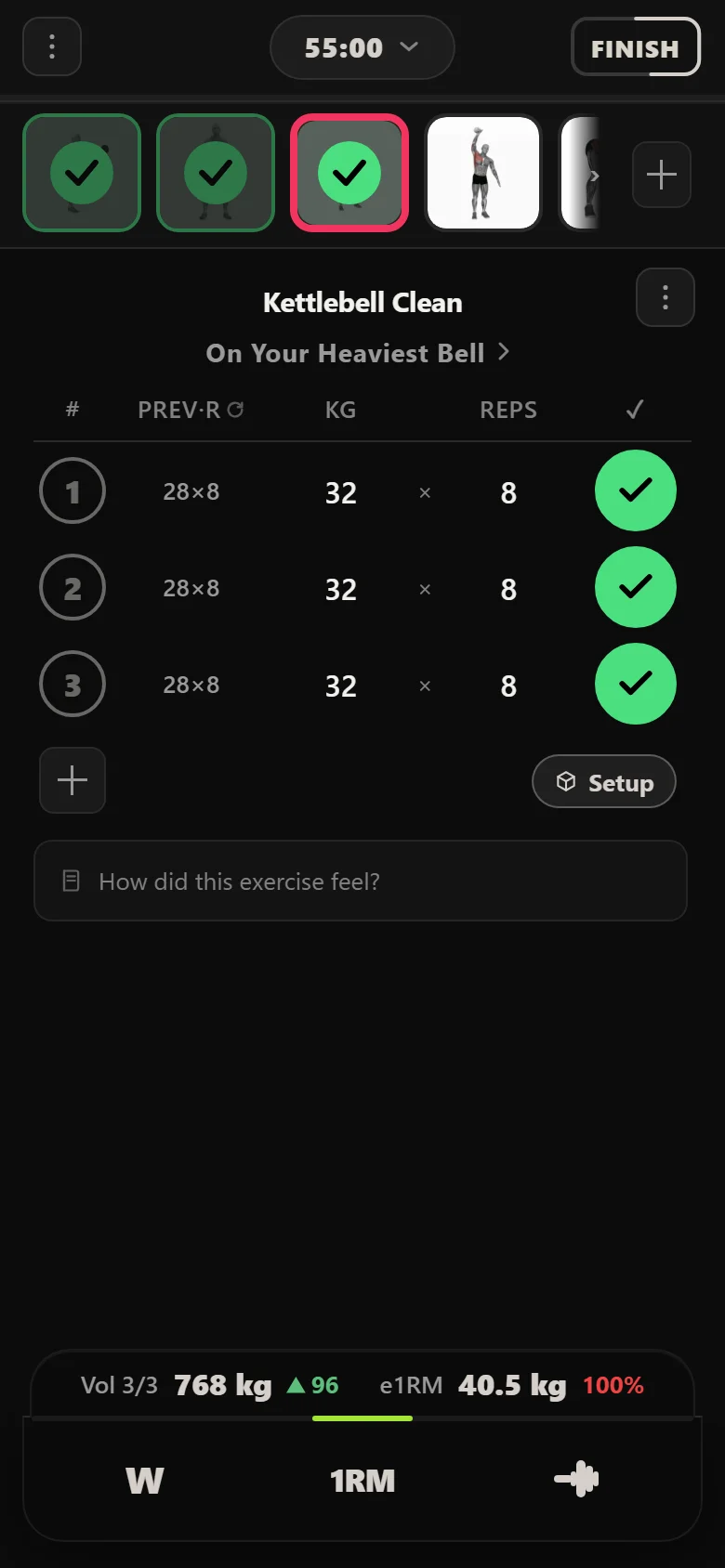
Then the ladder ran out. 32 kg is the heaviest bell on it, so sessions eight and nine opened on 32 again, and the line under the clean says so in plain words: on your heaviest bell. Nothing is asked for that you cannot pick up. The rep range is still there to work in, and the next move is yours: a heavier bell, listed in Settings, or a harder variation.
The other movements finished well short of that ceiling. The swing went from 16 kg to 28 kg, the goblet squat and the high pull from 12 kg to 24 kg, the press from 8 kg to 20 kg, and the gorilla row from 12 kg to 16 kg. Six movements, six separate arguments, all of them settled from logged reps.
The two movements the app leaves alone
Six of the eight movements carry a progression rule. The Turkish get-up and the farmer's walk do not, and they never appear in the progression ledger at all.
That is deliberate. A get-up is a skill before it is a lift, and the useful progression on it is doing it better rather than doing it heavier. A loaded carry progresses in distance and time as readily as in load. Putting a rep-target rule over either one would produce a number that means very little and would push you toward failure on a movement where failure means dropping something over your face.
So they sit in the session, they get logged, they count toward volume, and nothing tells you to add weight to them. Add weight when they feel easy. That judgement is yours and it is the right place for it.
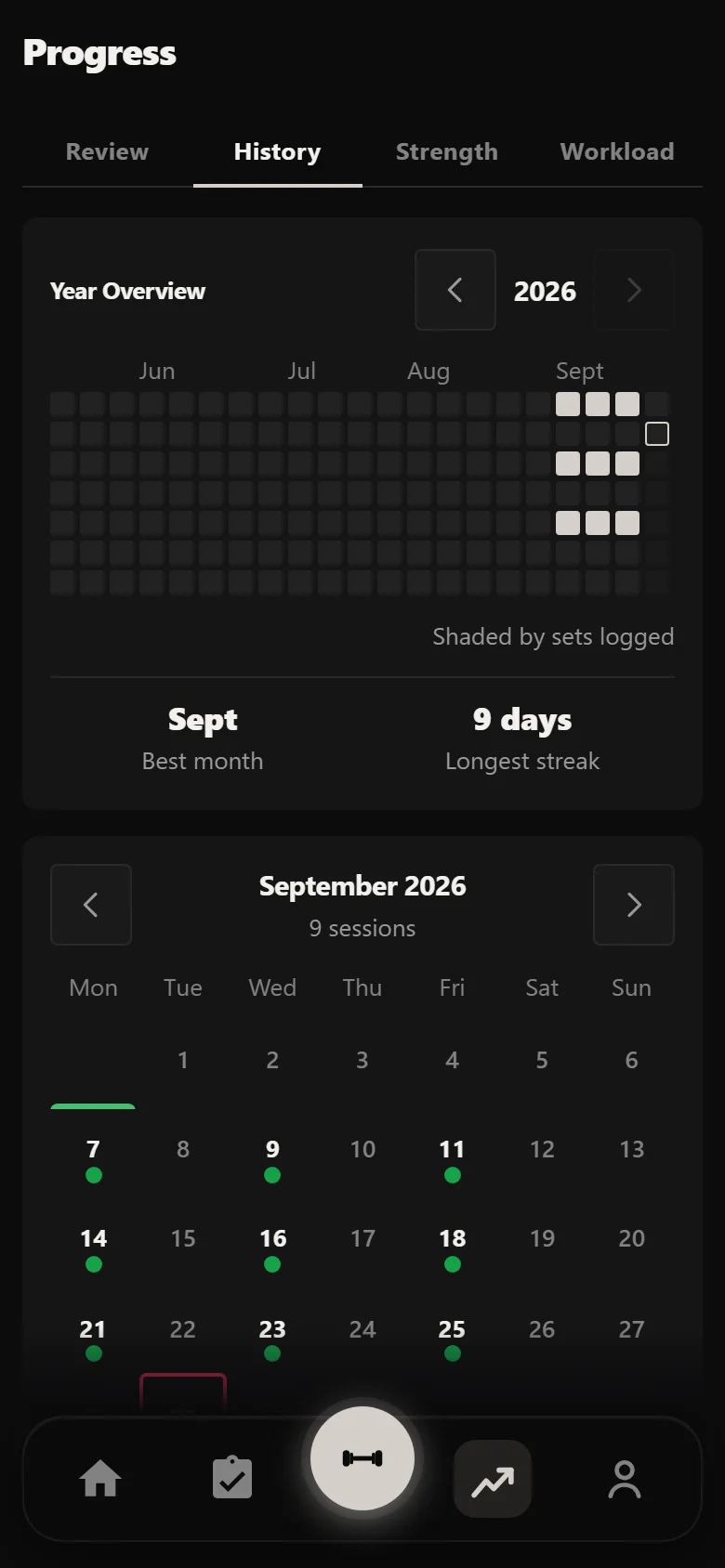
Nine sessions over three weeks fills the calendar at a rate anyone can keep up with, which is most of the argument for a three-day full-body program in the first place.
What three weeks of kettlebell work adds up to
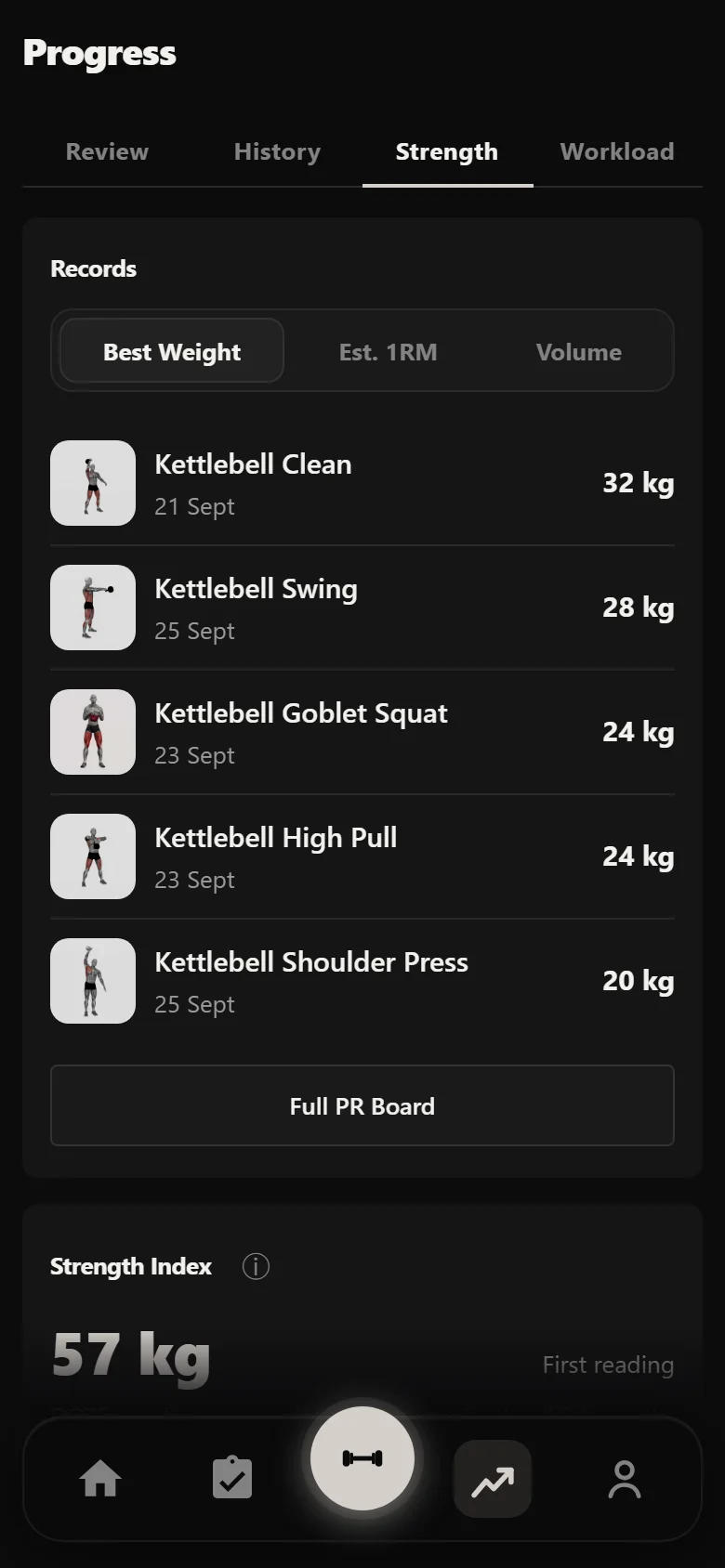
The Strength tab lists the records by best weight: the clean at 32 kg, the swing at 28 kg, the goblet squat and high pull at 24 kg, the shoulder press at 20 kg. Those are small numbers next to a barbell program and they are not comparable ones. A kettlebell clean is a different task from a barbell clean, and the useful comparison is this block against your own next block.
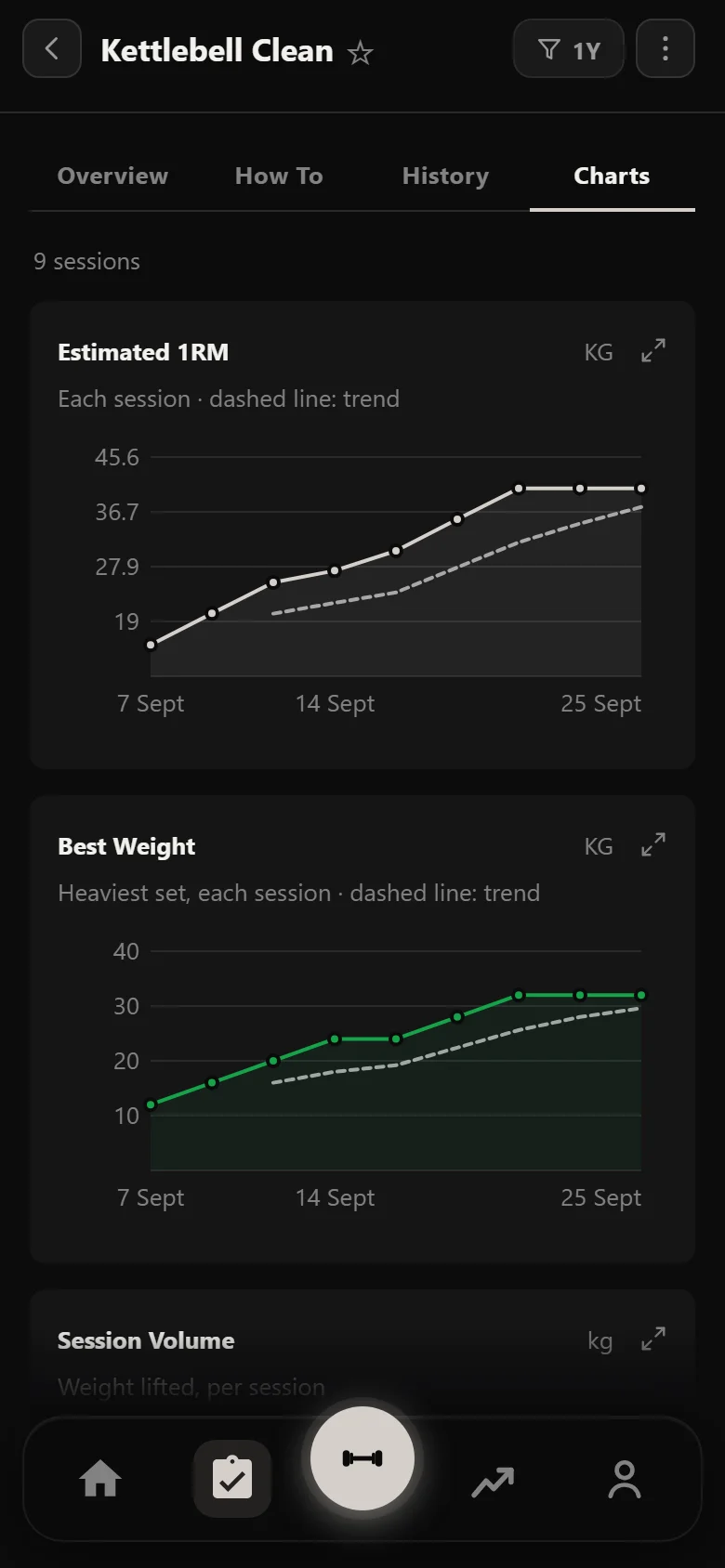
The clean's own charts show the shape properly: best weight climbing a bell at a time, the flat spot where 24 kg was held, then the climb resuming until it levels at 32 kg, where the ladder ends. The estimated one-rep max follows the same line and flattens with it.
The payoff: session one against session nine
The same movement, the same three working sets, three weeks apart. One held session in the middle, and nothing else decided by hand.
Five bells up, at a beginner's rate, and it does not last: the ladder ran out at 32 kg, and the next step is a heavier bell of your own.
Common questions
What is Kettlebell Full Body?
A beginner three-day program built entirely from kettlebell work: swings and high pulls for the posterior chain and conditioning, goblet squats and clean and press for legs and shoulders, gorilla rows for the back, and Turkish get-ups and farmer's walks for control and grip. The same session three times a week, with progression by adding reps across a range before moving to the next bell.
How many kettlebells do I need?
One will run the program. Two is meaningfully better, because the gap between your two bells becomes your progression ladder: you climb the rep range on the lighter one until the heavier one is earned. A third bell in between makes each step smaller.
What if I don't own the next bell on the ladder?
List the bells you do own under Settings, Plate Calculator, Kettlebells. The app then steps each movement to the next bell in your list and skips the sizes you don't have, so a lifter with 16 and 24 kg bells goes from 16 straight to 24. With nothing listed it uses the common 4 kg ladder, 8 to 32 kg.
What happens when I reach my heaviest bell?
The weight holds. The line under the movement says you are on your heaviest bell, and nothing asks for a weight you cannot pick up. Keep working the rep range, add a heavier bell to your list when you buy one, or move to a harder variation.
Why do the get-up and the farmer's walk have no progression rule?
Because neither one progresses usefully by adding weight on a schedule. A get-up improves by being done better, and a carry progresses in distance and time as readily as in load. They are logged and they count toward your volume, but nothing tells you to add weight. That call stays with you, which is the right place for it on a movement where failure means dropping a bell over your face.
Is this enough to build muscle?
For a beginner, yes, for a while. Three full-body sessions a week with a bell that moves up as the reps allow is a real training stimulus. As you advance you will want heavier bells or a barbell, because kettlebell loading eventually runs out of room in a way a plate-loaded bar does not, which is exactly what this drive's clean did at 32 kg.
Is Durata free?
Yes. Durata is free to use, with the full program catalogue, rest timers, rule chips and PR tracking. Everything in this walkthrough is in the app.
Put it into practice
Durata is free to use — 50 proven programs, automatic progression, rest timers and PR tracking, all on your phone.