


The Rippler in Durata: a 12-week wave to a max
The Rippler is Cody Lefever's intermediate-to-advanced GZCL peaking block: twelve weeks that ripple the main lift through an undulating intensity wave off your true one-rep max, until you test a fresh max at the end. It's a real step up in complexity from a linear program, so it's the perfect thing to watch run inside the app. Every screen below is the live app, and every weight, rep and estimate is computed by the real engine.
Where a beginner program bumps a training max a little each week, The Rippler holds your maxes fixed and moves the intensity around them: high-rep volume weeks, heavy low-rep weeks, then a test. Durata puts the right weight on the bar for every one of those sessions, so all you manage is the effort.
Finding the right block
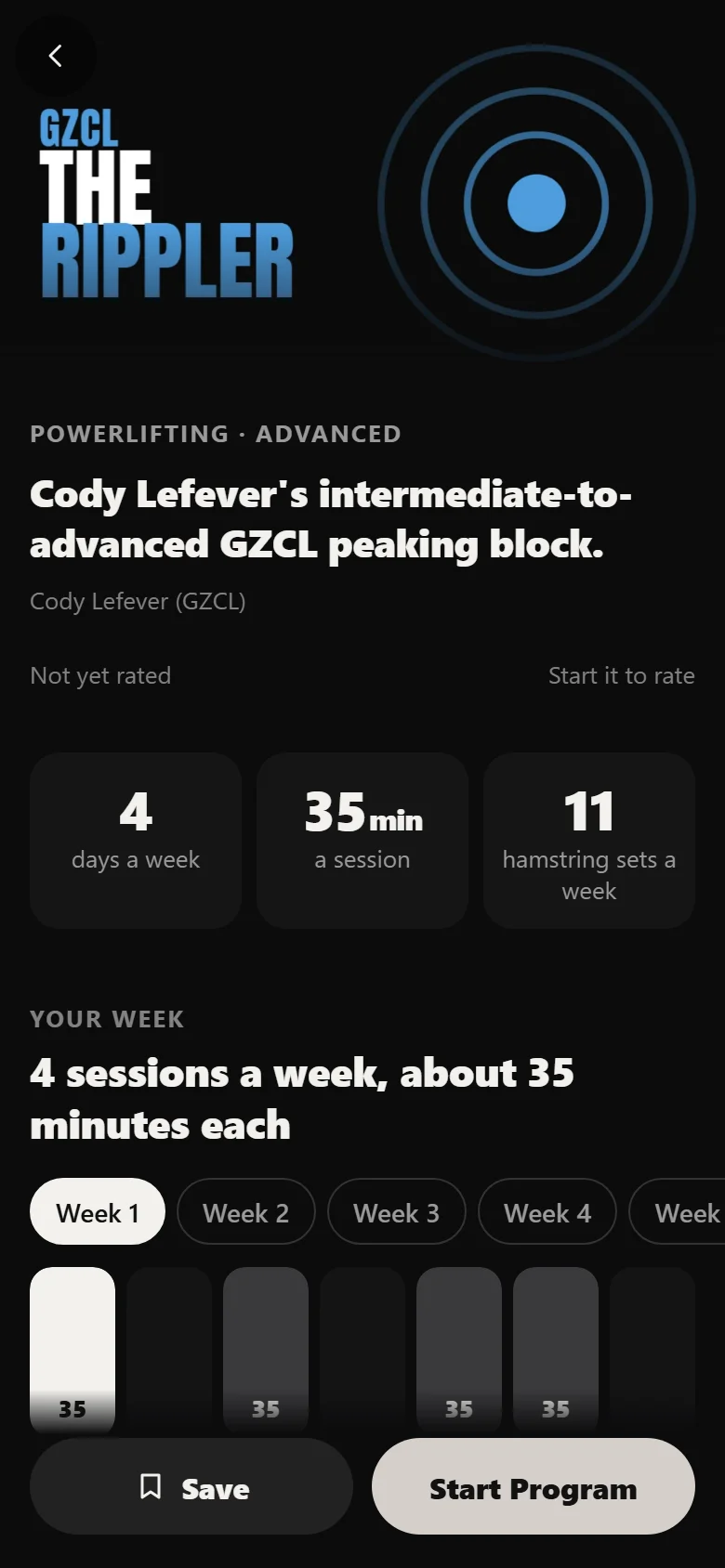
In Discover, The Rippler sits on the Powerlifting shelf, marked Advanced, at four days a week. Search finds it by name, or Filter narrows the shelves by level and days a week. Tap the cover for a quick look, then View Program for the full page.
The program page lays out the whole twelve-week wave and the four training days before you commit to anything.
Setting your maxes: true 1RMs this time
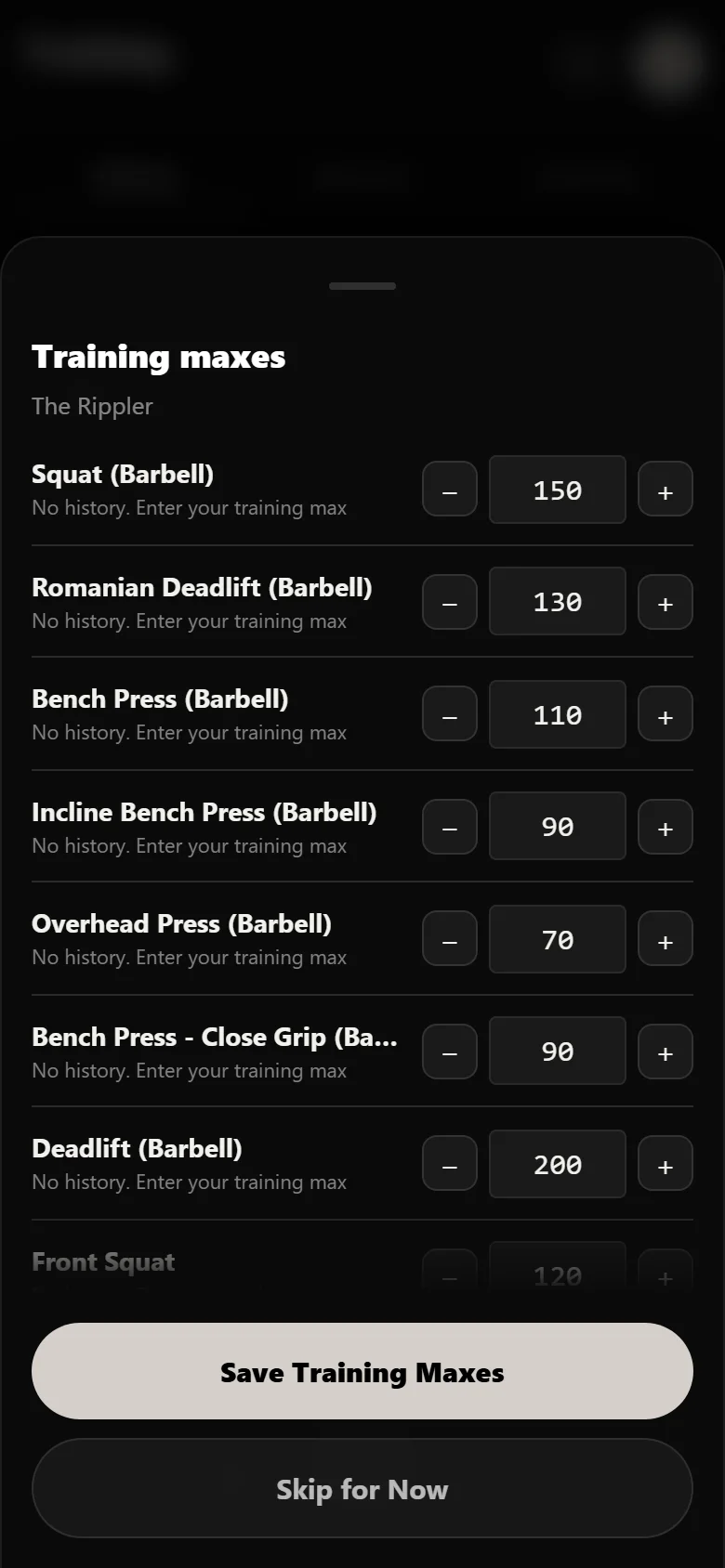
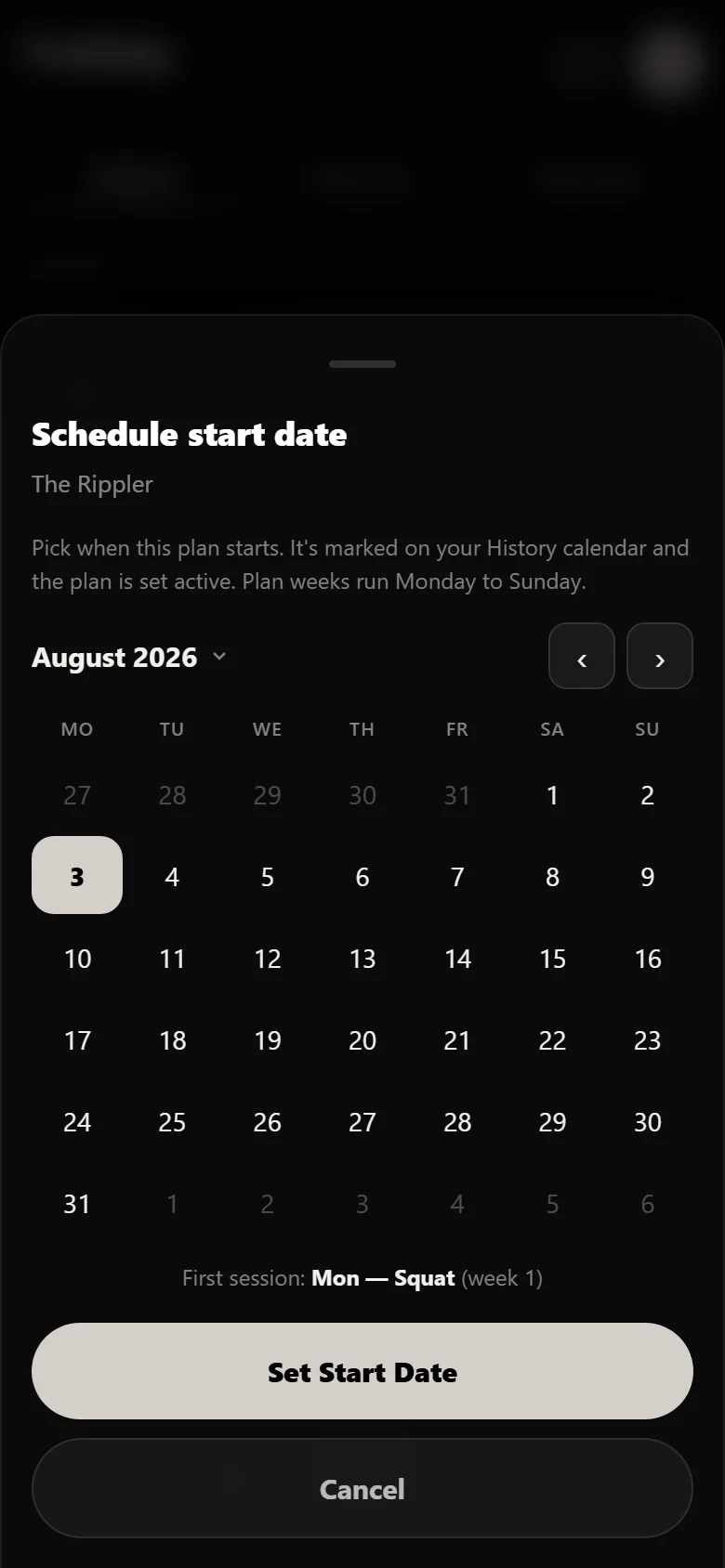
The Rippler's percentages are of your true one-rep max, not a conservative training max, so on start you enter real, tested maxes for each lift (here a 150 kg squat). Because the block also runs a T2 variation of each lift, Durata asks for those maxes too, and offers starting weights for the T3 accessories. Then you schedule the start date, and the whole twelve-week block flows from it.
The logic: T1, T2, T3 tiers
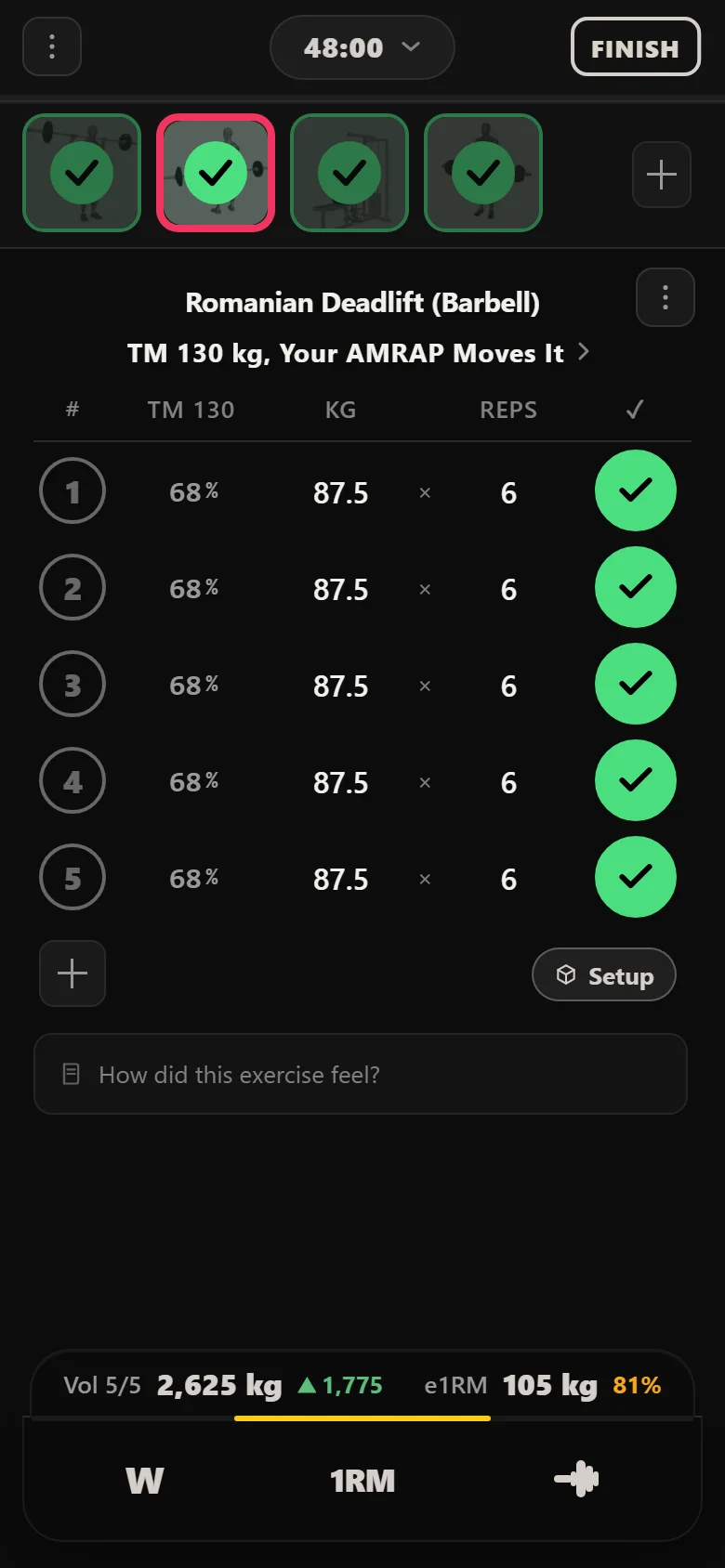
Every GZCL session is built in tiers. T1 is the heavy main lift for the day (squat, bench, overhead press or deadlift) run on the wave. T2 is a variation of that lift (a Romanian deadlift alongside squats here) waving alongside for volume. T3 is accessory work, a few double-progression movements for size. Durata loads all three, computes the weights, and tracks each tier's volume and rep targets so you just work through the session.
The wave: two up, one down
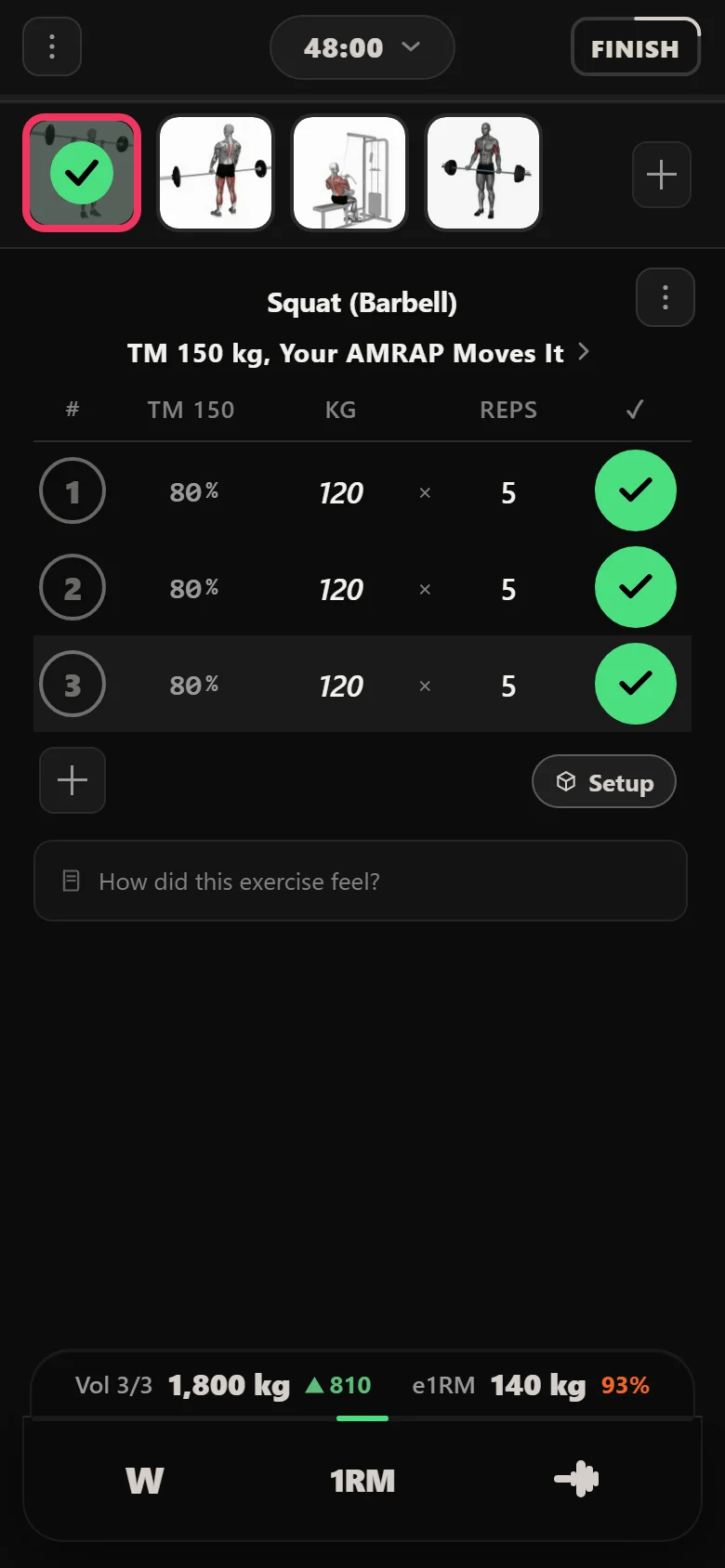
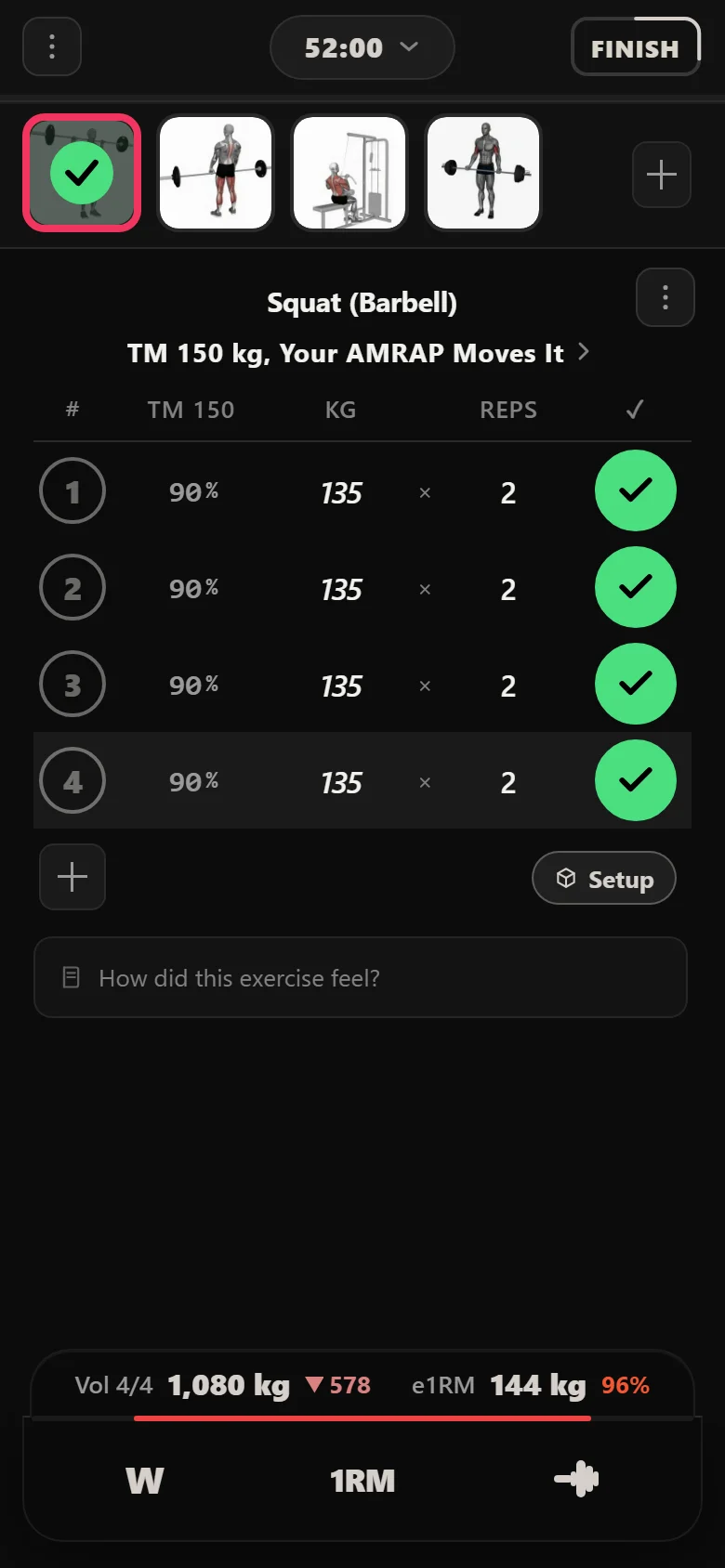
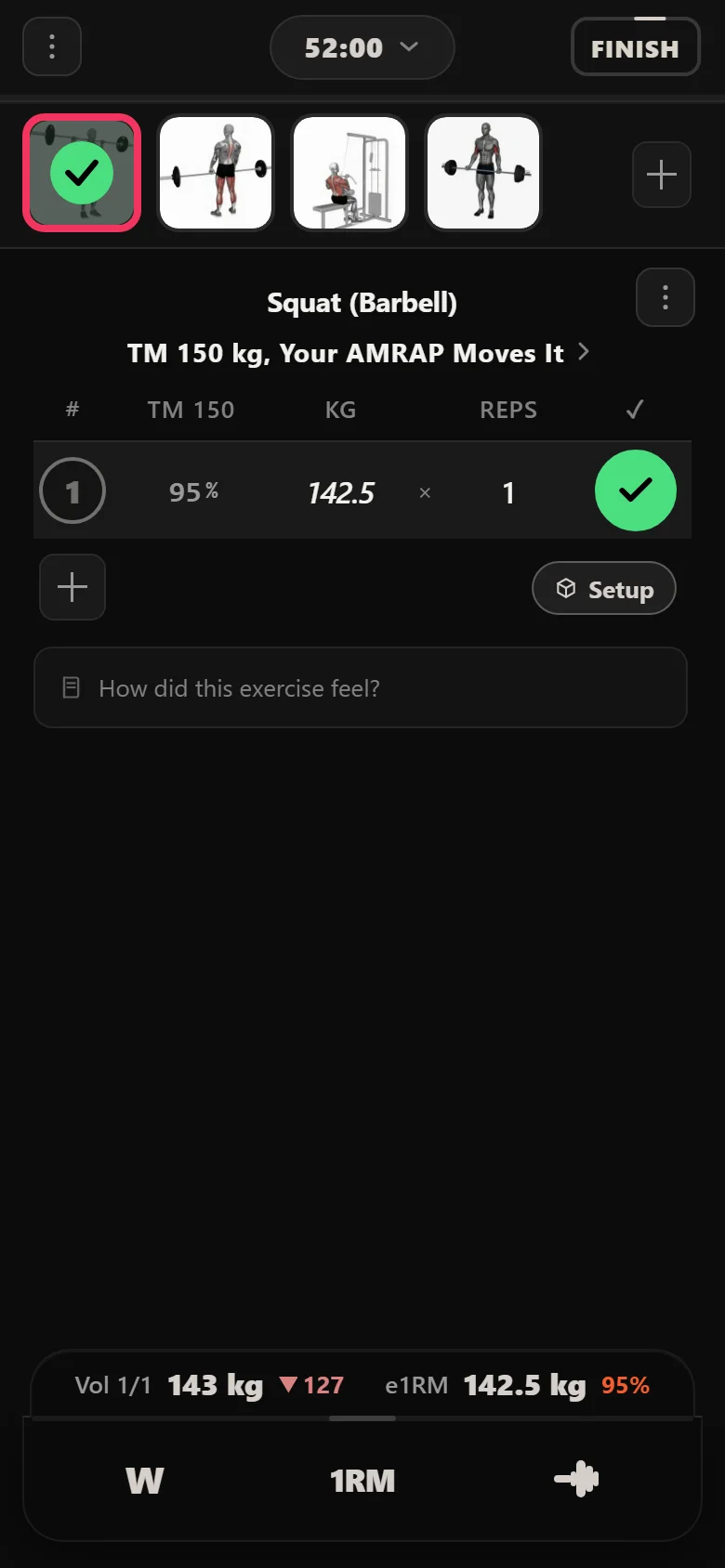
This is what makes The Rippler ripple. The T1 main lift climbs in intensity for two weeks, backs off for one, then climbs again, with reps dropping as the weight rises, all off the same 1RM. Week 1 opens light and high-rep at 80%; by week 6 you're grinding heavy doubles at 90%; by week 10 it's a near-max single at 95%. Durata reshapes every session for you. You never work out a single percentage.
Written as a list of weights, the ripple is obvious: 120, 127.5, 125, 132.5, 127.5, 135. Two steps up, one step back, and the step back is always heavier than the one before it. Week 8 puts 140 kg on the bar, week 10 reaches 142.5, then week 11 drops to 127.5 to let you recover into the test. None of those numbers were typed in. They are percentages of the same 150 kg, and the app worked out every one.
Notice what isn't happening: no personal records. Every one of these sets is a percentage of a max you've already tested, so by definition none of them is record territory. The session e1RM tracks along at 95–96% of your best and the app correctly refuses to award a PR. That's the whole design of a peaking block. You bank submaximal work for eleven weeks, and the only record comes when you finally test in week 12.
Squat T1: the prescribed top-set weight, week by week (% of a 150 kg max)
- 120S1 Session 1 — 80%, volume
- 127.5S2 Session 2
- 125S3 Session 3 — back off
- 132.5S4 Session 4
- 127.5S5 Session 5 — back off
- 135S6 Session 6 — 90%, doubles
- 132.5S7 Session 7
- 140S8 Session 8
- 135S9 Session 9
- 142.5S10 Session 10 — 95%, a single
- 127.5S11 Session 11 — back off into the test
- 142.5S12 Session 12 — week 12: rep it out
History and charts you earned
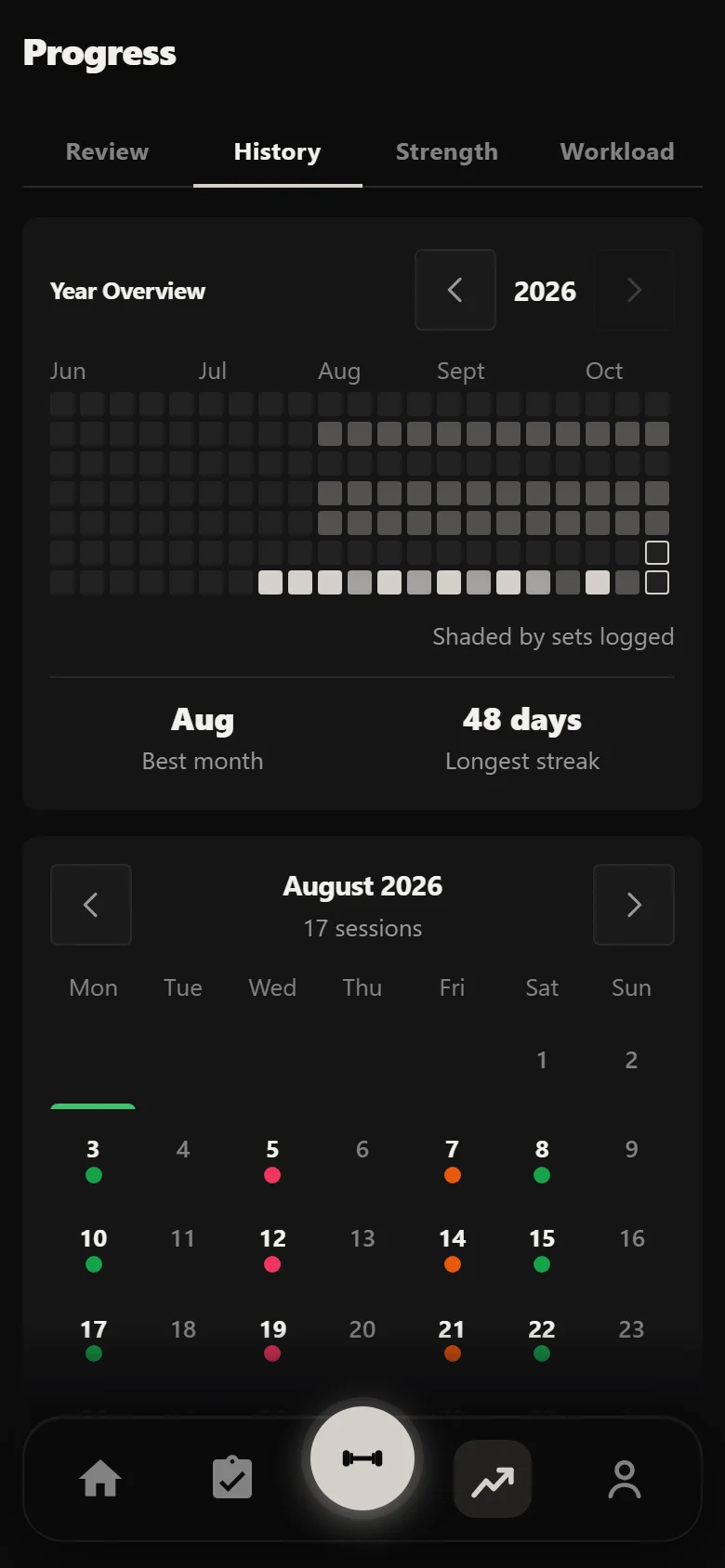
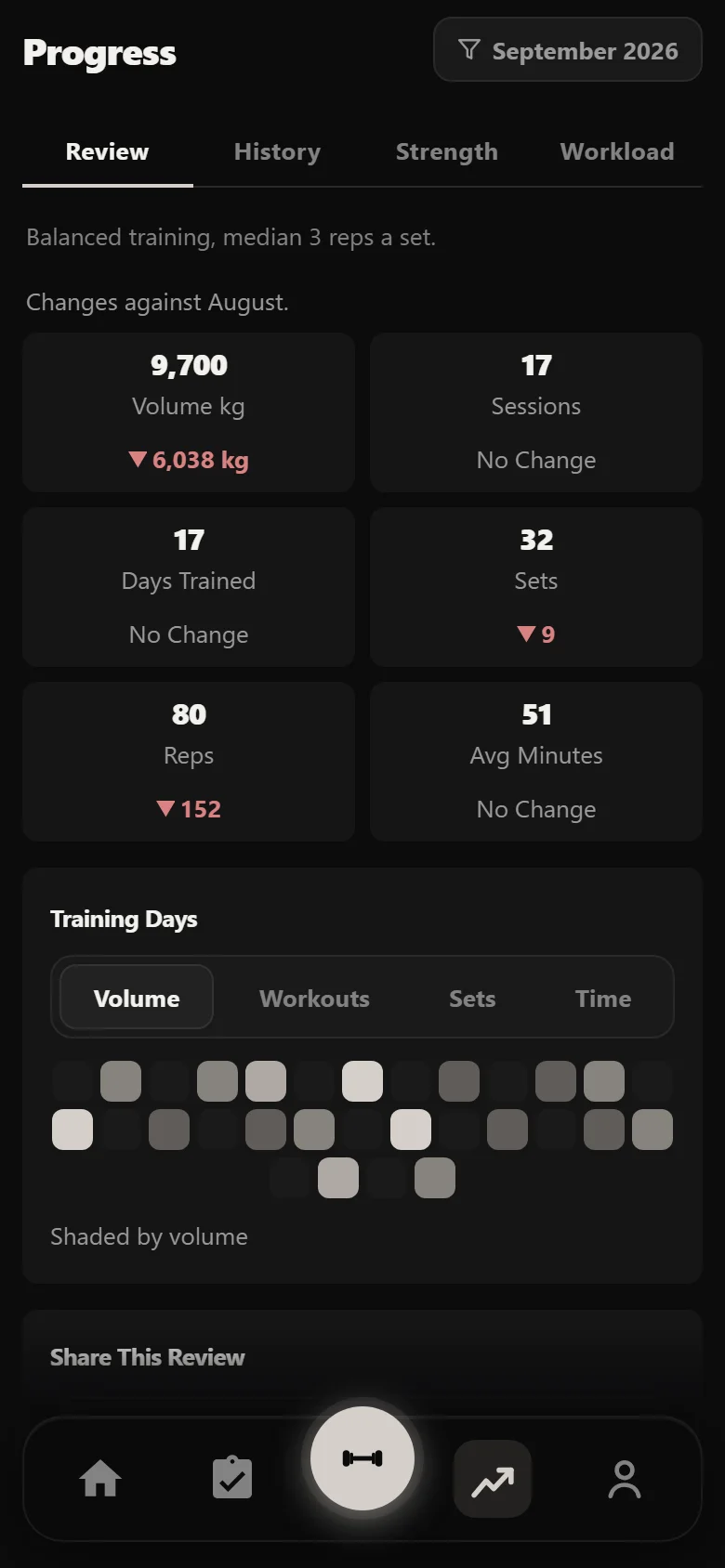
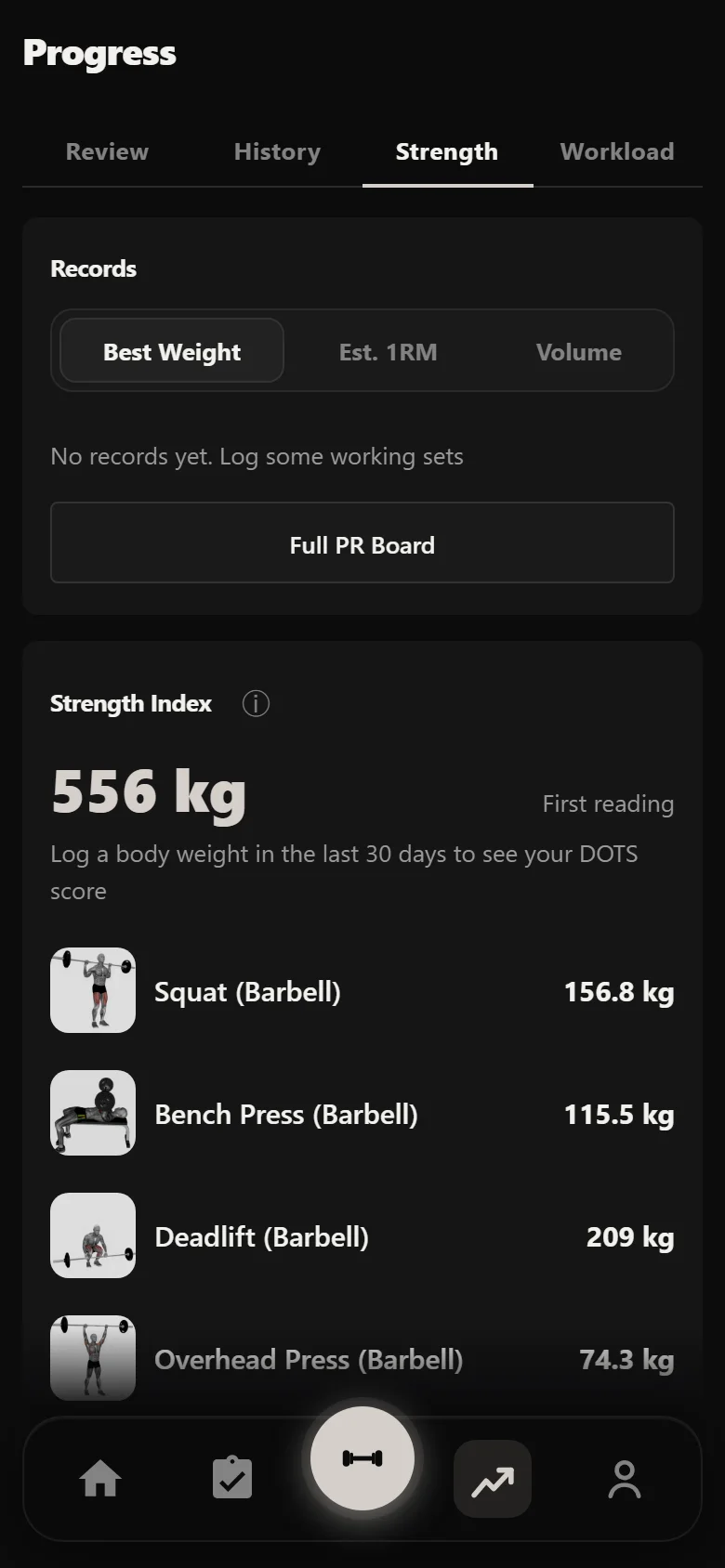
Twelve weeks of four-day training turns into a picture: a solid block of trained days on the calendar, a best-session callout, training frequency and consistency across the block, and a lift-by-lift estimated 1-rep max that climbs in step with the wave, high-rep weeks stacking work and low-rep weeks sharpening intensity.
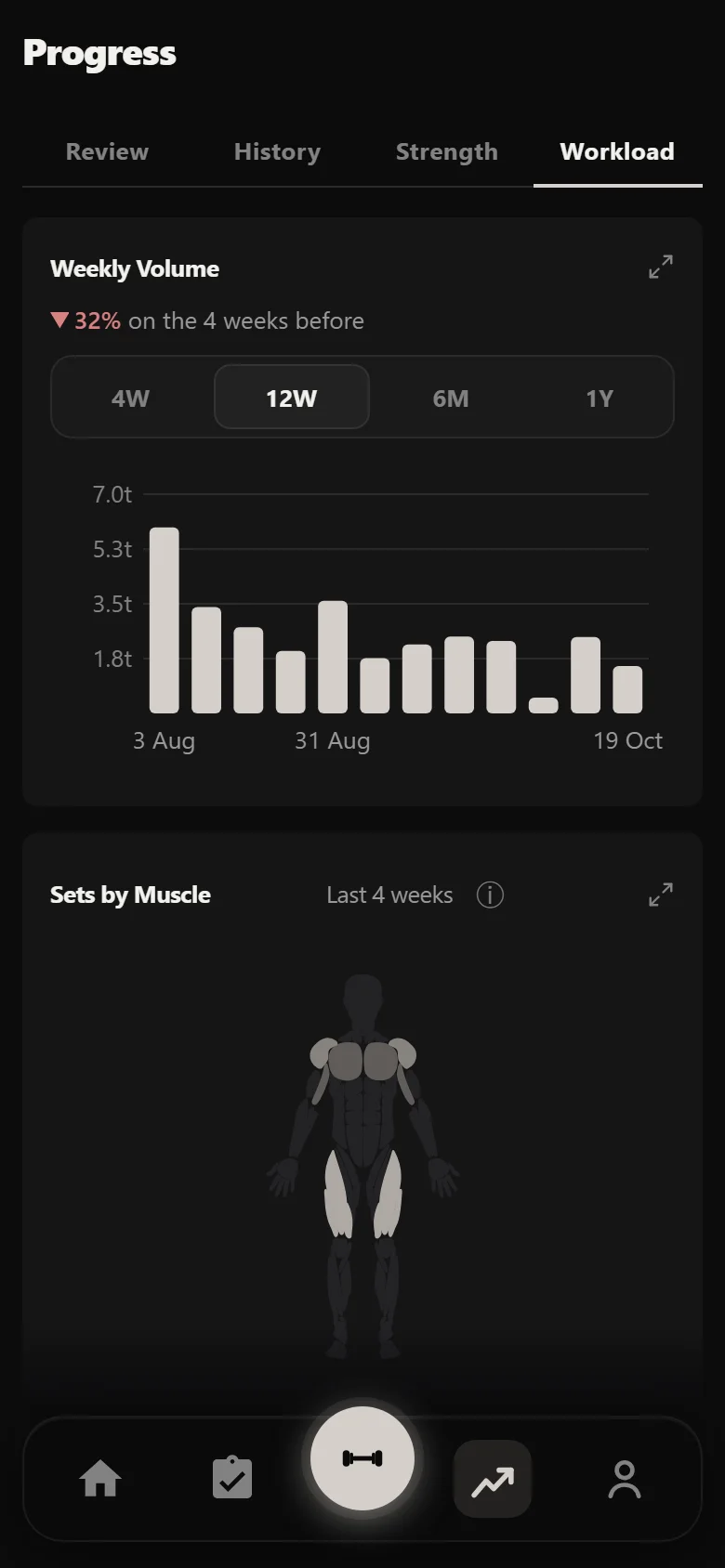
The workload view is the one worth reading on a wave block, because it shows the thing the weights alone hide. Weekly volume rises and falls out of step with the intensity: the high-rep weeks pile up tonnage, the heavy weeks sharpen instead. That trade is the program, and you can watch it happen week to week.
The payoff: week 12, test your max
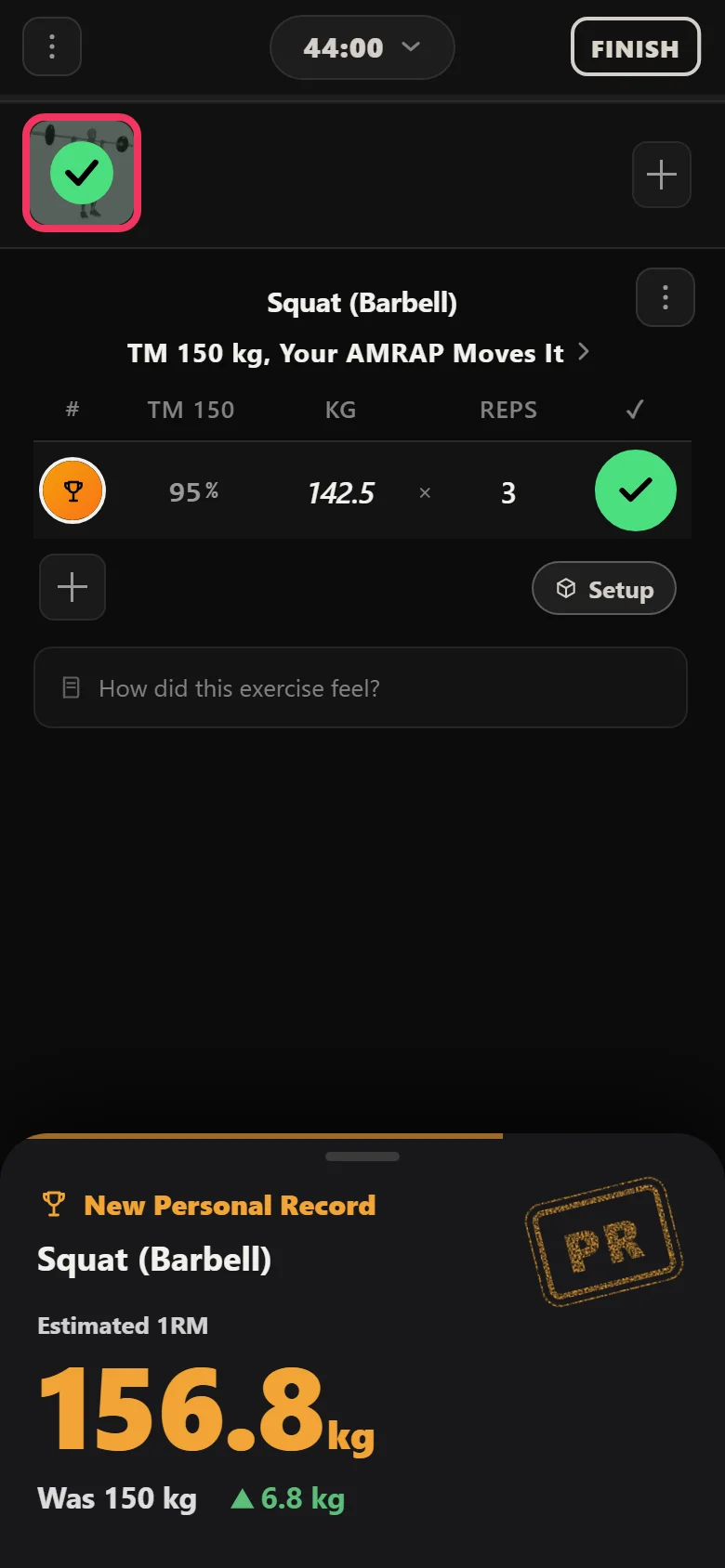
The whole block builds to one session. In week 12 you take 142.5 kg, the same 95% single you handled in week 10, for as many reps as you can, and because twelve weeks of waved training has made you stronger, you get three. That turns into an estimated 1-rep max of 156.8 kg, past the 150 you tested before the block, and Durata logs it as a new personal record.
Then the cycle closes: retest, load your new numbers, and run the block again off them. Every calculation in the last twelve weeks was the app's.
Week 1's high-rep 80% work vs the week-12 max at 95%. The wave carried you from volume to a fresh estimated 1RM of 157 kg, up from the 150 you started with.
Common questions
What is The Rippler?
A twelve-week intermediate-to-advanced peaking block from Cody Lefever's GZCL method. The main lift (T1) ripples through an undulating "two-up, one-down" intensity wave off your true one-rep max, a T2 variation waves alongside for volume, and T3 accessories add size, building to a max test in week 12.
What are T1, T2 and T3?
The three tiers of a GZCL session. T1 is the heavy main lift for the day, run on the wave. T2 is a close variation of it done for more reps at lower intensity, volume that carries over. T3 is accessory work, a couple of movements taken for higher reps and size. Durata loads and tracks all three.
Why does it use my true 1RM instead of a training max?
The Rippler is a peaking block, so its percentages are of your true one-rep max (set your real tested maxes on start). Your max is held fixed for the whole twelve weeks. The program moves the intensity around it, and you retest for a new max in week 12, then re-load and run it again.
How does the week-12 max work in Durata?
Week 12 prescribes a single at 95% taken for as many reps as possible. Rep it out and Durata estimates a new one-rep max from the weight and reps, which after twelve weeks of waved training comes out above where you started. It's logged as a personal record; you then reset your maxes to the new numbers.
Is Durata free?
Yes. Durata is free to use, with the full program catalogue, automatic percentage and progression maths, rest timers and PR tracking. Everything in this walkthrough is in the app.
Put it into practice
Durata is free to use — 50 proven programs, automatic progression, rest timers and PR tracking, all on your phone.