


Phrak's Greyskull LP in Durata: six lifts, six separate rules
Most program walkthroughs show you the good weeks. This one shows the whole block. Phrak's Greyskull LP adds weight to every main lift every time you clear it, with an AMRAP top set that can double the jump, and it cuts a lift 10% the moment that lift misses twice in a row. This run was driven end to end in the app: 18 sessions across six weeks, no edits, no nudges, every weight decided by the engine from the sets that were logged.
The headline is the squat (barbell), which opened at 60 kg, stalled at 67.5 kg, deloaded all the way back to its starting weight and then climbed through the stall. The more useful story is what the other five lifts were doing at the same time, because the deload rule runs per lift, and at the end of the block they were nowhere near each other.
Finding the program
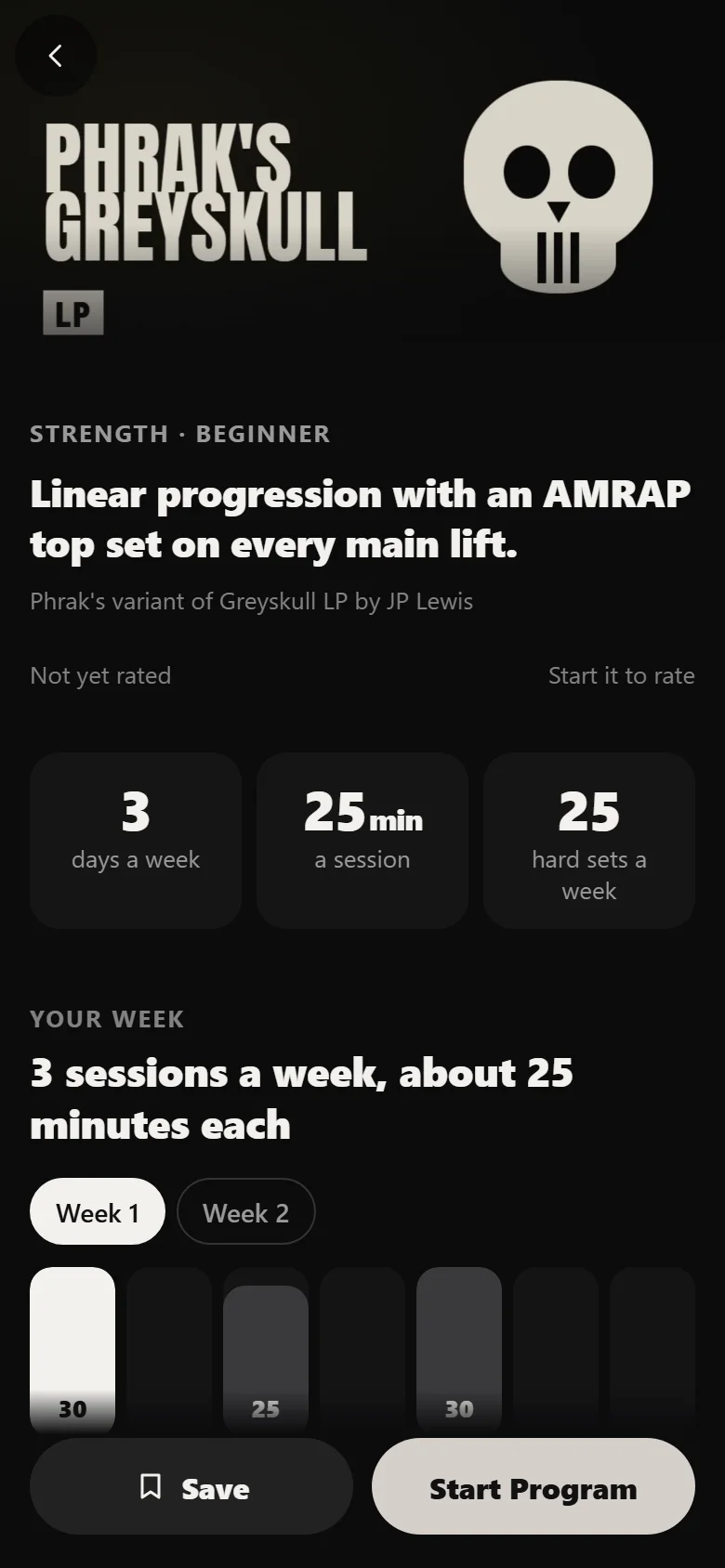
In Discover, Phrak's Greyskull LP sits on the Strength shelf, marked Beginner, at three days a week. Search finds it by name, or Filter narrows the shelves by level and days a week. Tap the cover for a quick look, then View Program for the full page.
The program page shows what you are agreeing to before you agree to it: the two alternating workouts, the lifts in each, and the progression rule that will govern them. Workout A is overhead press, chin-up and squat. Workout B is bench press, bent over row and deadlift. Every one of those lifts finishes on an AMRAP top set, and every one of them gets the same rule: clear it and the app adds 2.5 kg, rep out ten or more on that top set and the jump doubles.
No training maxes, just a number per lift
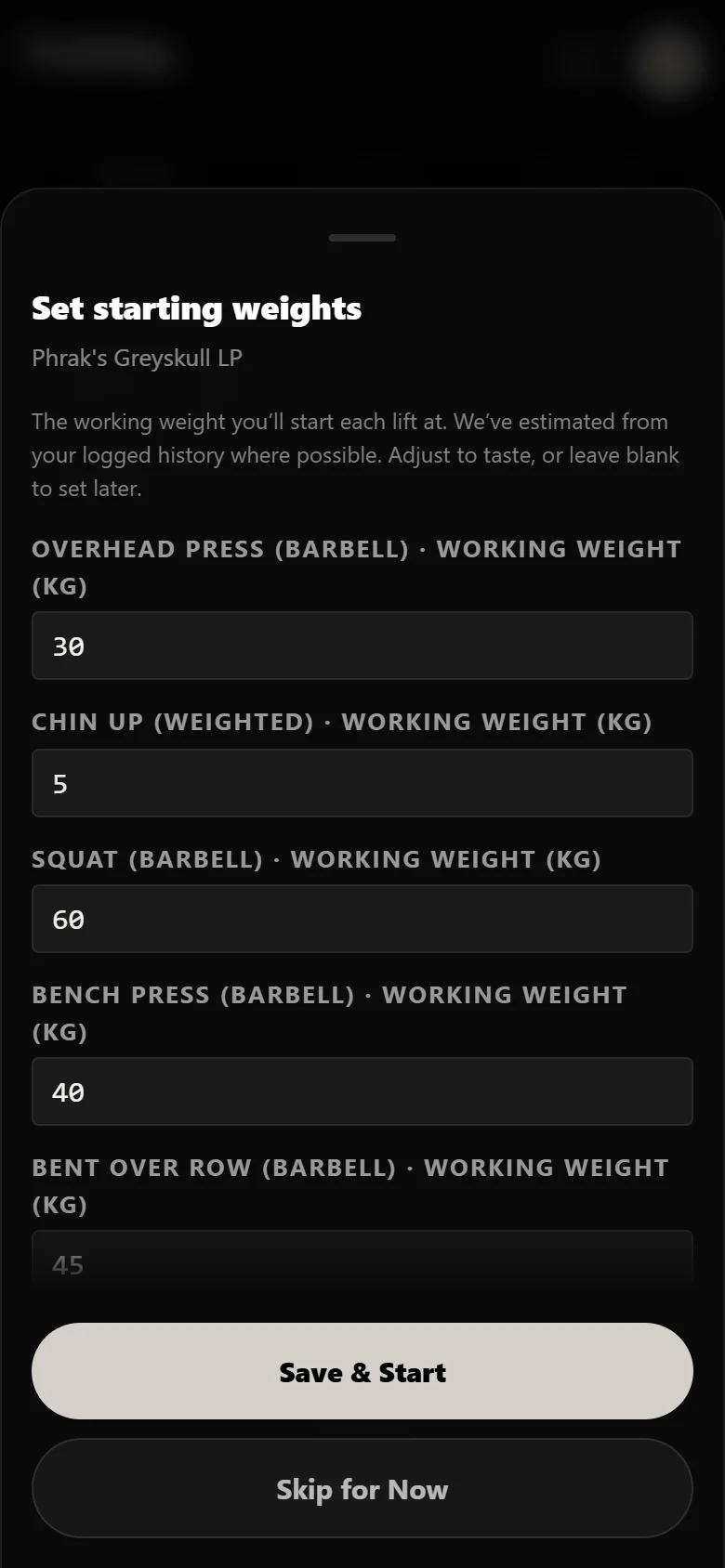
Percentage programs make you compute a training max before you can start. Linear progression does not. Durata asks one question per lift, what you can do now, and starts there. On this run the squat (barbell) opens at 60 kg and every other lift gets its own opening number in the same sheet.
Start lighter than you think. The AMRAP top set pays you for having reps left over, so the sessions where you can push past ten reps and take the double jump are the sessions where you were not already at your limit. Six weeks of 2.5 kg steps covers a conservative start very quickly, and a start that is too heavy just brings the first deload forward.
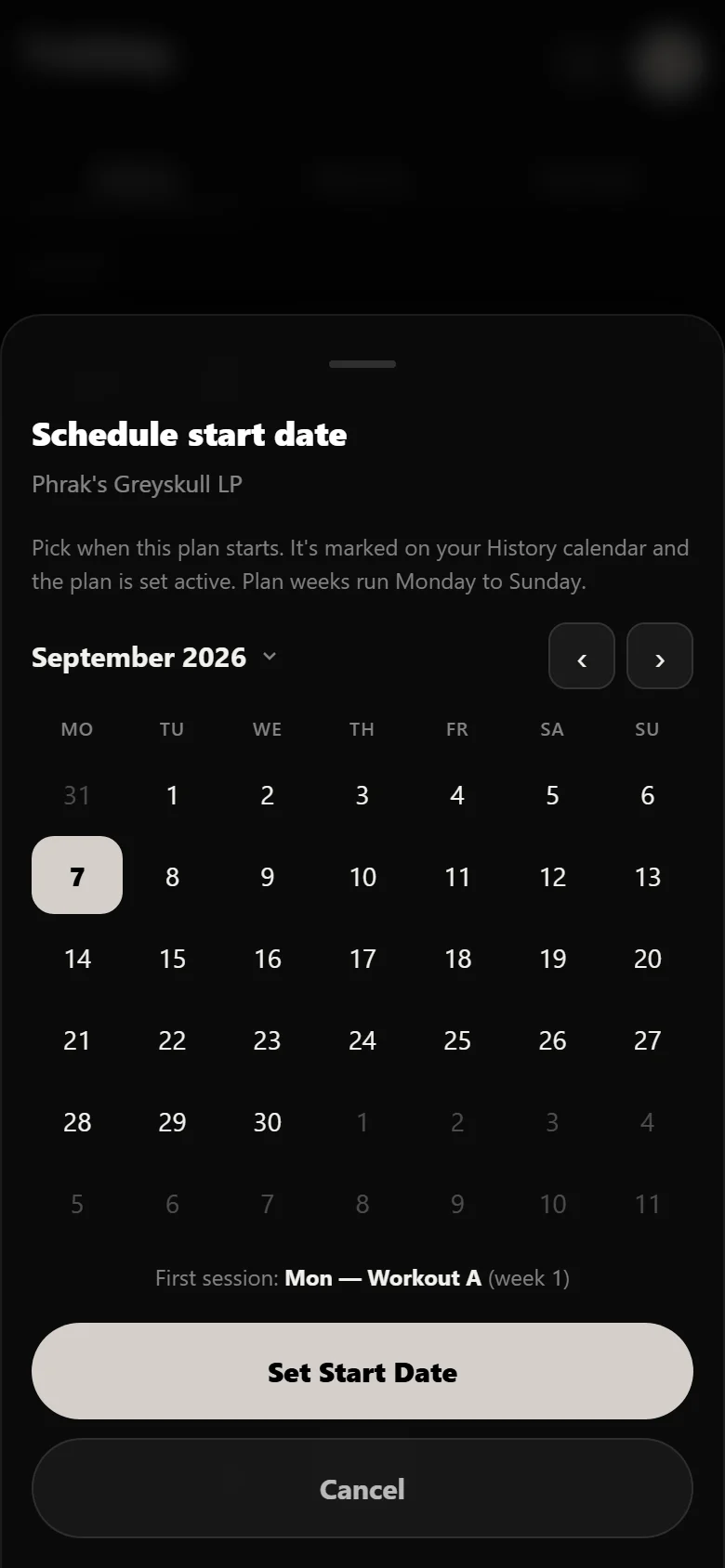
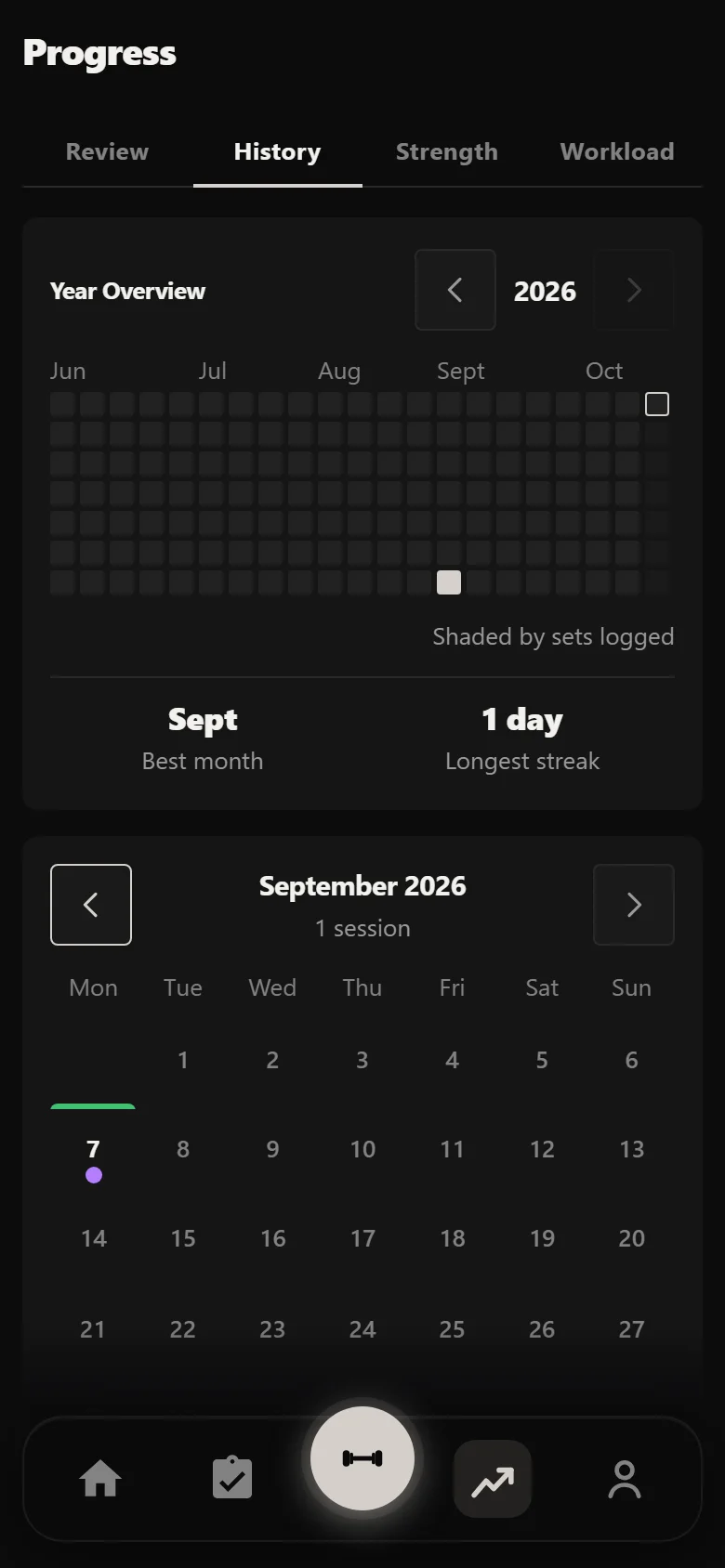
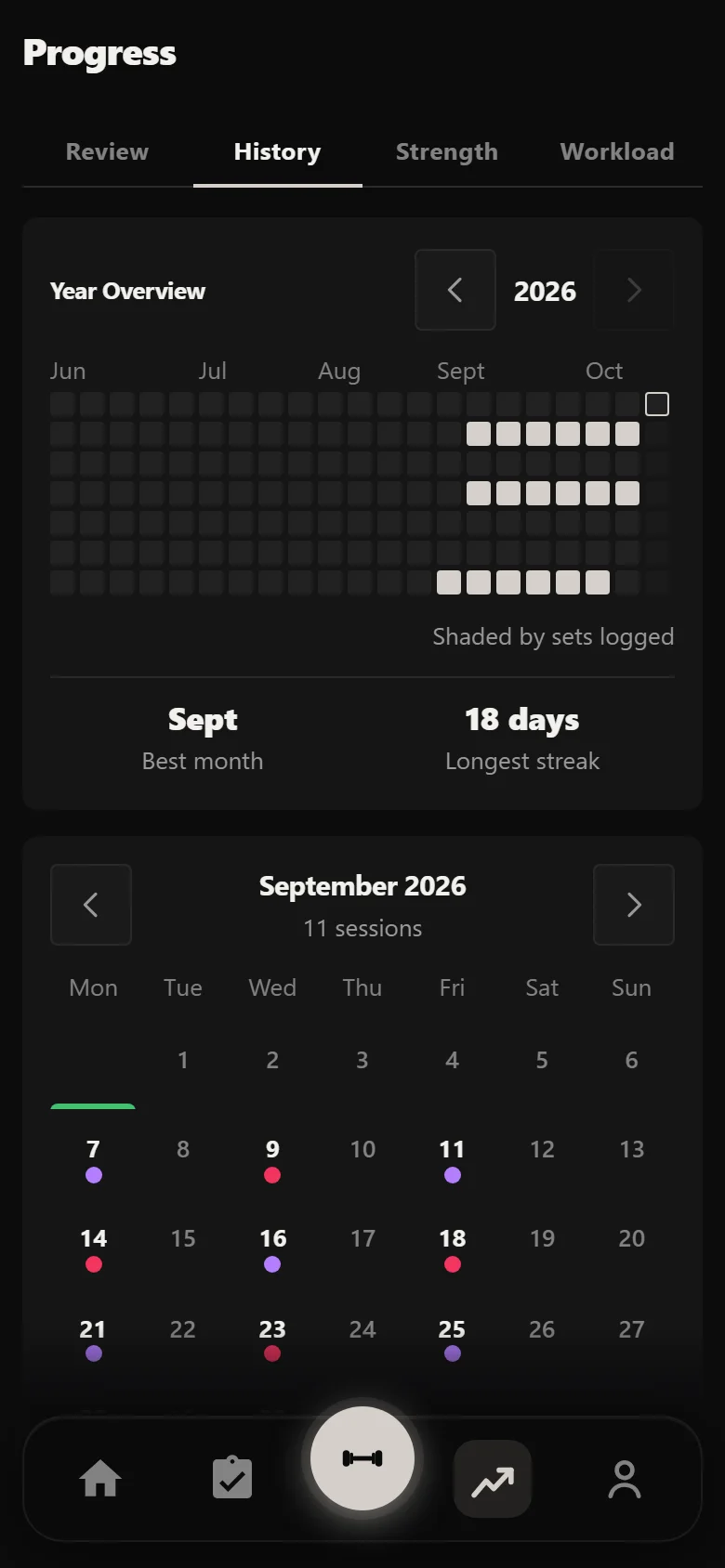
The block is then scheduled from a start date, which puts the whole cycle on the History calendar before a single set is logged. Sessions are dated from that point, which is why the arc further down counts sessions rather than weeks: Workout A lands on every other session, so the squat appears nine times in eighteen.
The climb: 2.5 kg a session, decided for you
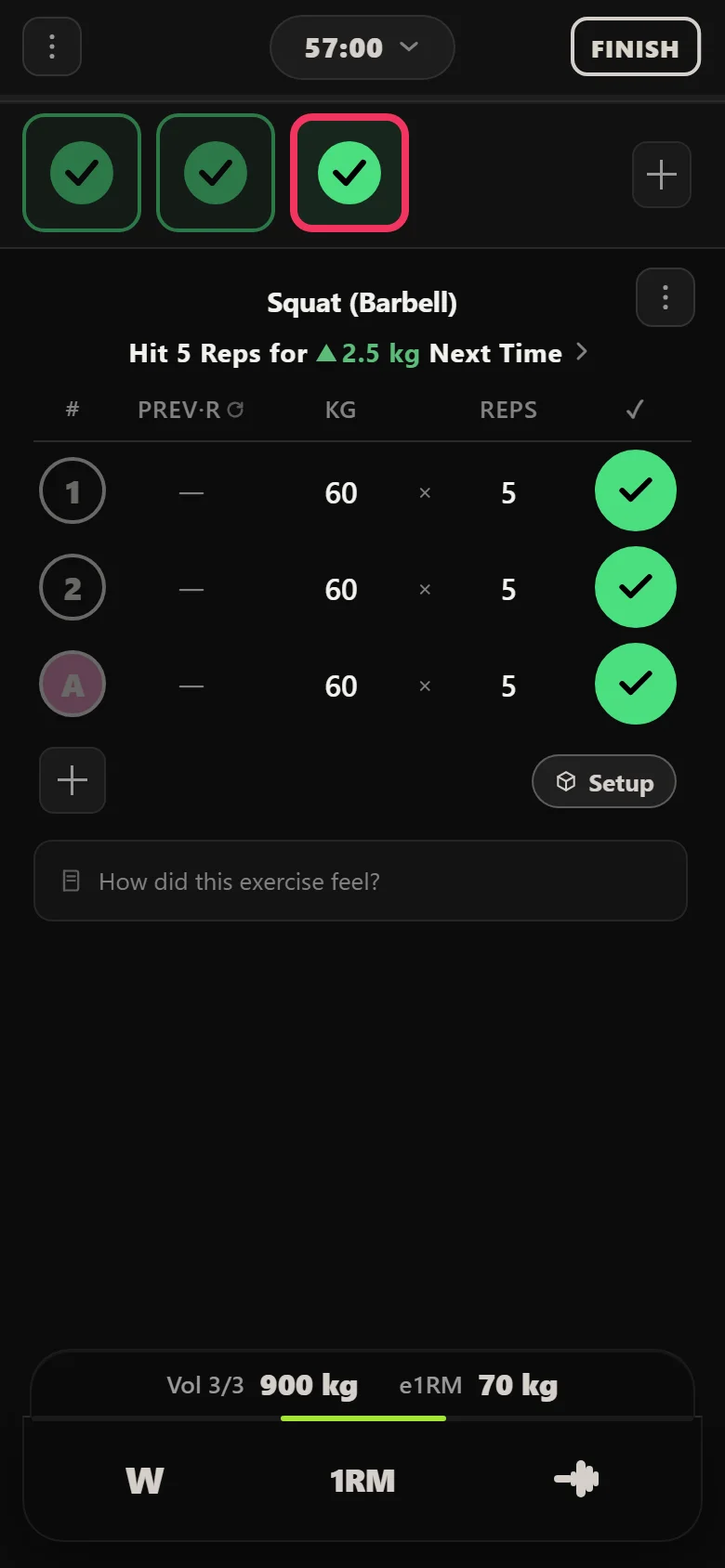
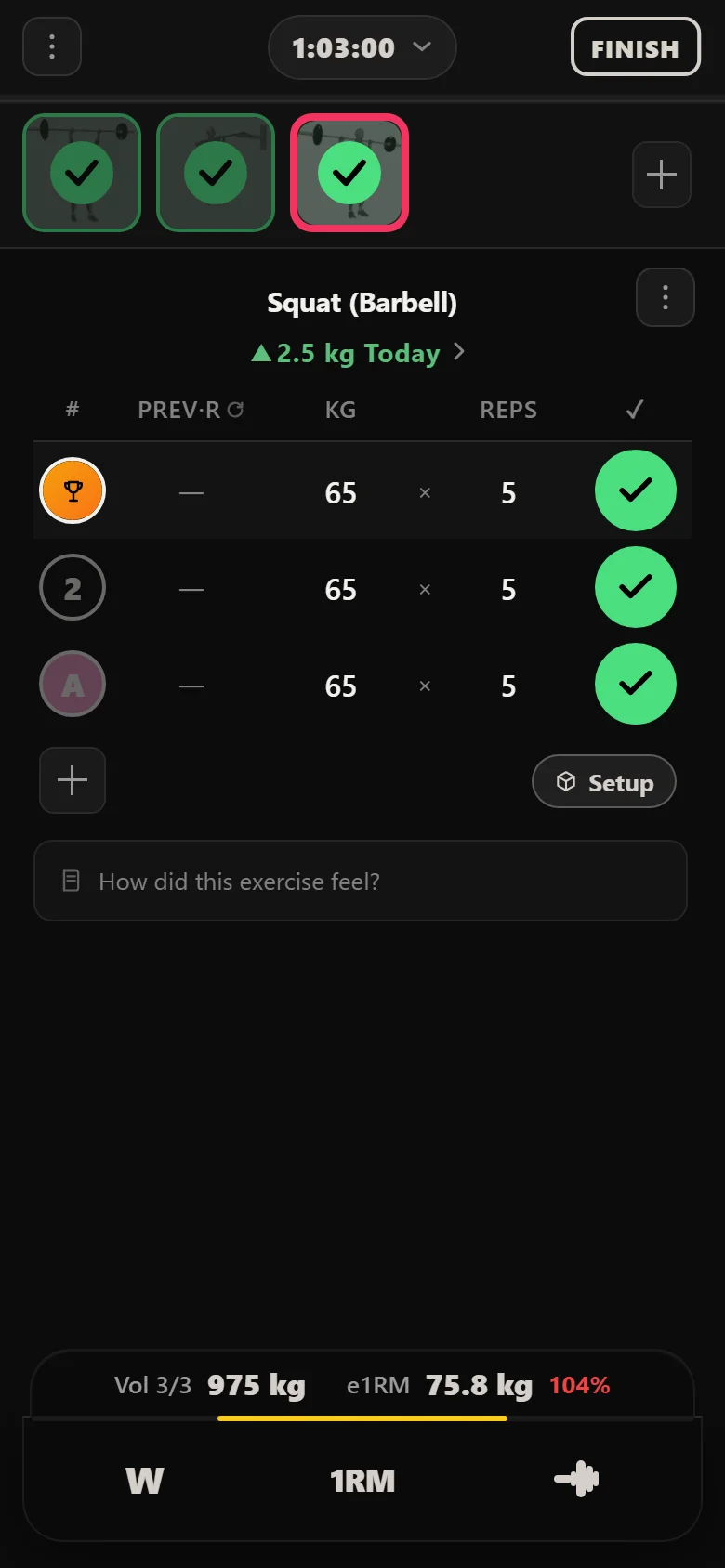
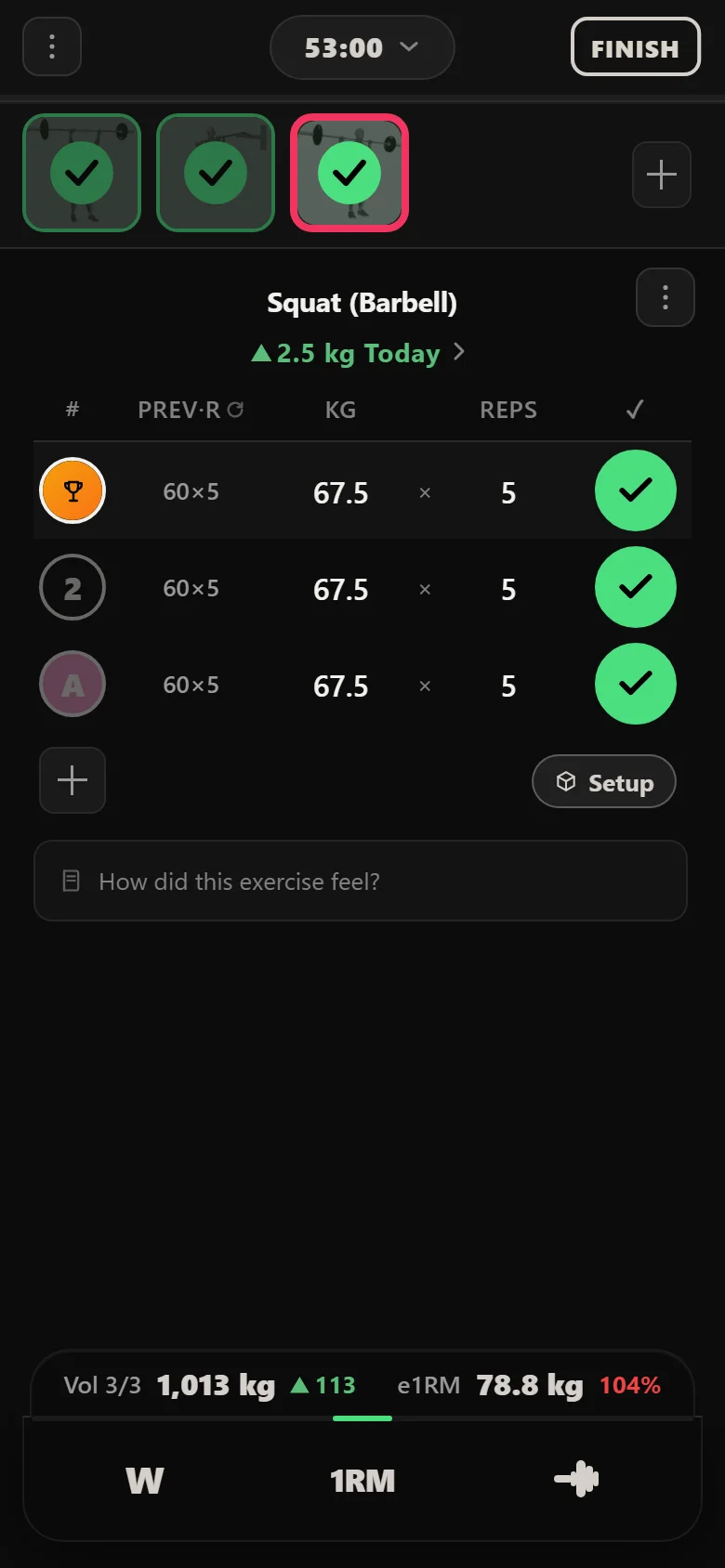
Session one puts 60 kg on the squat. The chip under the exercise name shows the rule that is governing the lift while you are training rather than hiding it in a settings screen, and the PREV column shows what you did last time. Clear every prescribed set, including the AMRAP, and the app carries 2.5 kg more into the next appearance. You do not tell it you succeeded and you do not do the arithmetic.
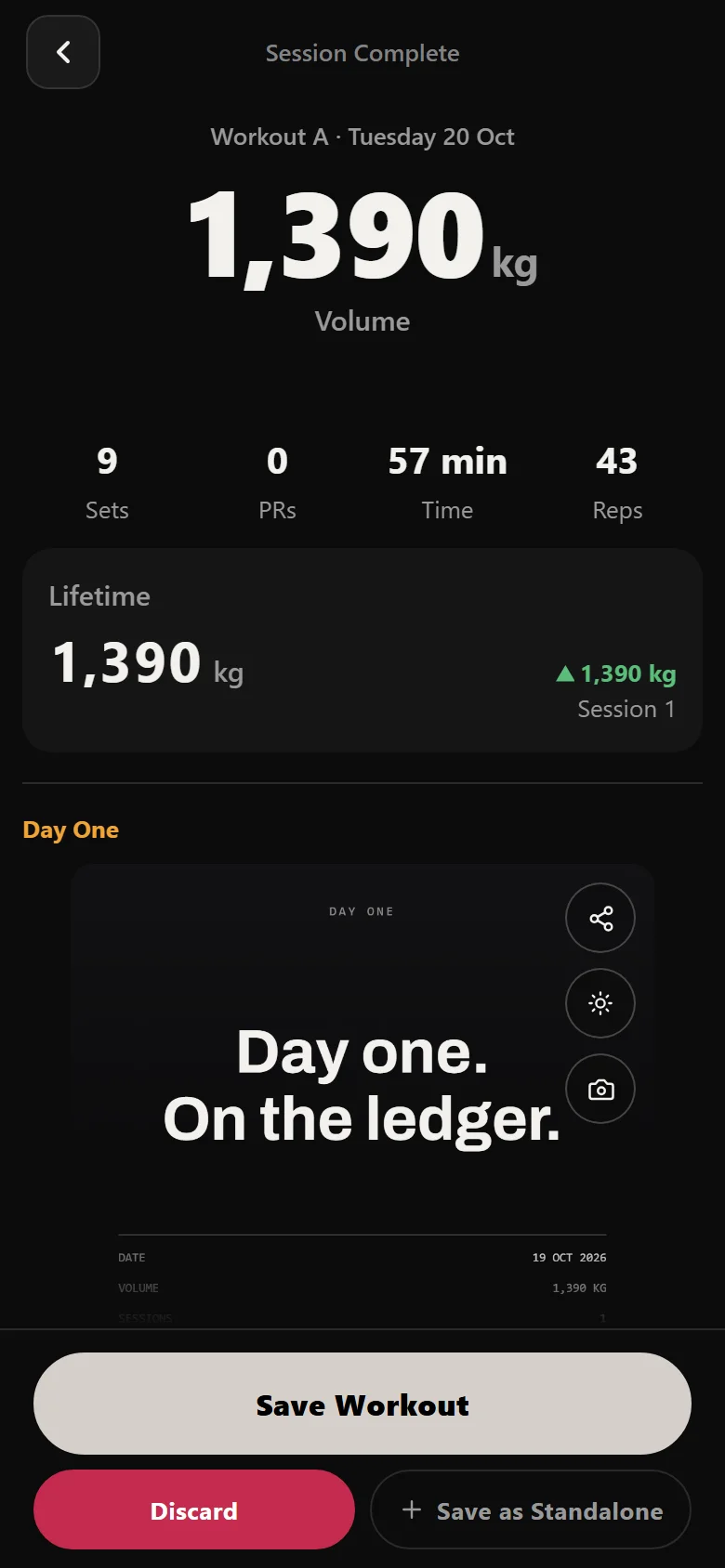
The session-complete screen tallies the whole thing before it saves: duration, every set, total volume. It is the last chance to correct a mistyped rep count, and it is also where the block's numbers start accumulating for the charts at the end.
By the fifth session the squat is at 65 kg, two clean steps up from where it opened, and the pattern is exactly as advertised: turn up, the weight is already on the screen, do the work. That is what the first half of a linear progression feels like, and it is the reason the program is recommended to beginners so relentlessly. It is also why the second half is the interesting half.
The stall: one miss is nothing, two is a rule
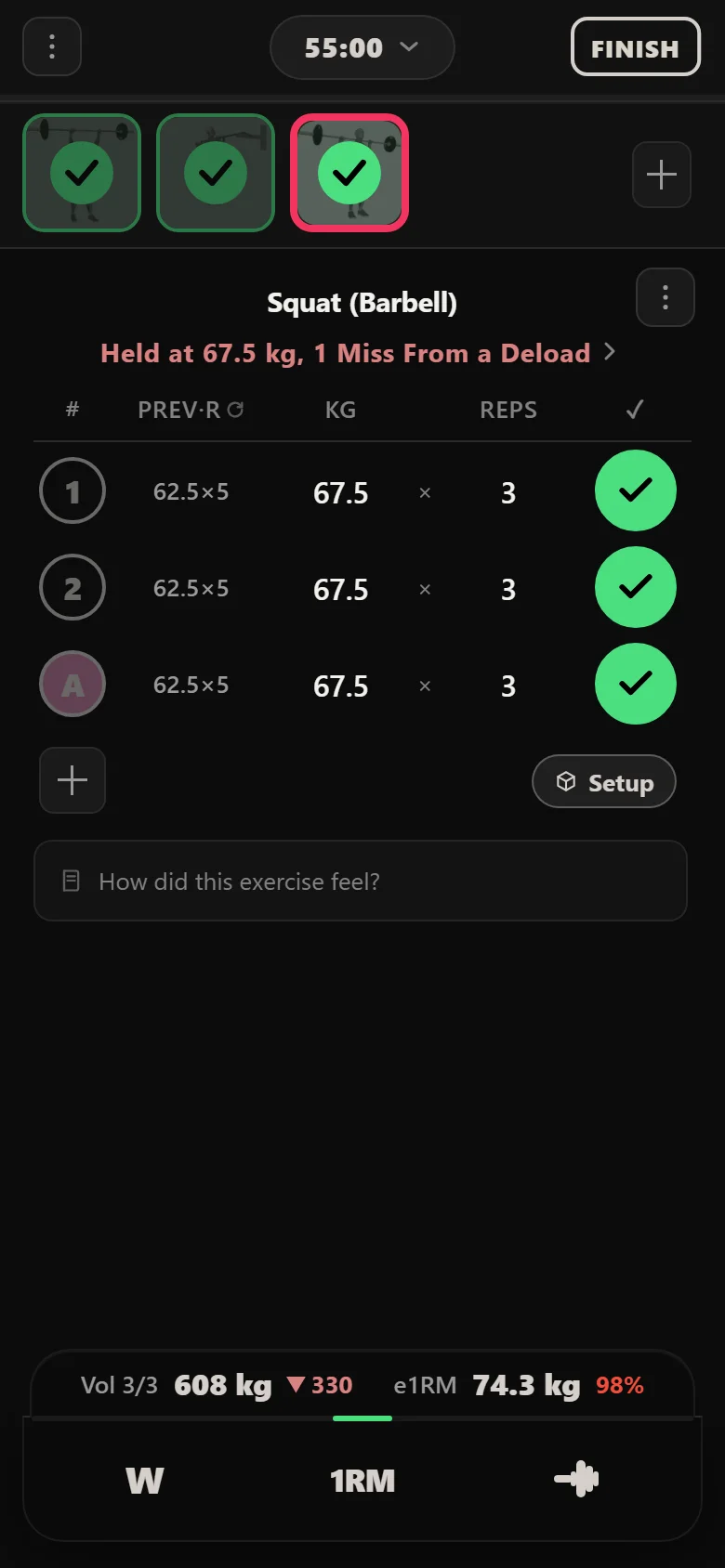
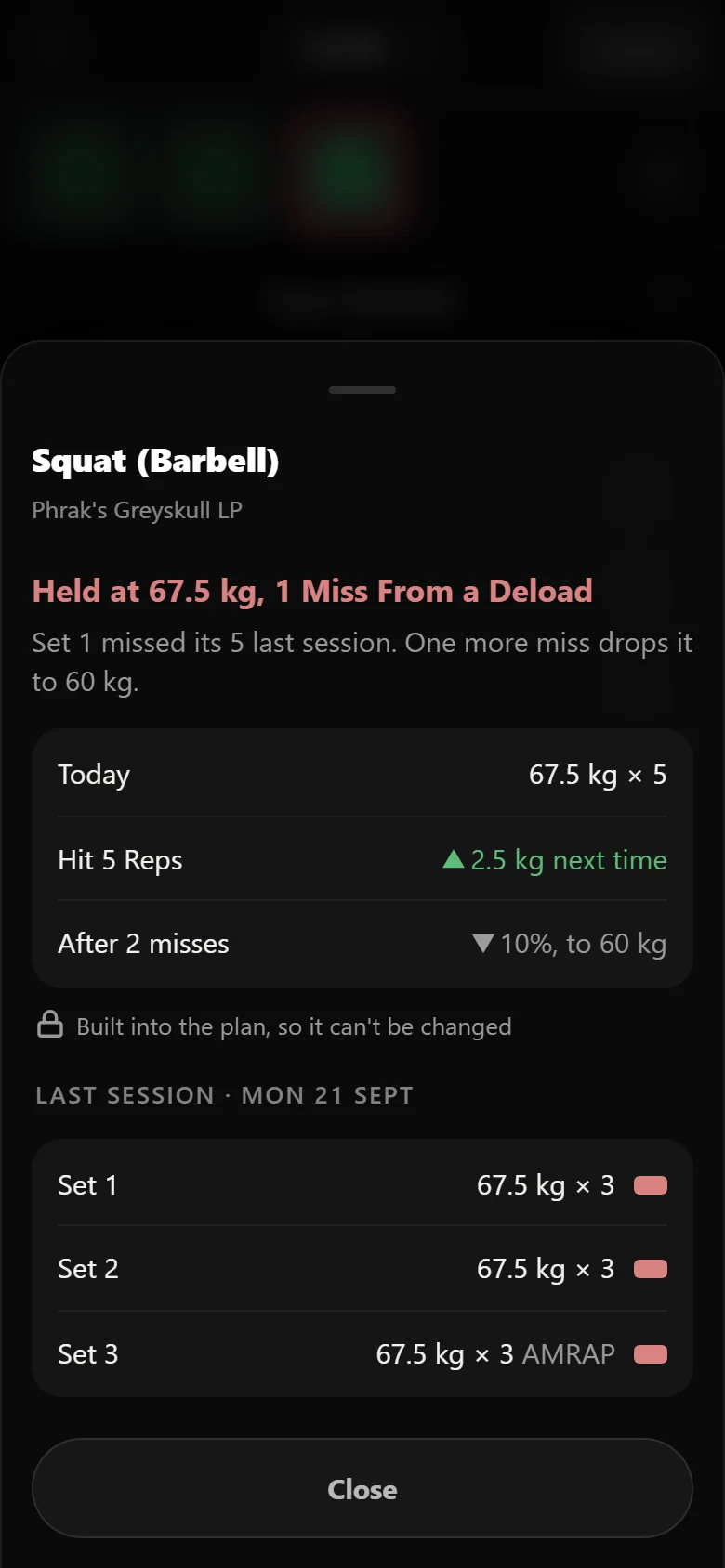
At 67.5 kg the working sets fall short. Missing any working set counts the whole session as a miss for that lift, so Durata holds the weight where it is instead of adding to it. Nothing dramatic happens. One miss is inside the normal run of a training block, and the program treats it that way.
The rule chip is a button. Tap it and the app makes its case instead of asking you to trust it: the evidence from this exact slot's own history, and the law it is being judged against. After the first miss that panel says where you stand, and it says it in the specific terms of this lift and this weight, not in general advice.
The panel is also where the double jump becomes concrete. The same rule that adds 2.5 kg on a clear session adds 5 kg when the AMRAP top set goes past ten reps, and both numbers are shown side by side. On this run the squat never got there. Every advance it made was a single 2.5 kg step, which is exactly what a start that is slightly too heavy buys you.
The deload: the program decides, not you
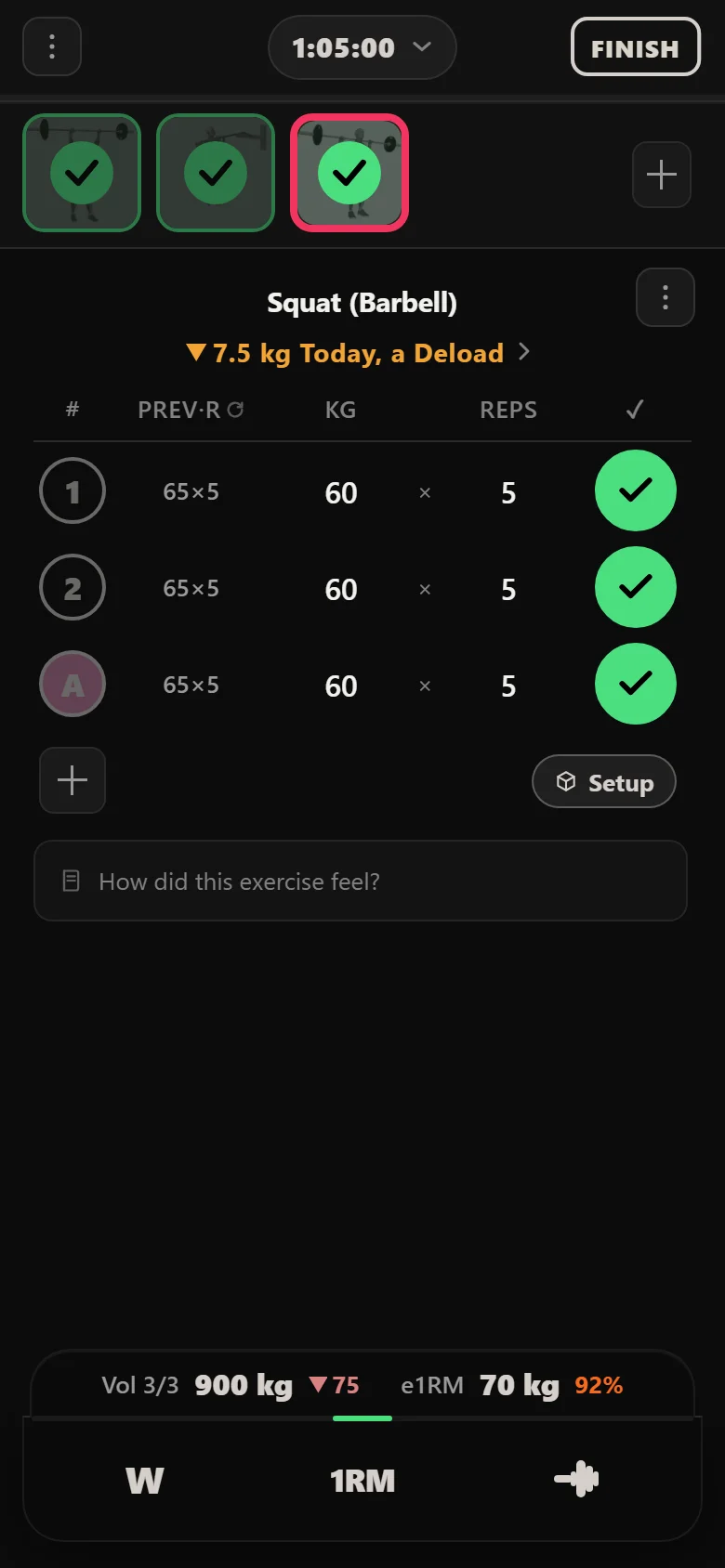
The second miss lands and the rule fires. Durata cuts the squat 10%, which takes it back to 60 kg, the weight the block opened on, and restarts the climb from there. Nobody calculated the cut, nobody decided the moment, and nobody had to admit anything. The evidence crossed a threshold the program had published in advance, and the program acted.
What follows is the part that makes the rule worth having. The rebuild runs on the same 2.5 kg steps as the original climb, so the squat comes back through 62.5 and 65 and reaches 67.5 kg again at session 17, this time clearing it. The weight that stopped the block the first time is the weight the block finished on, and the next session was already prescribed at 70 kg.
Nine appearances, one stall, one cut, one rebuild. The strip below is that sequence exactly as the engine computed it, with the two misses marked.
Squat (Barbell): weight on the bar, appearance by appearance
- 60S1 Session 1 — start
- 62.5S3 Session 3
- 65S5 Session 5
- 67.5S7 Session 7
- 67.5S9 Session 9
- 60S11 Session 11 — deload
- 62.5S13 Session 13
- 65S15 Session 15
- 67.5S17 Session 17 — cleared
Six lifts, six separate rules
The squat's story is the one an article can follow session by session. It is not the whole block, because the deload rule is attached to the lift, not to the program. Six main lifts run six independent copies of the same rule, each counting its own misses, each cutting its own weight, and none of them waiting for the others.
By session 18 those six had gone in different directions. The squat finished 10 kg up on where it started, at 70 kg prescribed for the next appearance. The overhead press finished 2.5 kg up, at 32.5 kg. The other four all finished below their opening weight: the bench press at 37.5 kg from 40 kg, the bent over row at 37.5 kg from 45 kg, the deadlift at 62.5 kg from 70 kg, and the weighted chin-up at 42.5 kg from 45 kg.
That looks like a bad block and it is not. Those four lifts stalled late enough that the block ended while they were still on the low side of their cut, which is what a six-week window through a linear progression usually looks like once the starting weights stop being easy. The alternative is the version most people run by hand, where a stalled lift keeps getting the same weight written next to it week after week because nobody wants to be the one to write a smaller number.
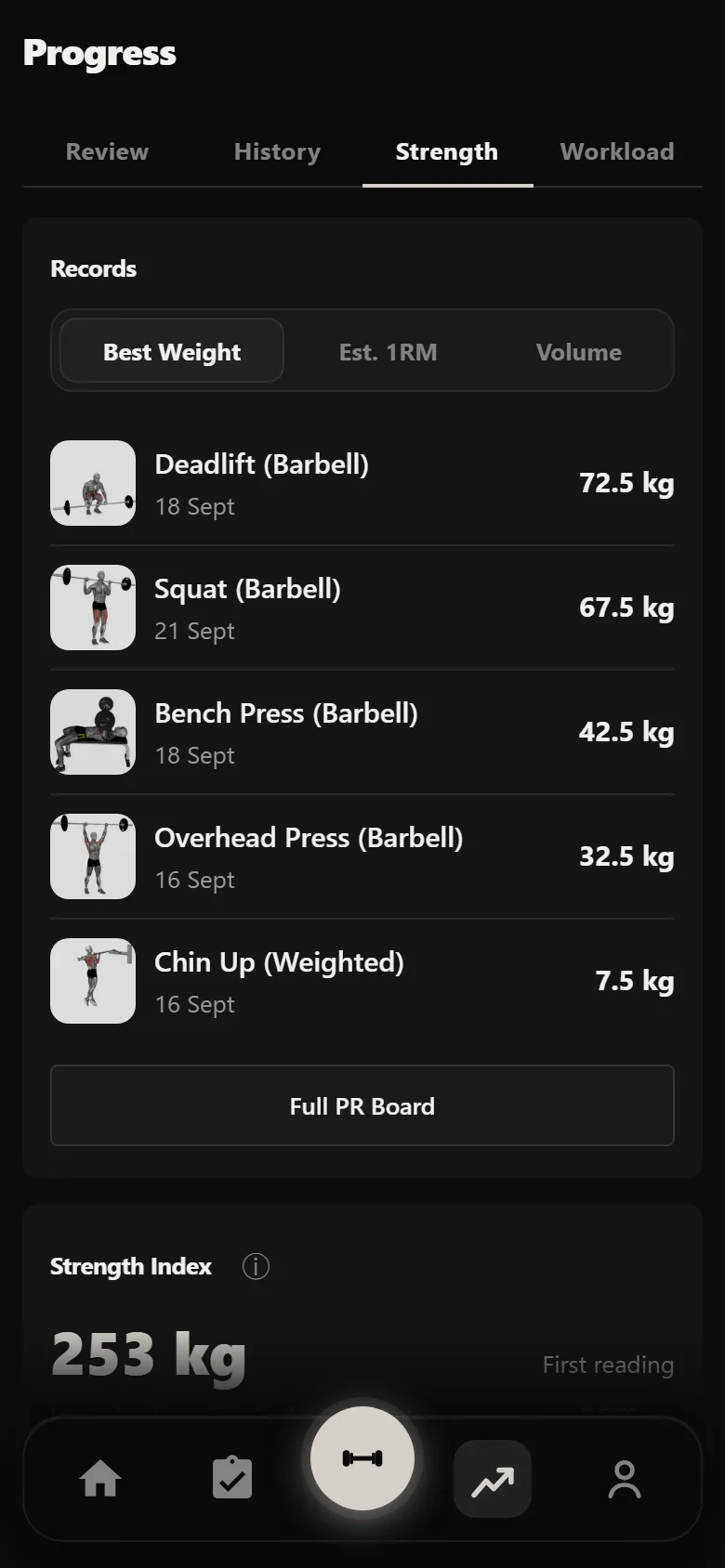
The strength view is where this becomes visible in one screen. It carries a per-lift index alongside weekly volume, so the lifts that are climbing and the lifts that have just taken a cut are on the same page instead of scattered through six separate histories.
What the block looks like from the outside
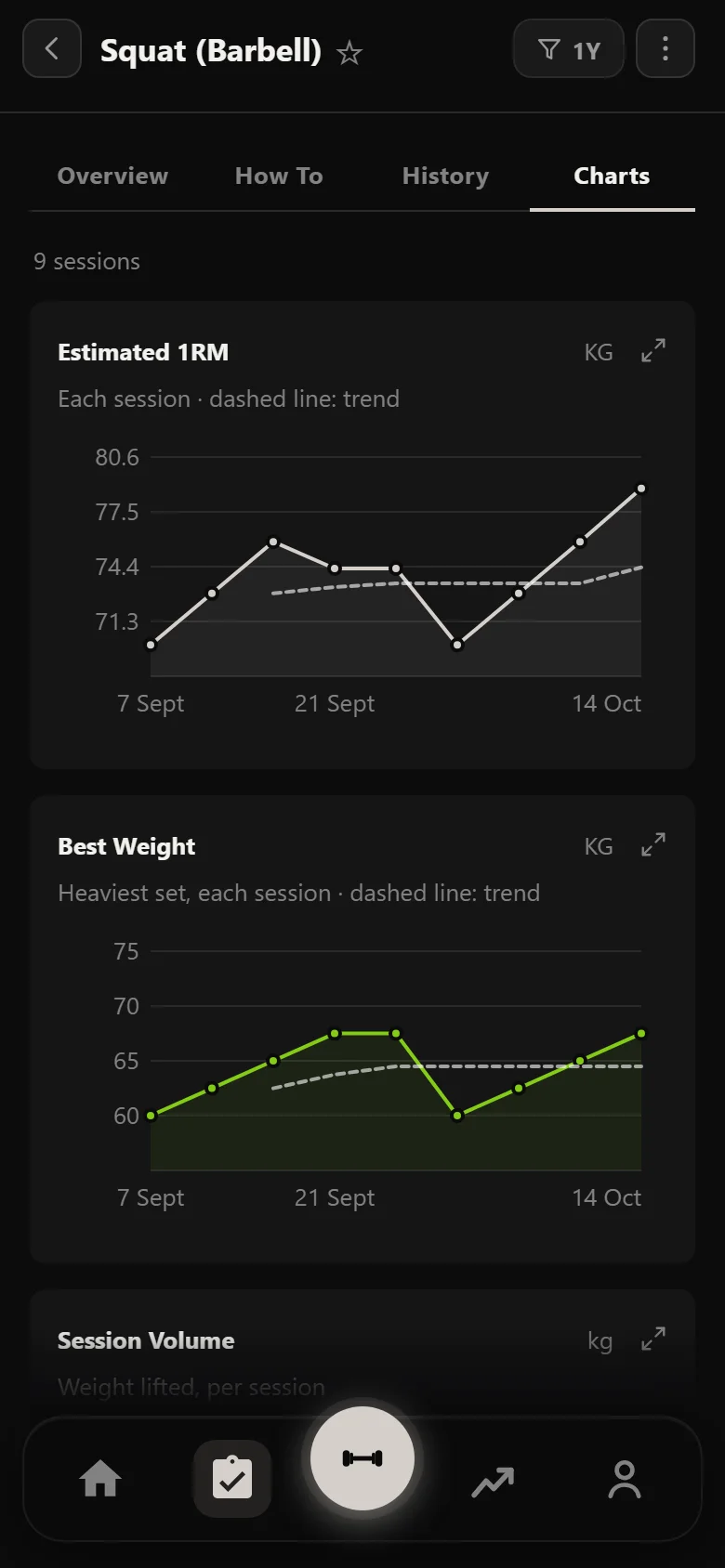
The squat's own estimated 1RM chart draws the shape of the whole thing without being told what happened: a climb, a flat stretch across the two misses, a dip at the deload, then a second climb that goes past where the first one stopped. Nothing was smoothed and nothing was added after the fact, because the chart is drawn from the logged sets and there is nowhere else for it to get its numbers.
The History calendar tells it from the other side. Eighteen sessions across six weeks, alternating between the nine-set Workout A and the seven-set Workout B, with the whole arc readable in one view.
The payoff: the same lift, six weeks apart
Two screenshots of the same squat on the same screen. It opened the block at 60 kg, stalled, was cut back to 60 kg by the program's own rule, and closed the block at 67.5 kg with 70 kg already queued for the next session. The setback is inside that number rather than edited out of it, and every step between the two screenshots was chosen by the engine.
60 kg to 67.5 kg with a stall and a full 10% deload in between, and the app drove every step of it.
Common questions
What is Phrak's Greyskull LP?
A beginner linear progression built around an AMRAP top set on every main lift. Workout A runs overhead press, chin-up and squat; Workout B runs bench press, bent over row and deadlift, and the two alternate three days a week. Clear a session and the weight goes up 2.5 kg next time. Rep out ten or more on the AMRAP top set and the jump doubles to 5 kg.
What happens when I miss a session?
The first miss holds the weight. You repeat it next time rather than adding to it. Miss the same lift twice in a row and Durata cuts that lift 10% automatically and resumes the normal climb from the lower number. On this run the squat was cut back to 60 kg after two misses at 67.5 kg, and reached 67.5 kg again by session 17.
Why did some of my lifts finish lighter than they started?
Because the deload rule belongs to the lift, not to the program. Each main lift counts its own misses and takes its own cut, so a six-week block can easily end with some lifts above their starting weight and some below it. On this run the squat finished at 70 kg and the overhead press at 32.5 kg, while the bench press, bent over row, deadlift and weighted chin-up all finished under their opening numbers after taking their own cuts.
What weight should I start with?
Less than you think. The AMRAP top set rewards reps left in the tank, so a conservative start is what makes the double jump reachable. This run opened the squat at 60 kg. Pick something you can clear on every prescribed set and let the app do the adding, because 2.5 kg a session covers a cautious start faster than most people expect.
Does a deload undo the block's progress?
No. It resets one lift and lets the climb continue from there on the same steps as before. On this run the squat deloaded all the way back to its starting weight and still finished the block 7.5 kg above it, with the next session prescribed at 70 kg.
Is Durata free?
Yes. Durata is free to use, with the full program catalogue, automatic progression maths, rest timers and PR tracking. Everything in this walkthrough is in the app.
Put it into practice
Durata is free to use — 50 proven programs, automatic progression, rest timers and PR tracking, all on your phone.