


Physique Peak in Durata: the lifts hold, the cardio climbs
A shred is not a strength program, and the fat-loss plans that pretend otherwise are the ones that get you hurt or get you nowhere. You are eating less than you are spending. You are not going to add much to the bar and you do not need to. The job of the heavy work is to give your body a reason to keep the muscle it has while the deficit takes the fat off.
Physique Peak takes that seriously enough to build it into the rules. The four barbell lifts run at a fixed 80% of a training max that only moves when the top set reaches seven reps, and on this run none did, so they opened on the same weight in week ten as in week one. The conditioning is what ramps. The accessories creep, slowly, on reps. Three different rules doing three different jobs, and none of them asking you to work out which is which.
This walkthrough follows a full ten-week block driven through the real app. Every weight, rep and interval below came off that run.
Finding the program
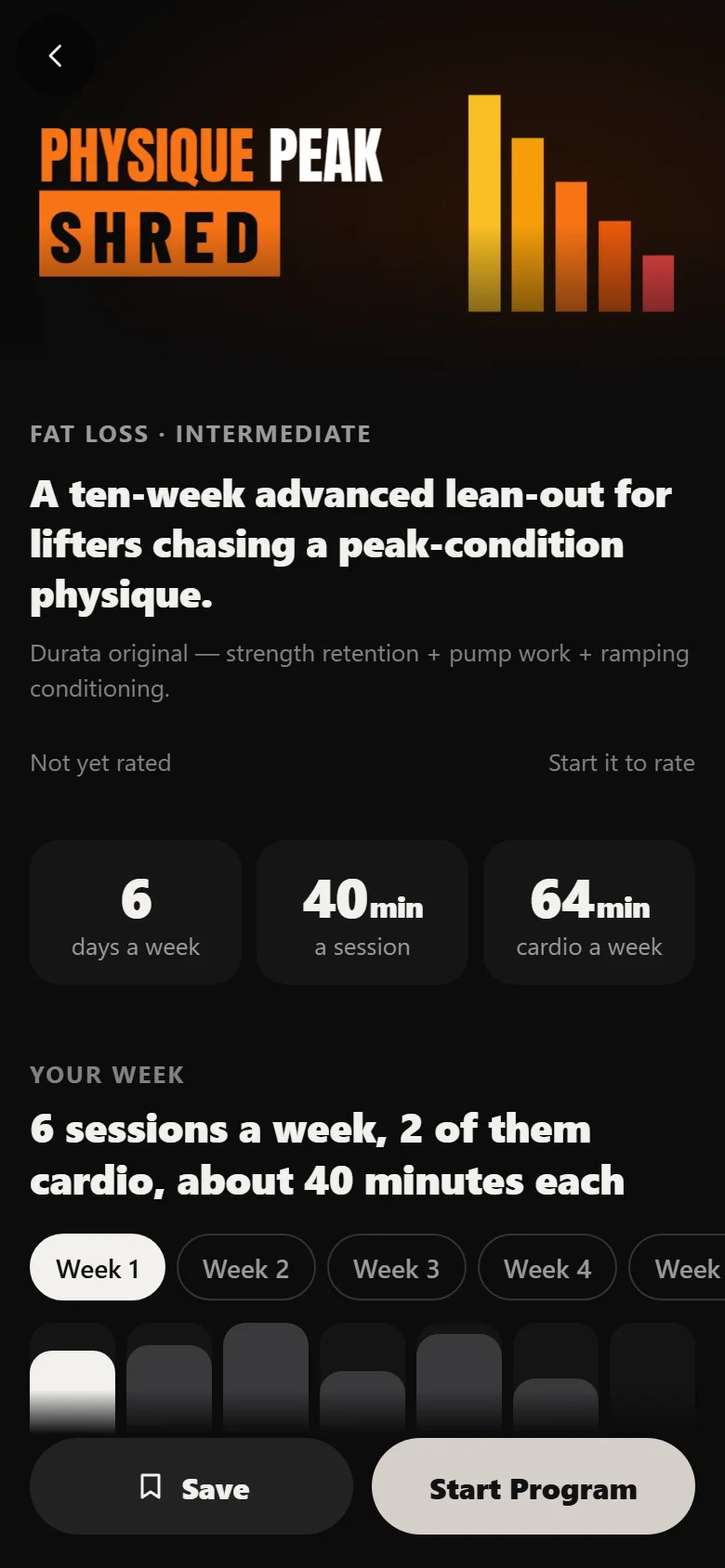
The Fat Loss shelf in Discover holds the cuts and shreds rather than strength blocks. In Discover, Physique Peak sits on the Fat Loss shelf, marked Intermediate, at six days a week. Search finds it by name, or Filter narrows the shelves by level and days a week. Tap the cover for a quick look, then View Program for the full page.
Physique Peak is the ten-week one: six days, barbell work to hold what you have, conditioning to bring the look in.
What it asks for before you start
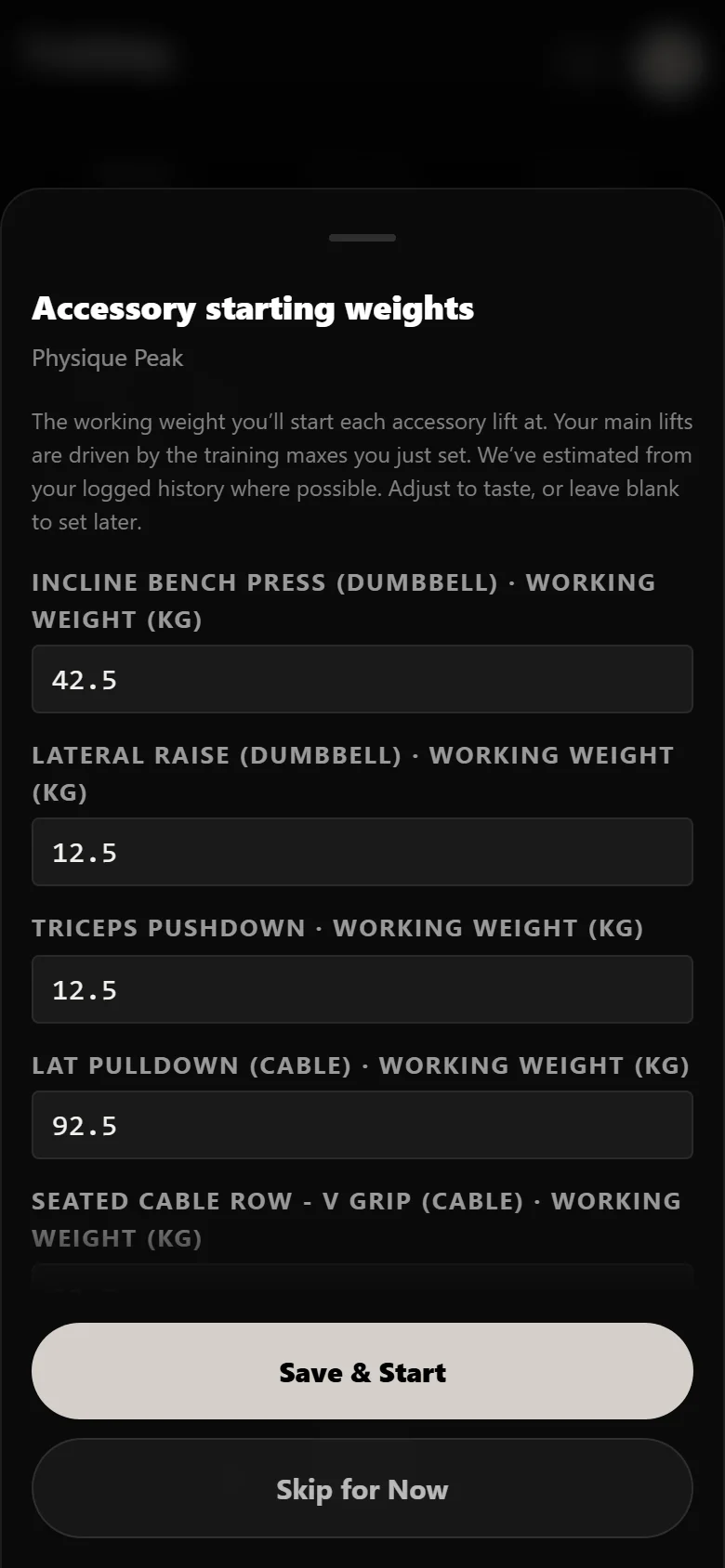
Setup asks for two different things, because the program runs two different kinds of rule. The four barbell lifts want a training max, so you enter one each: 140 kg for the bench on this run. The accessories want a working weight, and the incline dumbbell bench opens at 42.5 kg.
That is the last arithmetic you do. Every barbell weight in the ten weeks is a percentage of the max you just typed, worked out by the app on the day, and every accessory weight is decided by what you log.
The program page shows the whole week before you commit: the barbell days, the accessory work behind them, and the two conditioning sessions. The conditioning days are draggable in the planner, so you can put them wherever they fit around the rest of your week.
The lift that is supposed to stand still
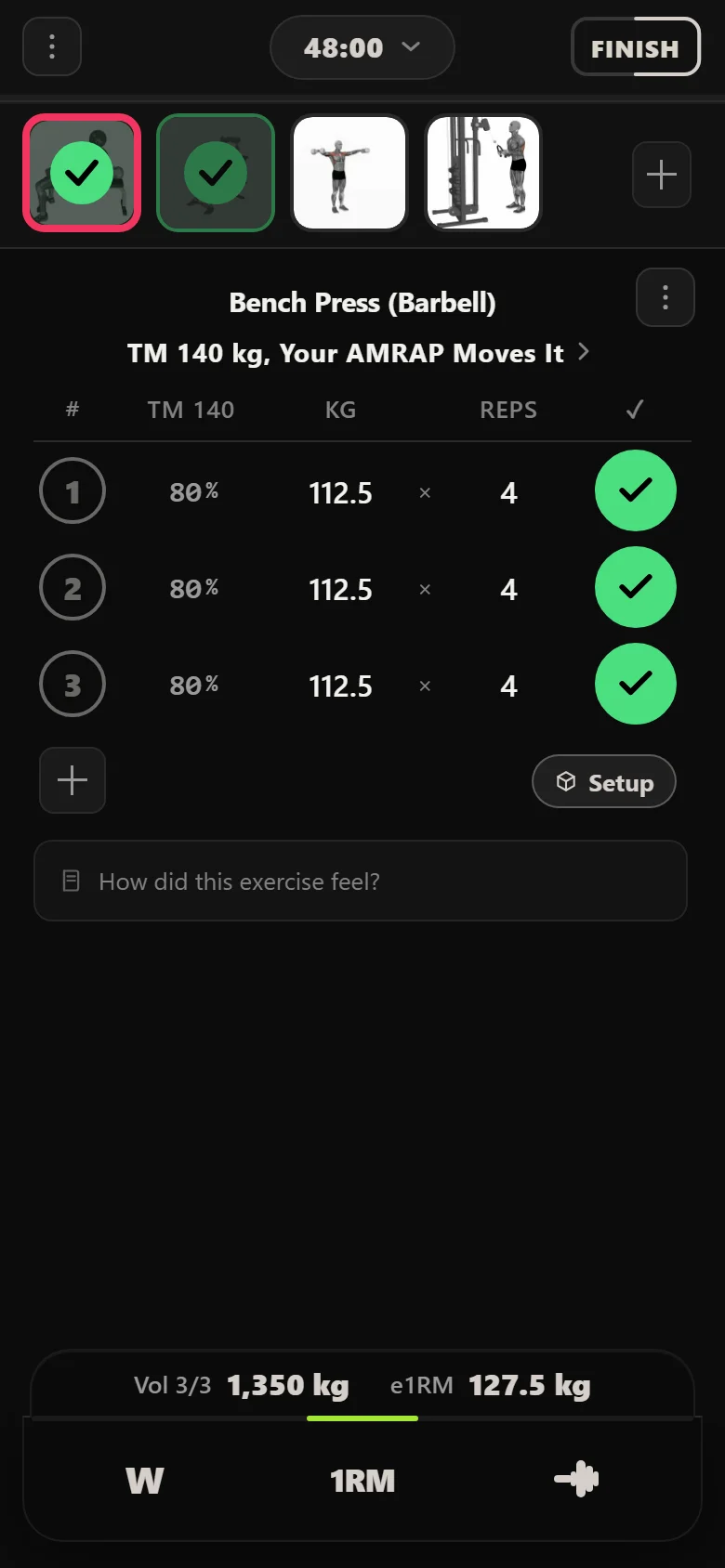
Week one, the barbell bench comes up at 112.5 kg. That is 80 percent of the training max, and 80 percent is what it is every week the program runs.
The rule on this lift sets a high bar for an increment and has no cut at all. It adds 2.5 kg to the training max only when the top set reaches seven reps at 80%, and it never takes weight off. Both of those are deliberate. You are in a deficit, so a bad session is information about your food and your sleep rather than about your training, and a rule that reacted to it would spend ten weeks chasing noise downward.
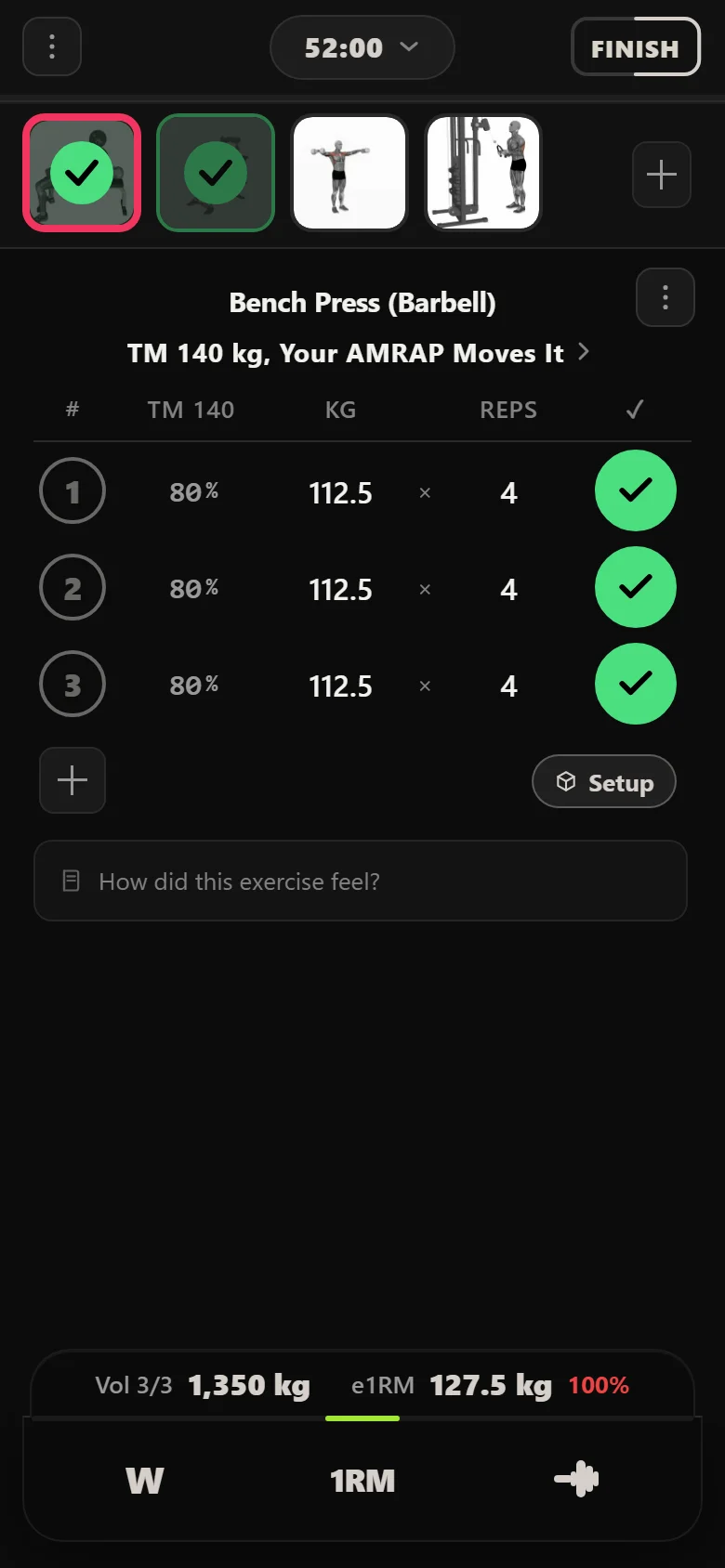
So in week ten it is still 112.5 kg: the top set never reached seven. Nothing failed, nothing stalled, and nothing was held back as a punishment. The app held the lift because the rule said to, which is the least dramatic thing in this walkthrough and the one worth understanding. Holding a number for ten weeks while you get lighter is not standing still.
The same goes for the squat, the deadlift and the overhead press. Four lifts, four maxes, one flat percentage, and on this run no movement in either direction for the length of the block.
The conditioning is what climbs
Here is the part of the program that actually gets harder, and the app builds the whole ramp for you.
The HIIT session starts at 30 seconds of work against 30 seconds of rest, 15 rounds. Every week the work interval grows by five seconds and the rest shrinks by five, and the round count climbs. By week four it is 45 seconds on against 15 off for 21 rounds, which is a work-to-rest ratio three times what you started with, and the rounds keep building to 24 through the back half of the block.
The steady session climbs the simple way: 25 minutes in week one and three more each week, to 52 by the end.
You schedule none of it. Each week's session arrives already set to that week's numbers, and the interval timer runs it.
Cardio that hardens week by week, prescribed for you
HIIT Intervals work / rest, per week
- W1 30s / 30s 15 rounds Week 1: 30 second work intervals, 30 second rest, 15 rounds
- W2 35s / 25s 17 rounds Week 2: 35 second work intervals, 25 second rest, 17 rounds — harder than the week before
- W3 40s / 20s 19 rounds Week 3: 40 second work intervals, 20 second rest, 19 rounds — harder than the week before
- W4 45s / 15s 21 rounds Week 4: 45 second work intervals, 15 second rest, 21 rounds — harder than the week before
- W5 45s / 15s 23 rounds Week 5: 45 second work intervals, 15 second rest, 23 rounds — harder than the week before
- W6 45s / 15s 24 rounds Week 6: 45 second work intervals, 15 second rest, 24 rounds — harder than the week before
- W7 45s / 15s 24 rounds Week 7: 45 second work intervals, 15 second rest, 24 rounds
- W8 45s / 15s 24 rounds Week 8: 45 second work intervals, 15 second rest, 24 rounds
- W9 45s / 15s 24 rounds Week 9: 45 second work intervals, 15 second rest, 24 rounds
- W10 45s / 15s 24 rounds Week 10: 45 second work intervals, 15 second rest, 24 rounds
- Steady Conditioning25 → 28 → 31 → 34 → 37 → 40 → 43 → 46 → 49 → 52 min
The accessories move, a rep at a time
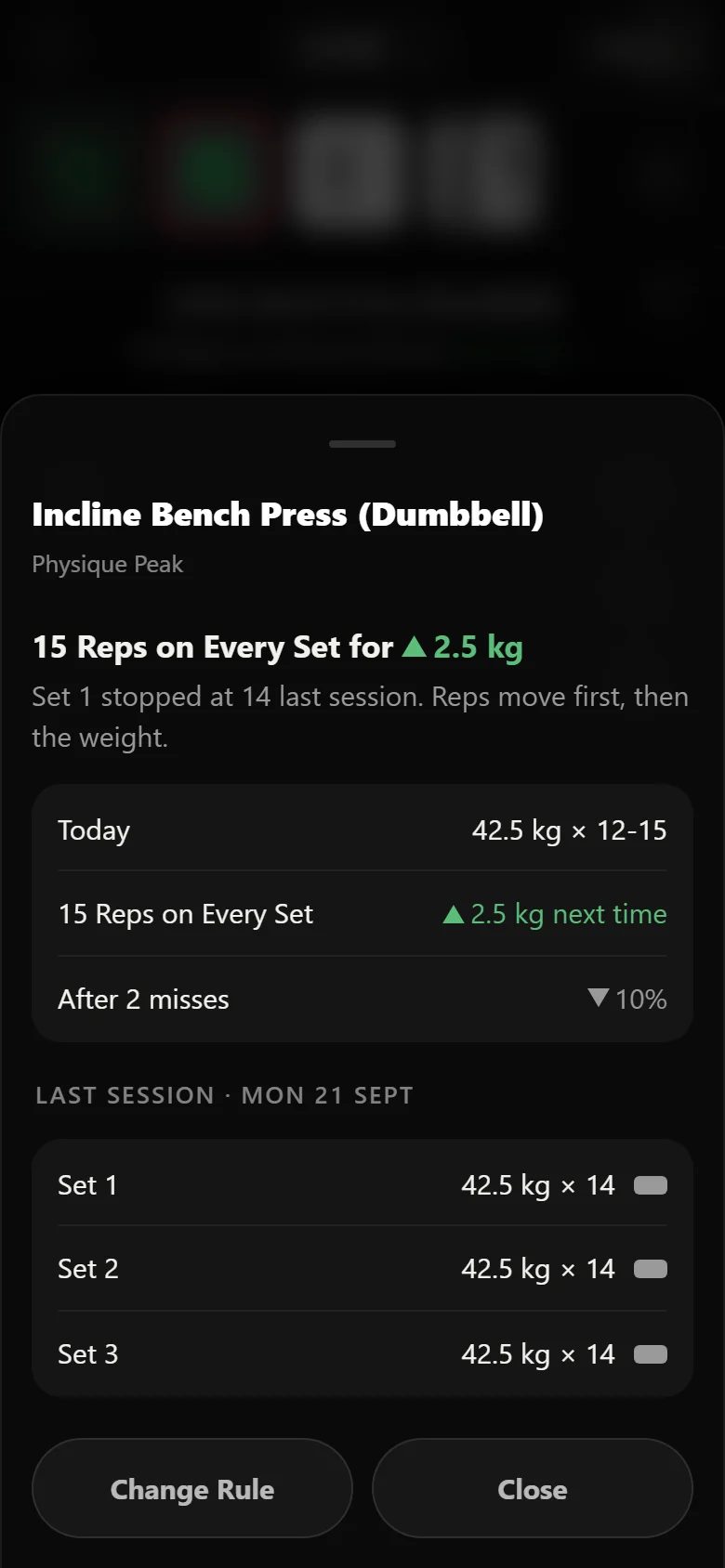
The third rule sits on everything else, and it is the one that actually produces a jump in a deficit. Double progression: the weight stays put while you add reps inside a range, and only when every set reaches the top of the range does the weight go up and the reps drop back to the floor.
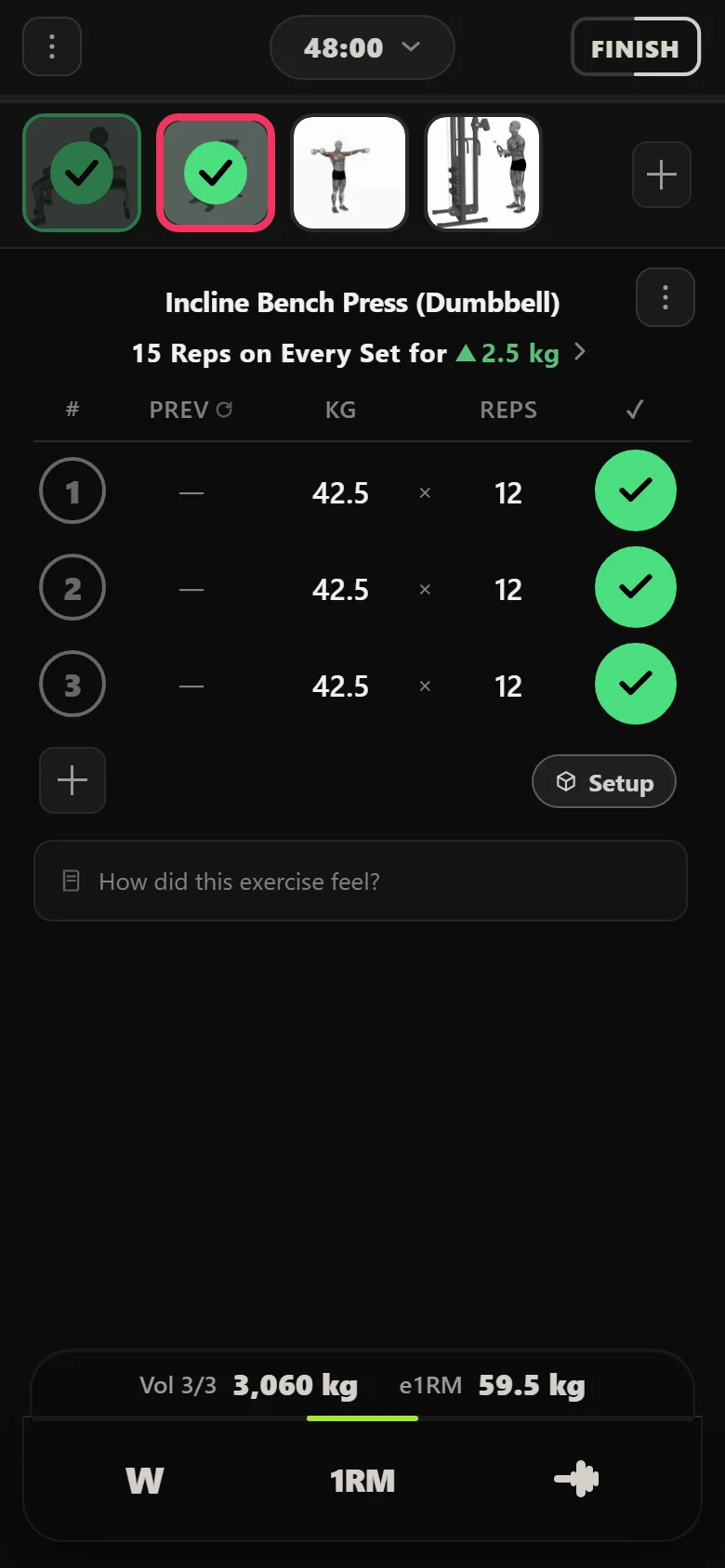
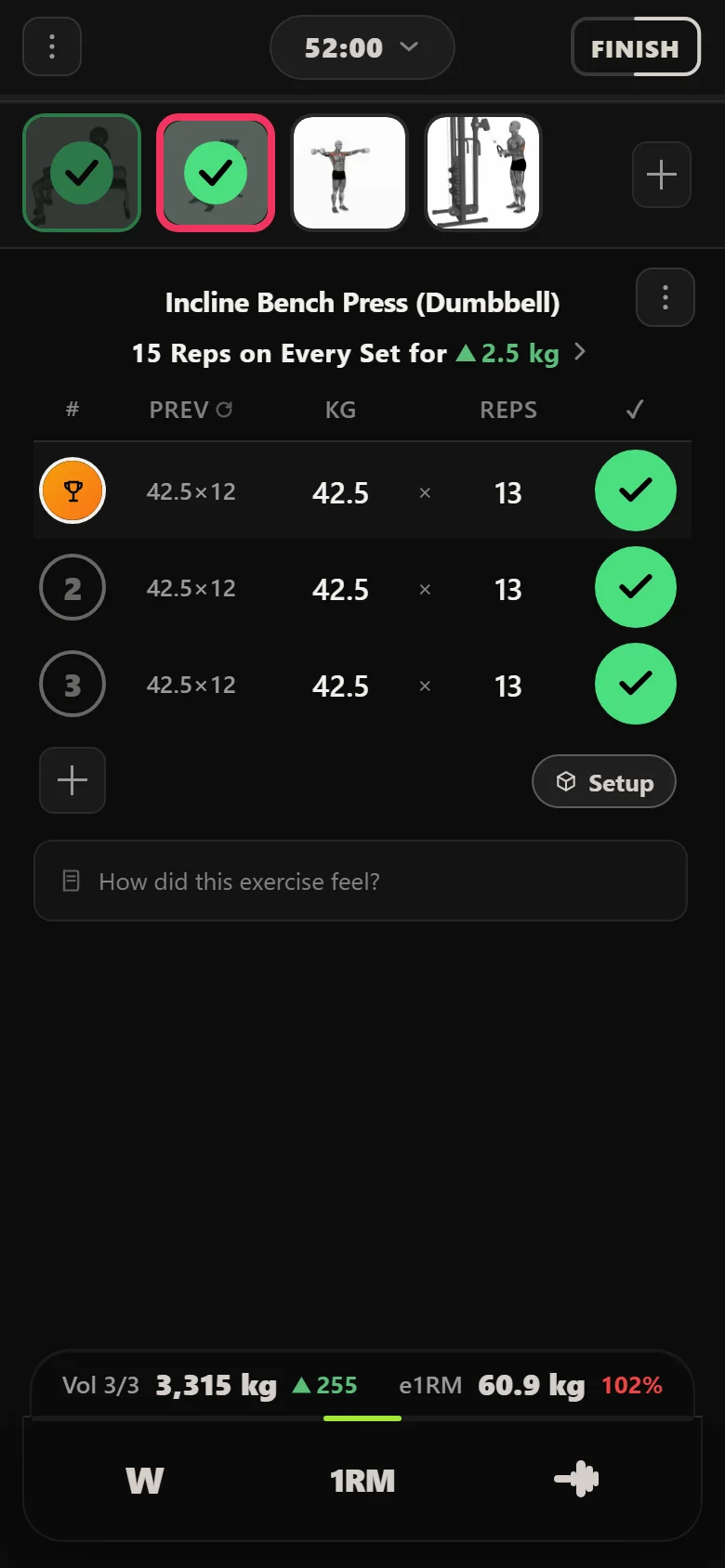
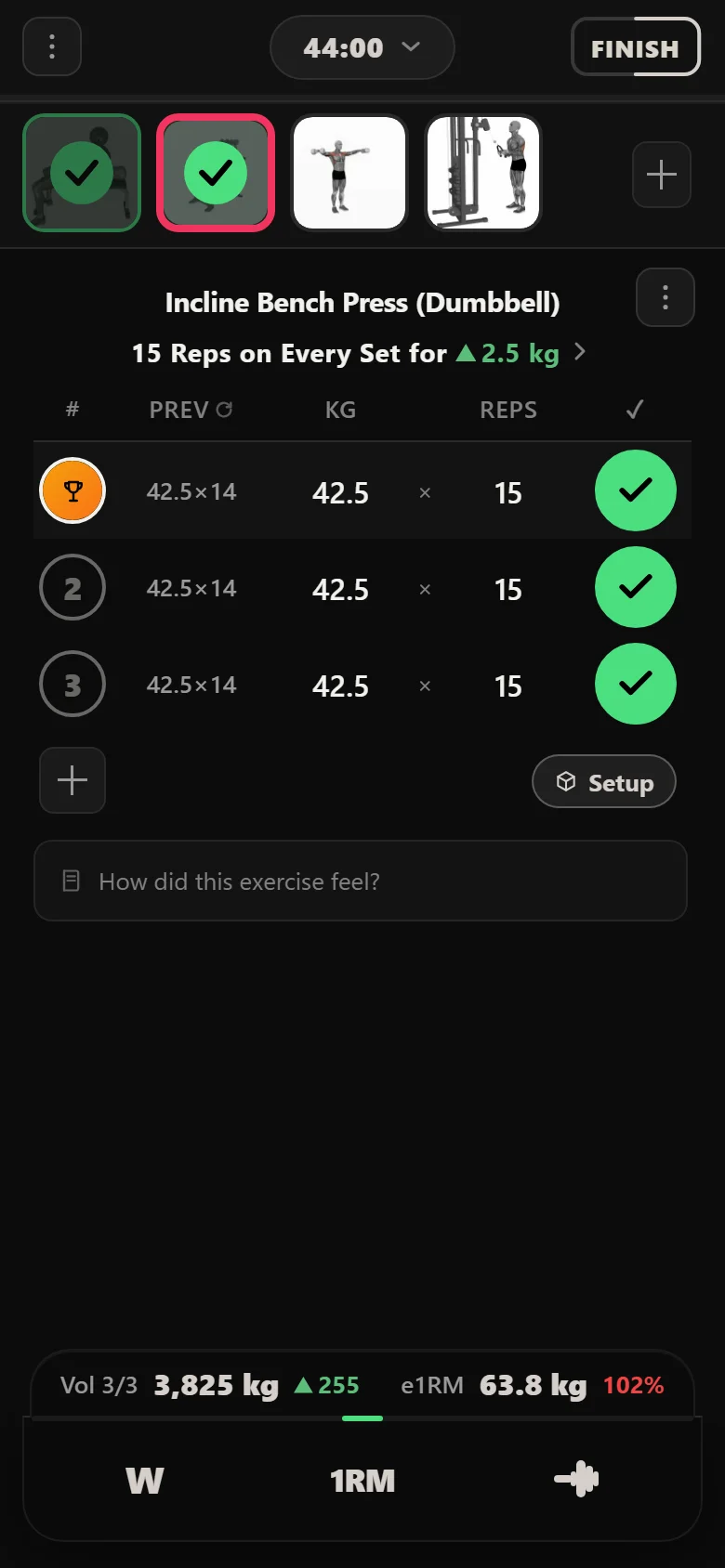
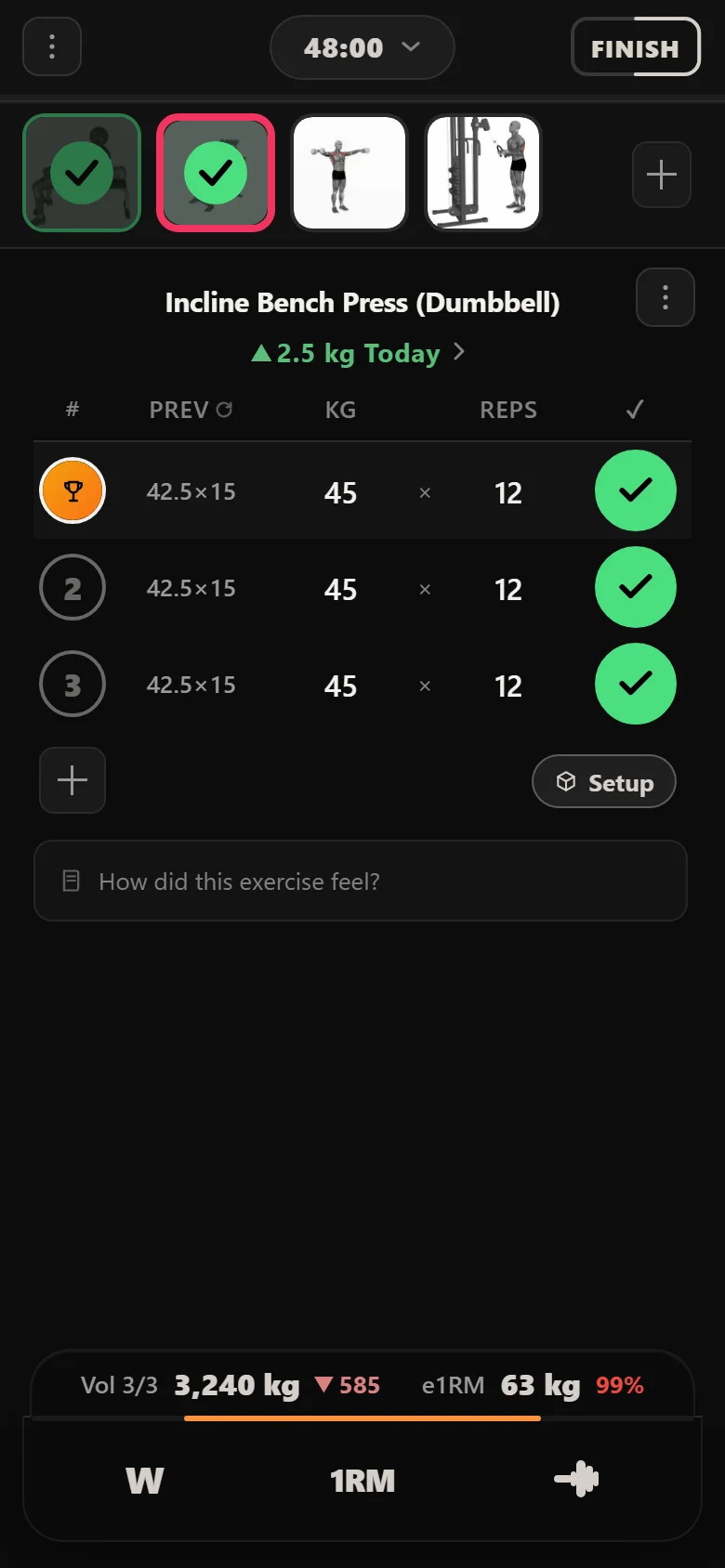
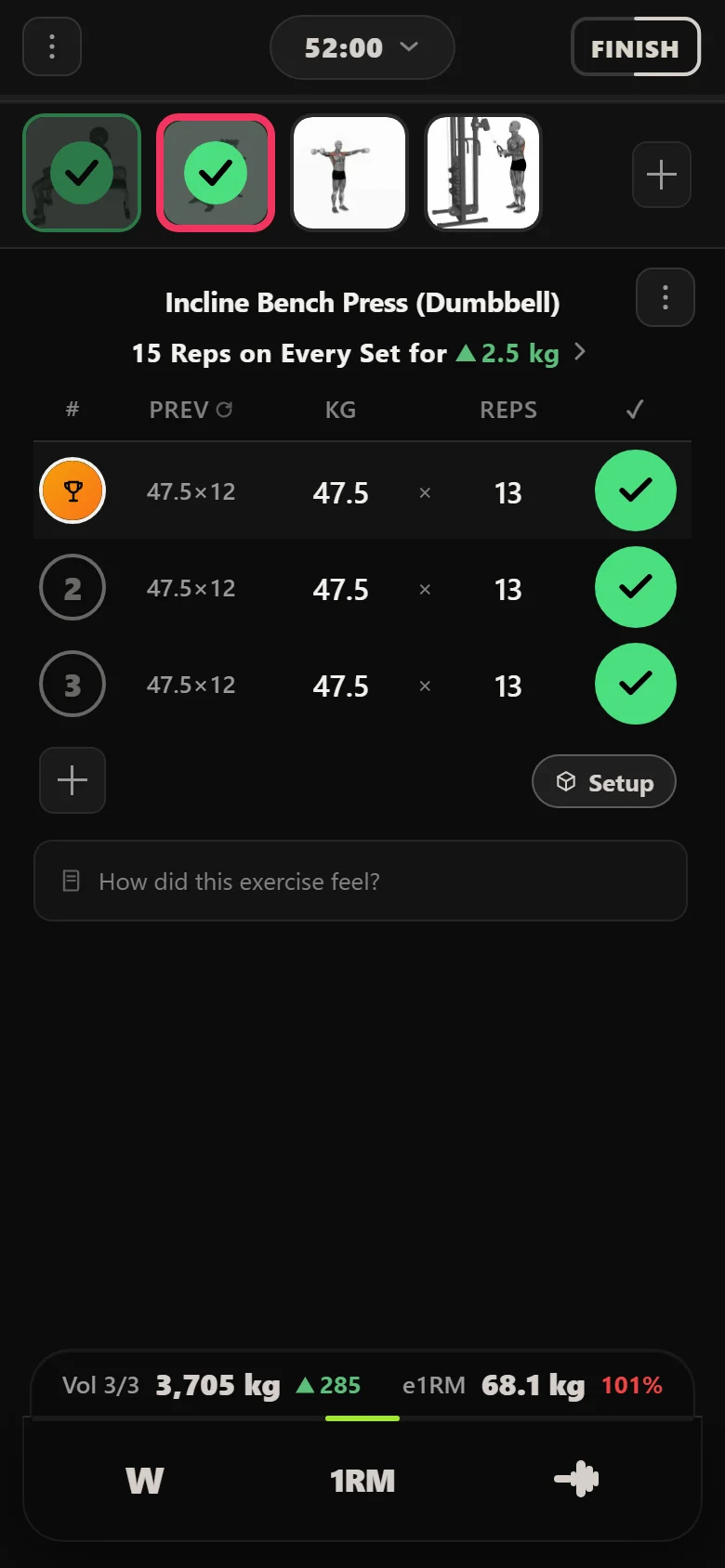
The incline dumbbell bench is prescribed 12 to 15. It opens at 42.5 kg for 12 reps a set. Three appearances later it is still 42.5 kg, now for 14, and the app is scoring that as progress because on this rule it is the progress. The fourth appearance reaches 15 on every set, which is the condition the rule has been waiting for, and the next one opens at 45 kg back at 12 reps.
Then the whole thing runs again. Ten appearances across the block, two increments earned: 42.5 to 45 to 47.5 kg, +5 kg over ten weeks. That is a slow number and it should be. Adding 5 kg to a pressing accessory while eating in a deficit is a good outcome, not a disappointing one, and a rule that handed you more than that would be lying about what your body did.
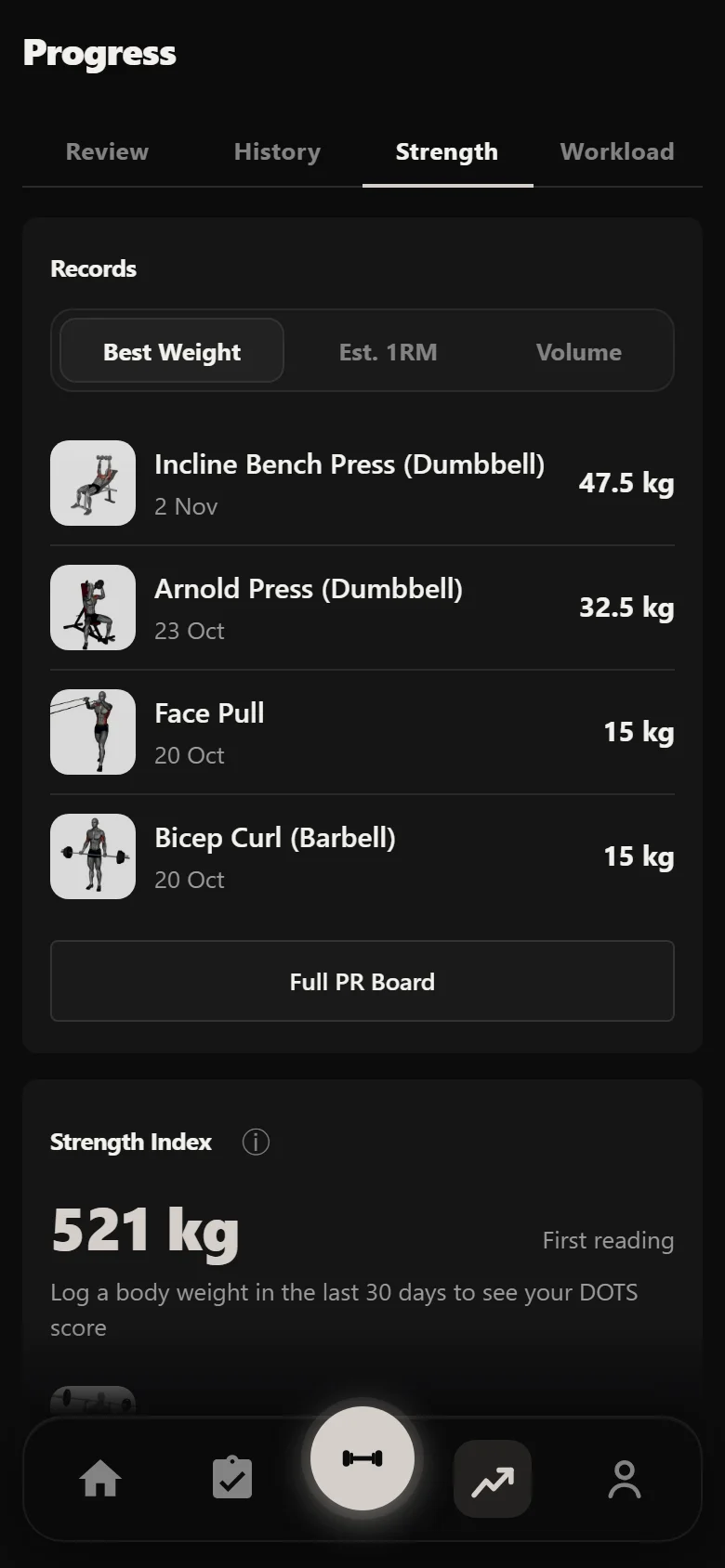
The other logged accessories did the same thing at their own pace: the Arnold press went 30 to 32.5 kg, and the face pull and the barbell curl both went 12.5 to 15 kg.
Incline Bench Press (Dumbbell): weight and reps per appearance
- 42.5S1 Session 1 — 12 reps
- 42.5S2 Session 2
- 42.5S3 Session 3
- 42.5S4 Session 4 — 15 reps
- 45S5 Session 5
- 45S6 Session 6
- 45S7 Session 7
- 45S8 Session 8
- 47.5S9 Session 9
- 47.5S10 Session 10
What ten weeks looks like from the other end
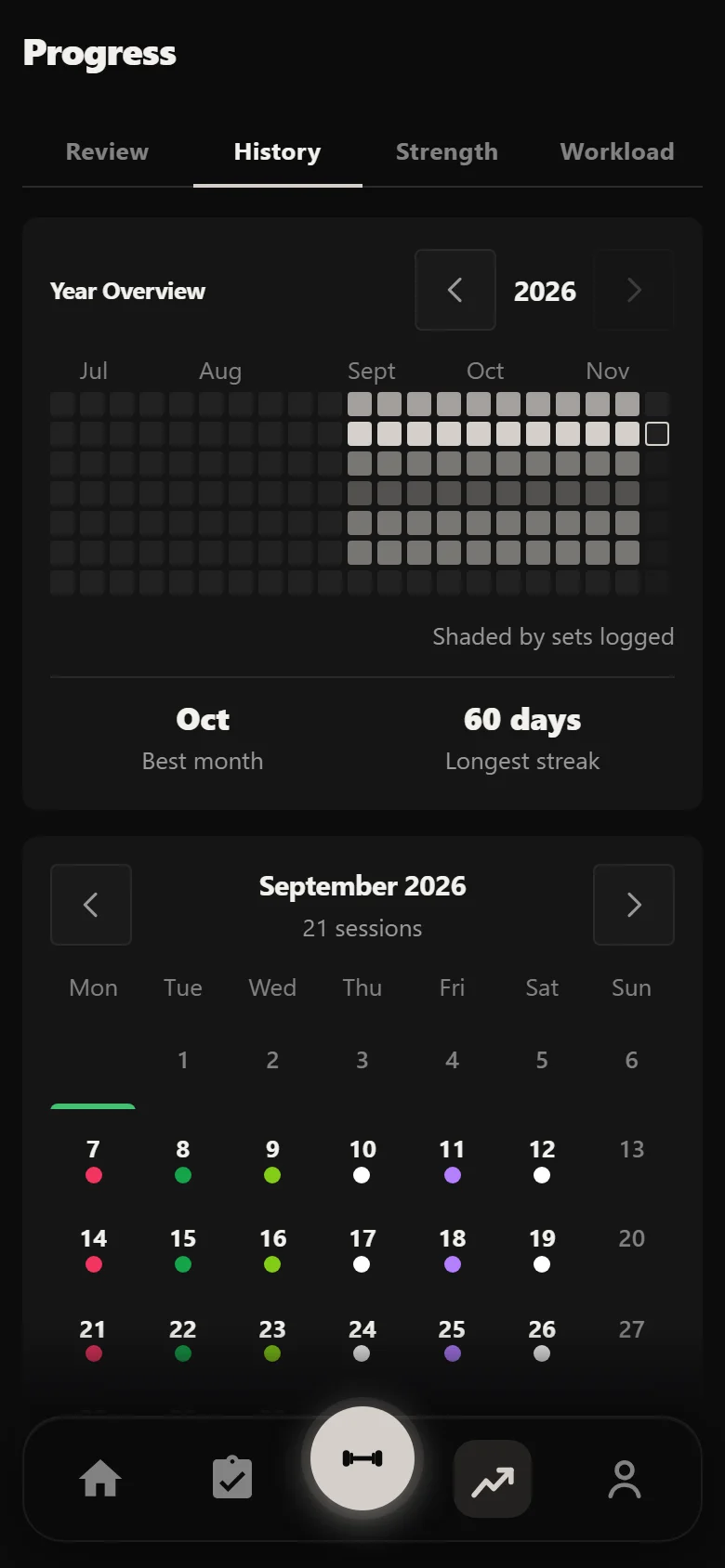
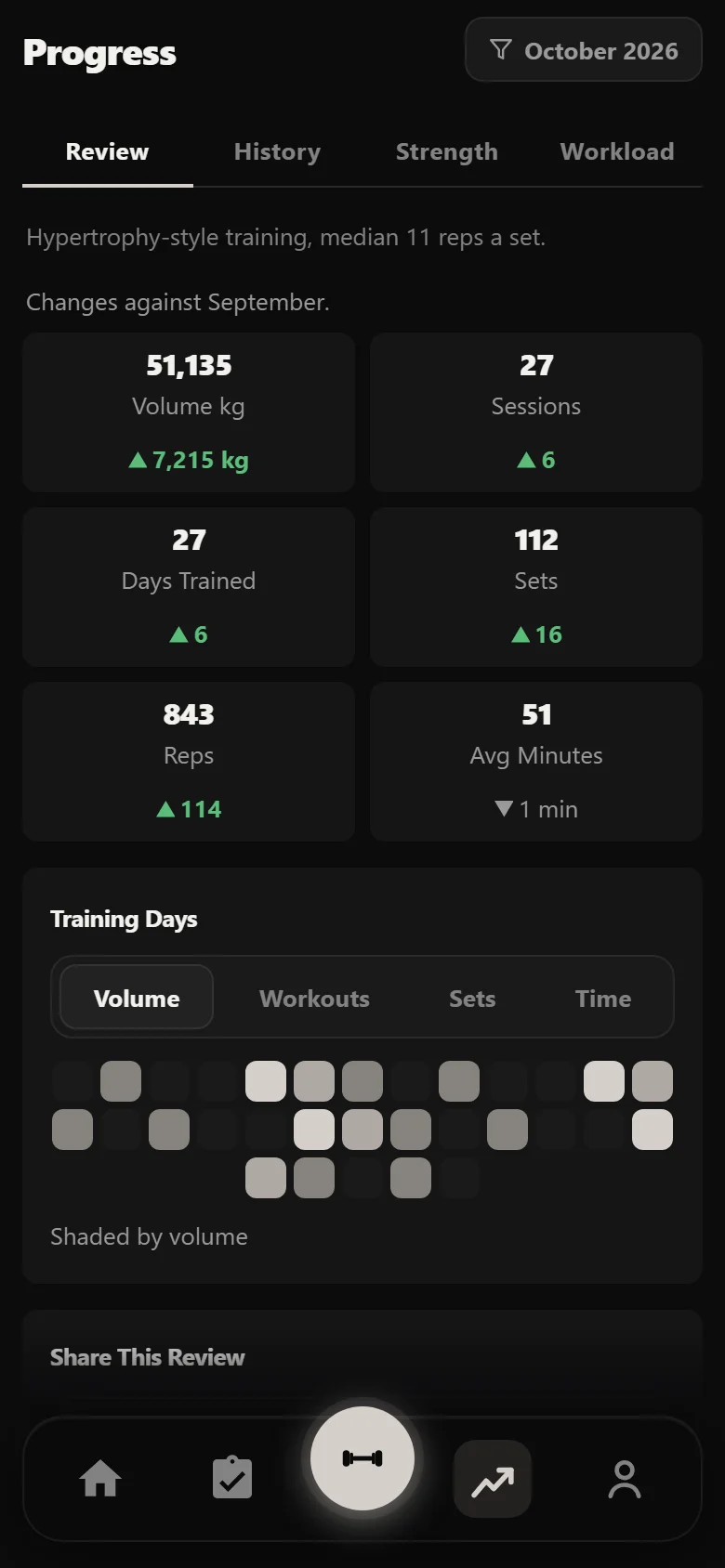
Sixty sessions on the History calendar, barbell days and conditioning days, filling in from the start date. Nothing there was entered twice.
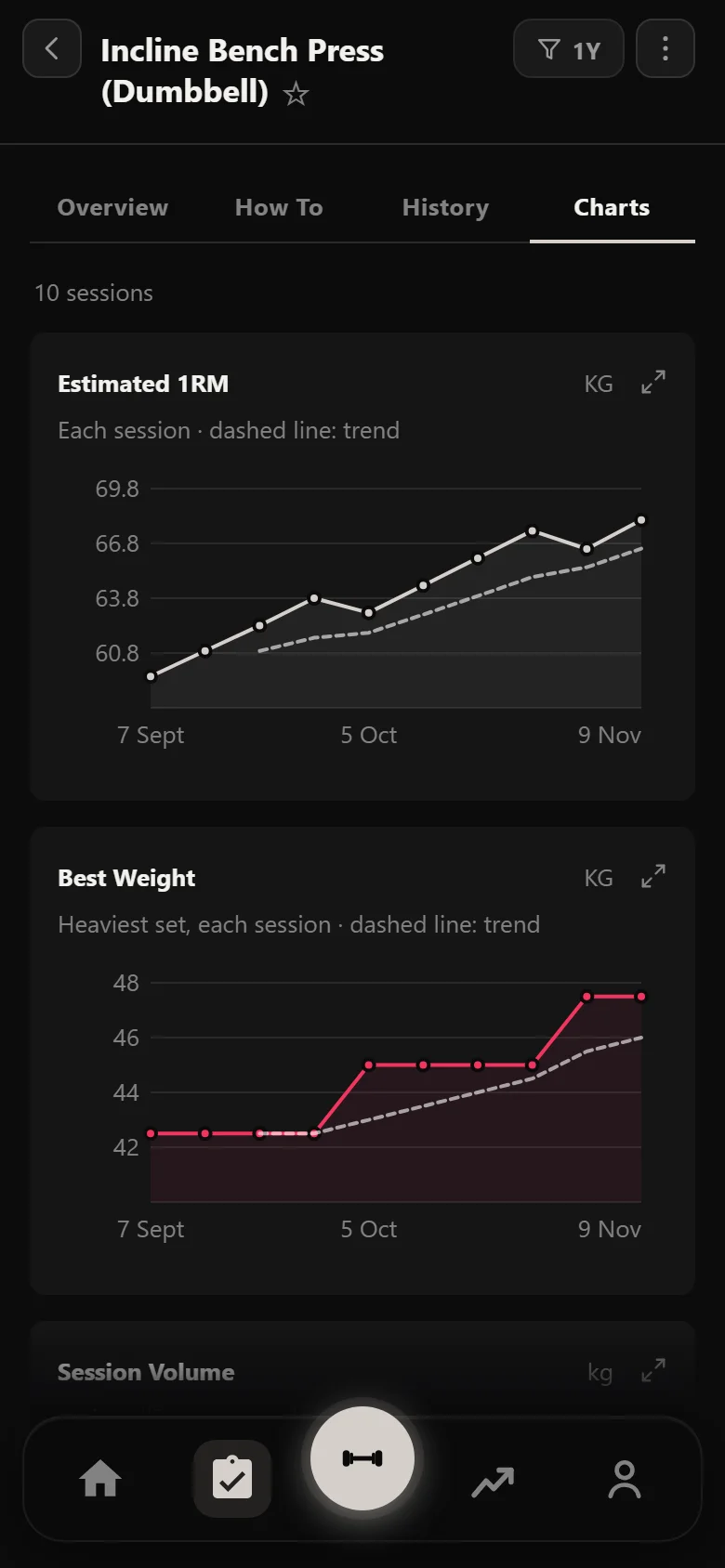
The charts show the shape a shred is meant to have. The estimated one-rep max on the incline bench rises through the block, and it rises on the rep sessions too rather than only on the two days the weight changed, because more reps at the same weight is a better performance and the maths knows it. The strength index and the weekly volume underneath tell it from the other side.
Read against the conditioning ramp, that is the whole result: the lifting held or crept while the work capacity went up a long way.
The payoff: small, earned, and the right size
Two screenshots of the incline dumbbell bench, ten weeks apart. 42.5 kg for 12 at the start, 47.5 kg at the end, and every rep in between logged in the app rather than worked out on paper.
Set that against the barbell bench sitting on 112.5 kg the whole way and the conditioning going from 15 rounds to 24, and you have the three jobs the program was doing all along. Hold the heavy work. Ramp the conditioning. Let the accessories take what they can get. The app is the thing keeping all three straight so you only have to turn up.
Two increments in ten weeks, each one earned by topping the rep range on every set first.
Common questions
Should I expect to get stronger on a shred?
Not much, and the program is built to stop you trying. The four barbell lifts run at a fixed percentage of a training max that only rises when the top set reaches seven reps, so for most lifters they hold their weight for the whole block. The accessories can still creep: on this run the incline dumbbell bench went from 42.5 kg to 47.5 kg over ten weeks. The fat loss comes from the deficit in the kitchen.
Why does the barbell weight never change?
Because that is the rule the program puts on it. Those lifts run at a flat percentage of a training max that only rises on a seven-rep top set and never deloads, which means the app will not chase an ordinary good session upward or punish a bad one downward. In a deficit a bad session usually means you ate or slept badly, not that you got weaker, and a rule that reacted to it would spend ten weeks drifting the wrong way.
How does the cardio get harder?
The ramp is built into the program and the app schedules it. The intervals start at 30 seconds of work against 30 of rest for 15 rounds, and every week the work grows five seconds while the rest shrinks five, up to 45 against 15 for 24 rounds. The steady session climbs from 25 minutes to 52, three minutes a week. Each week's session arrives already set.
Can I move the conditioning to different days?
Yes. The conditioning sessions are draggable in the planner, so you can put the intervals and the steady work wherever they fit around the barbell days. That week's prescription travels with them.
Is Durata free?
Yes. Durata is free to use, with the full program catalogue, automatic progression maths, cardio interval timing, rest timers and PR tracking. Everything in this walkthrough is in the app.
Put it into practice
Durata is free to use — 50 proven programs, automatic progression, rest timers and PR tracking, all on your phone.